
Tesofensine (400 mcg, 60 units)



Ipamorelin Peptide (10MG)
This batch of Ipamorelin has been third party lab tested and verified for quality.

TESTED FOR:

purity
weight
sterility
endotoxins(lps)
$44.99
| Quantity | Price | |
|---|---|---|
| 0% | 1 - 4 | $44.99 |
| 10% | 5 - 9 | $40.49 |
| 20% | 10 - 19 | $35.99 |
| 30% | 20 + | $31.49 |
This product comes as lyophilized powder and is not reconstituted. All products and materials sold on this site are for Research Use Only and not for human use; subject to our Terms and Conditions.

2-Day Shipping
Order by 2:00 PM ET

INSULATED SHIPPING
Ice foam-box shipping available
| Peptide vial specifications | Results | |
|---|---|---|
Not reconstituted | ||
Bottle type: | Vial - sealed - flip top | |
Form: | Powder (lyophilized) | |
Vial size: | 3ML | |
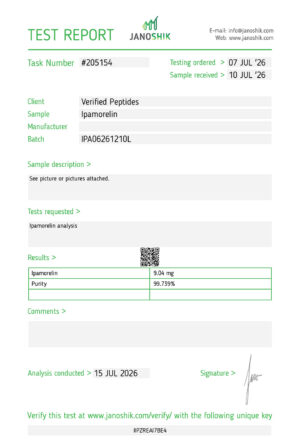
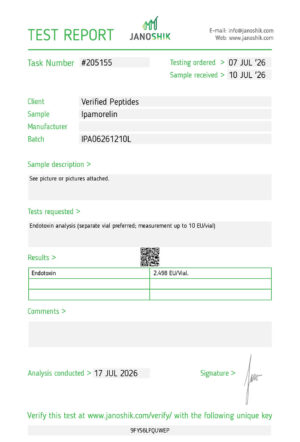
Ipamorelin Certificate of Analysis (COA) Test Result
| Date Tested: | |
|---|---|
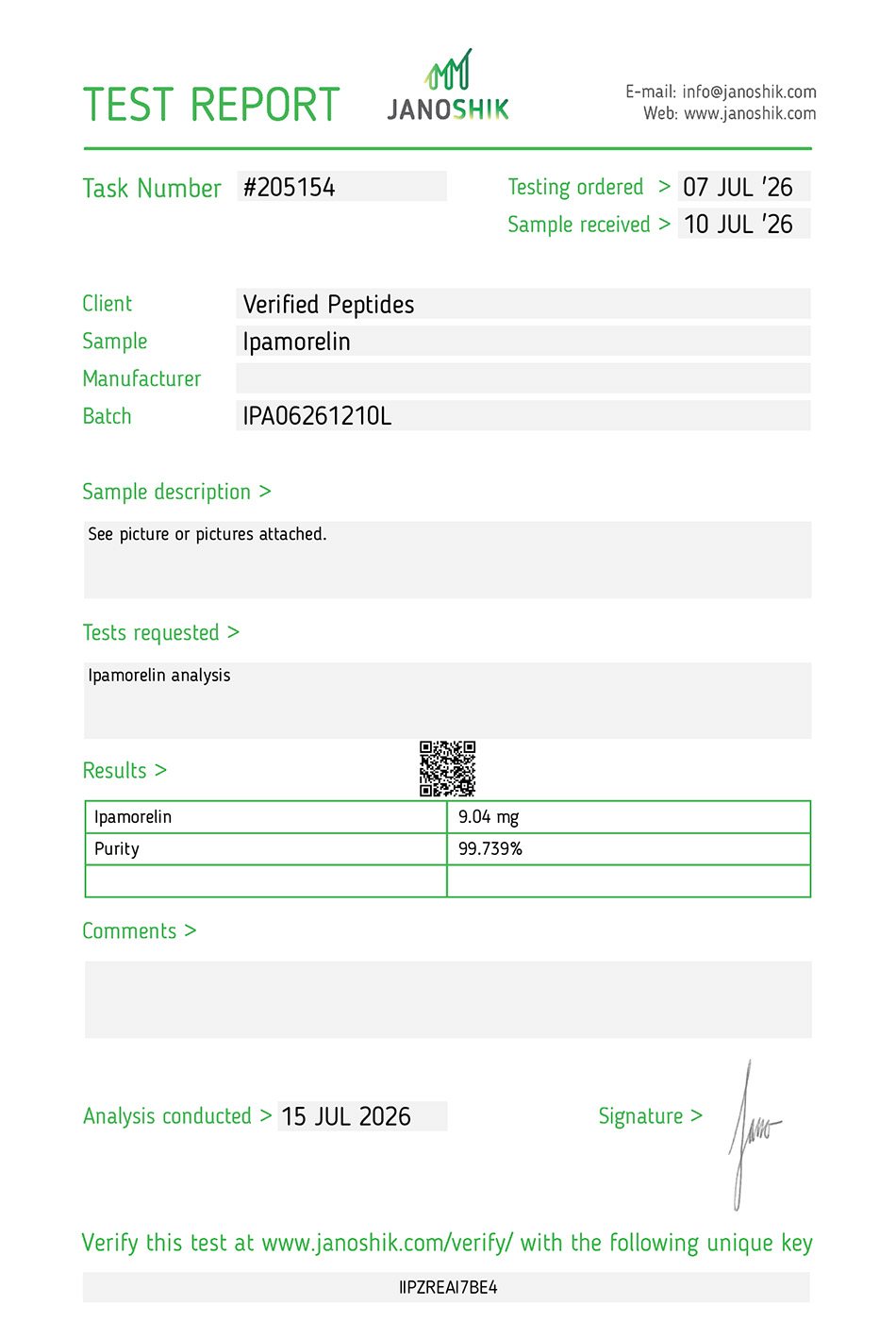
| Purity: | 99.739% |
| Weight: | 9.04mg |
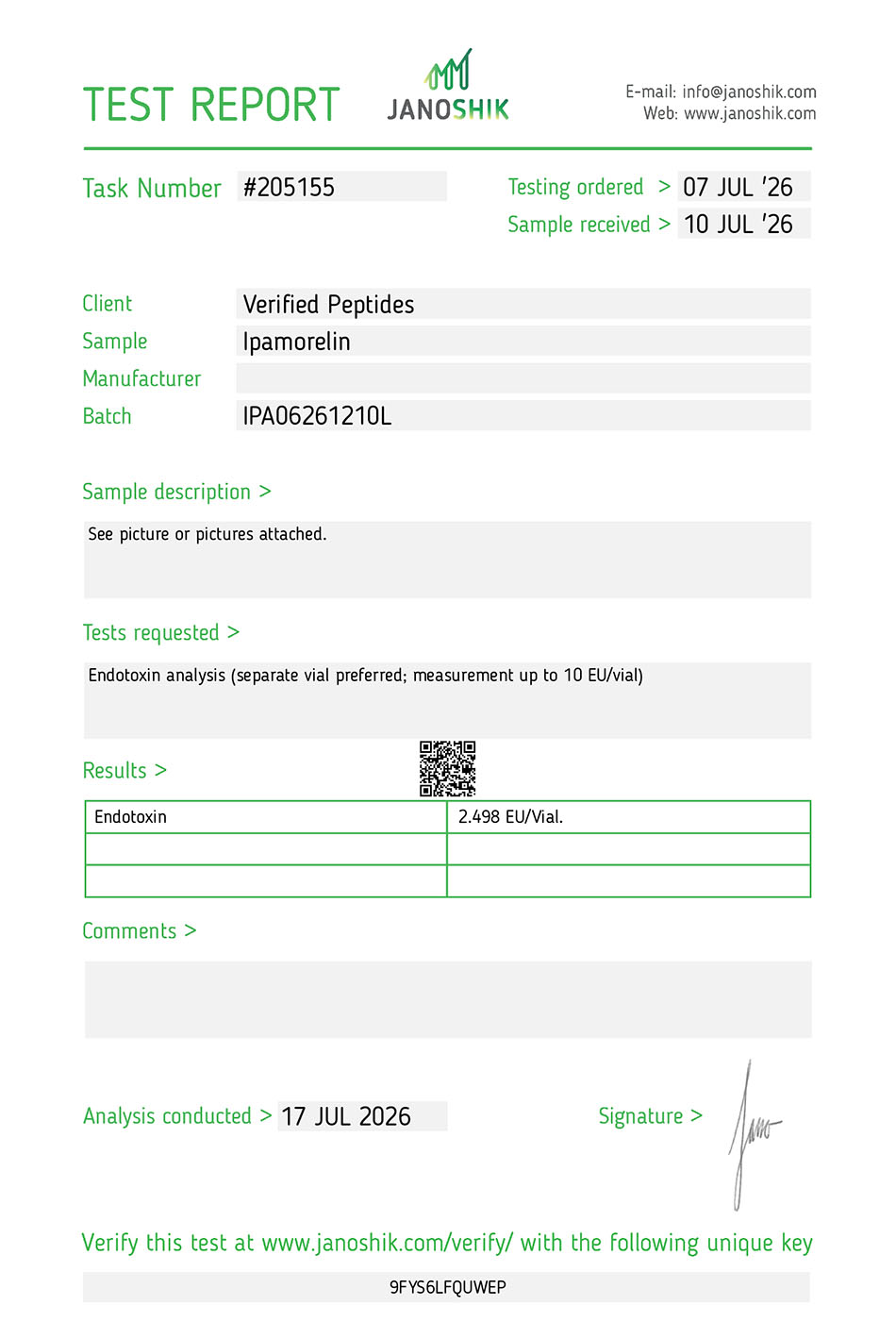
| Endotoxins (LPS): | Pass |
| Batch #: | IPA06261210L |
| Testing Lab: | Janoshik |
| COA Verified Link: | Purity Report Endotoxin Report |
| Testing Methods: | HPLC, LAL, TAMC/YAMC USP <71> |
Ipamorelin Specifications: Molecular Weight, CAS Number & Sequence
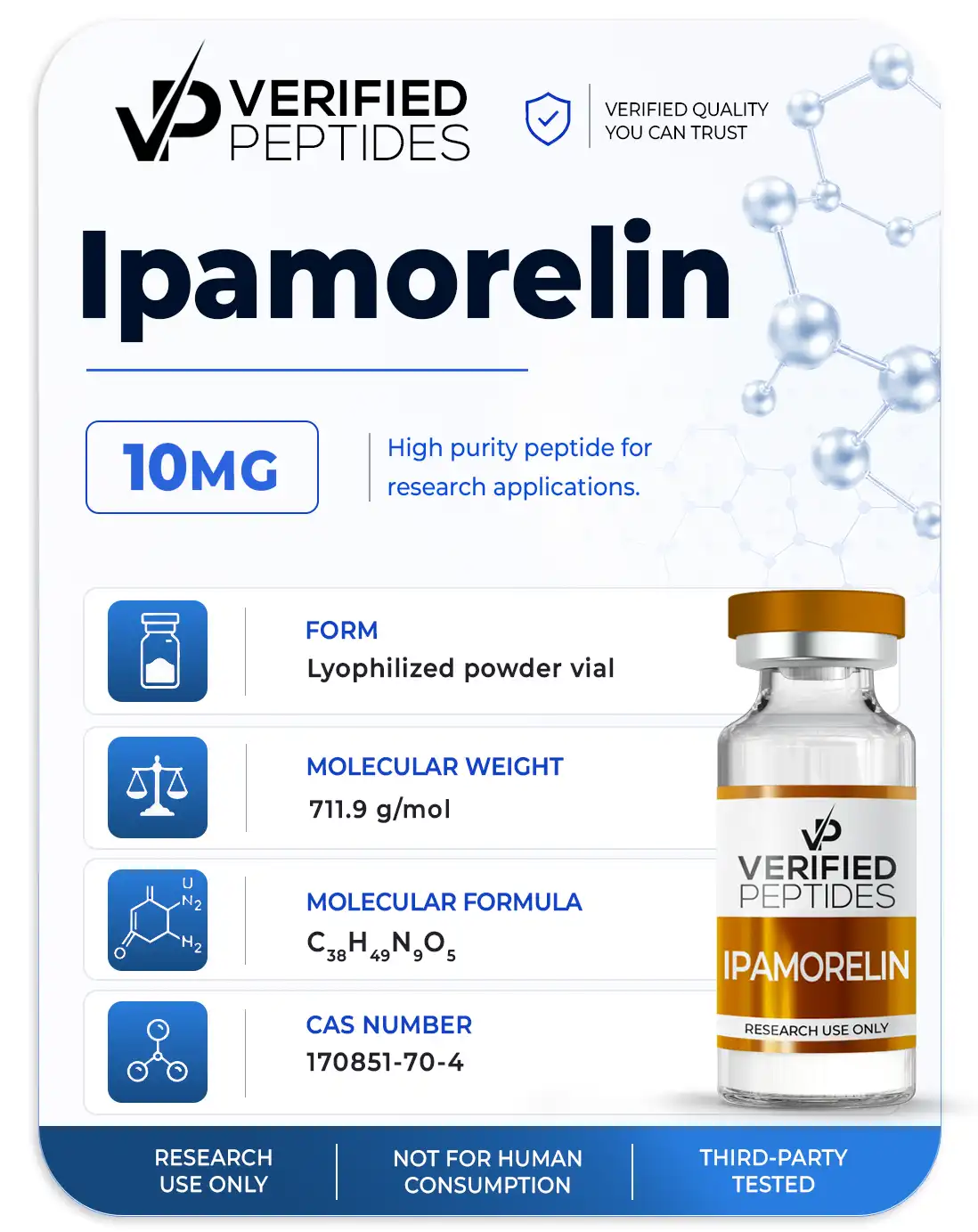
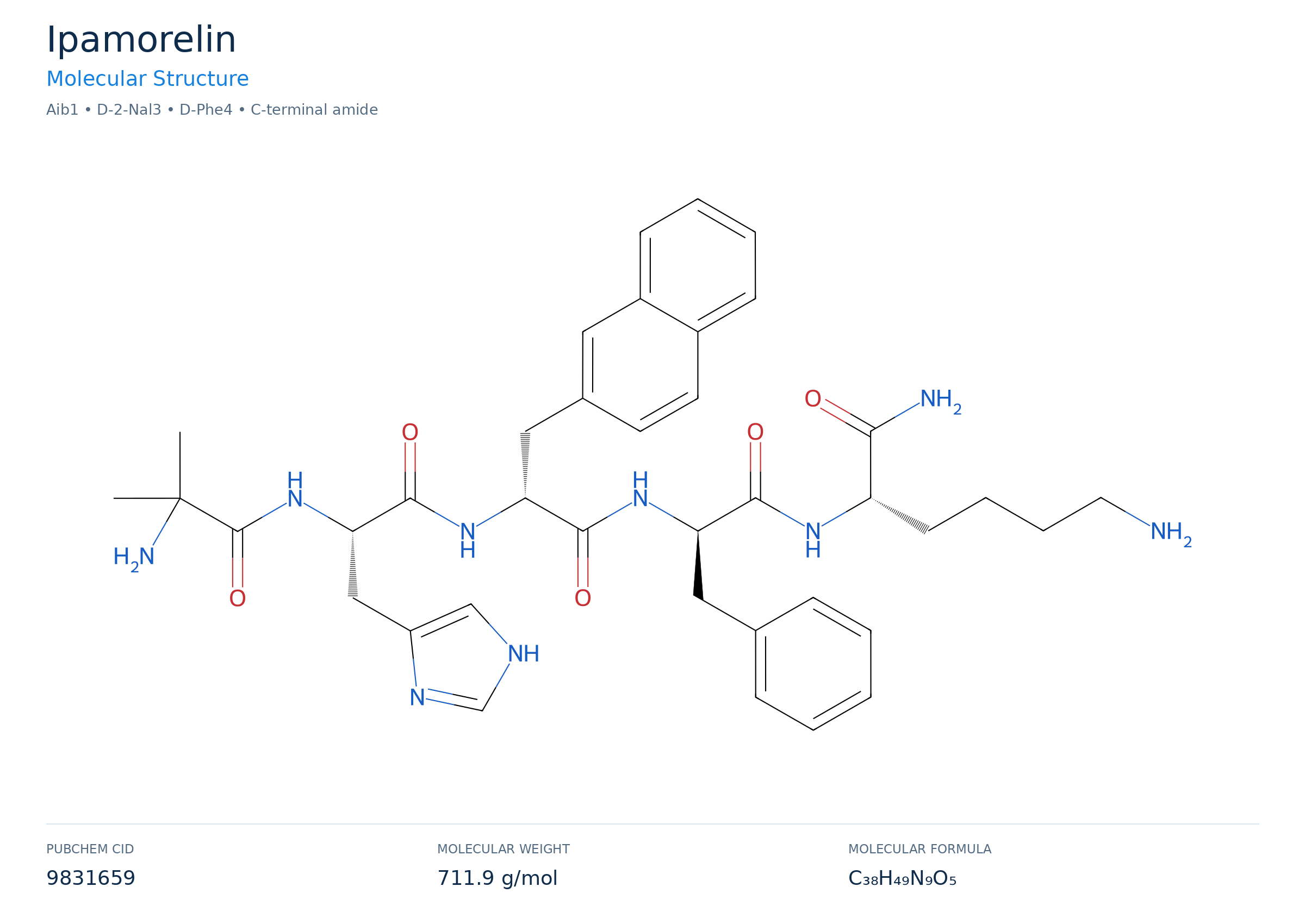
Ipamorelin (CAS 170851-70-4) is a research peptide with the molecular formula C38H49N9O5 and a molecular weight of 711.85296 g/mol.
| Form: | Powder (lyophilized) |
|---|---|
| Weight: | 10mg |
| Appearance: | White lyophilized powder |
| CAS Number: | 170851-70-4 |
| Molecular Formula: | C38H49N9O5 |
| Molecular Weight: | 711.85296 g/mol |
| PubChem CID: | 9831659 |
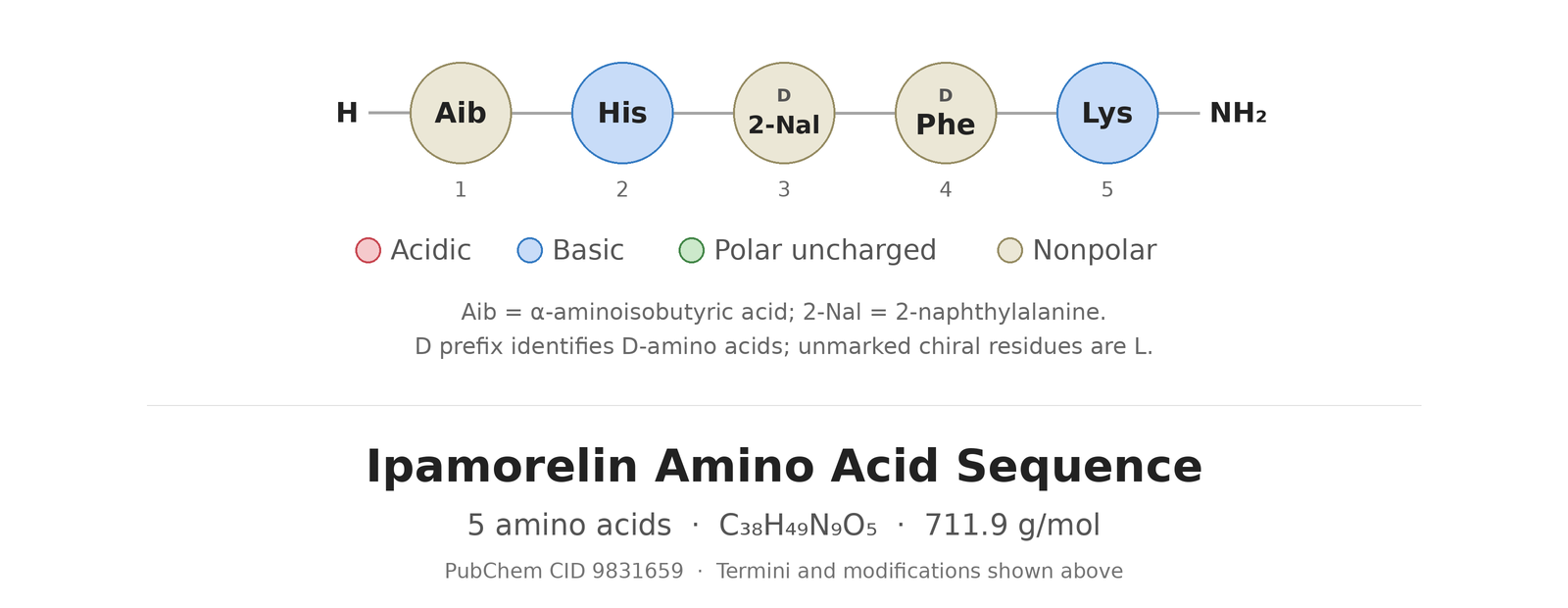
| Sequence: | Aib-His-D-2-Nal-D-Phe-Lys-NH2 |
| Other Names: | Ipamorelin Acetate, IPAM |
| Terms: | Subject to our Terms and Conditions. This material is sold for laboratory research use only. Not for human consumption, animal, or medical use. |
Ipamorelin Molecular Structure
Ipamorelin Amino Acid Sequence

The industry's most trusted source for research peptides
The Leader In Peptide Testing
500+ Certificates of Analysis
You can be sure we don't cut corners on testing every single batch.
Visit our Lab Reports page.
An Established, Trusted Company
6+ Years of Peptides
We pioneered third party lab testing and have stood the test of time. Our first lab report dates back to 2019 proving our track record.
Fair market pricing
Competitively priced cost per milligram for verified quality.
Peptides Tested For More Than Purity
We conduct an array of analytical testing for our peptides:
purity, weight, endotoxins(LPS), sterility (bacteria & mold/yeast), and TFA content.
Transparent. Consistent. Reliable.
- Batch number on every vial
- Published Certificates of Analysis
- Expert customer service
- Satisfaction and quality guarantee
- Cold pack foam-lined shipping
Explore Other High-Purity Peptides
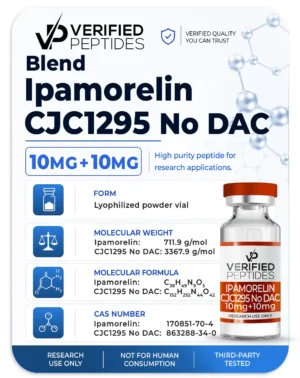
Peptide Blends
Price range: $65.00 through $107.00
Peptides
$49.99
Peptides
$44.99
Peptides
$62.00
Peptides
$119.00
Peptides
Price range: $43.00 through $77.00
Peptides
$34.99
Hear What Our Customers Say
Trusted by thousands of researchers for high-quality peptides

This is a first class operation. Quality products and the best customer service. There may be many similar type of companies out there, but this one is trusted and affordable. [...] I highly recommend this company.
Verified Peptides is hands down my favorite website for these products. I can always count on the products to be legitimate and effective, all while being affordable. Will continue to give them my business.
Outstanding product, outstanding price, outstanding shipping
What is Ipamorelin?
Ipamorelin is a synthetic pentapeptide (Aib-His-D-2-Nal-D-Phe-Lys-NH₂) developed by Novo Nordisk researchers in the 1990s. It belongs to the growth hormone secretagogues, compounds that stimulate growth hormone (GH) release through the GH-releasing peptide (GHRP) receptor, now known as the ghrelin receptor. It acts separately from the GH-releasing hormone (GHRH) receptor. Researchers have used it in cell and animal studies to examine how selectively a secretagogue can release GH without affecting other pituitary and adrenal hormones.
Ipamorelin Research Studies
Summaries of peer-reviewed research. For research and educational purposes only.
🔬 Peer-Reviewed Study · Rat Cells, Rats and Swine
Ipamorelin Study: Growth Hormone Release and Hormonal Selectivity in Rat Pituitary Cells, Rats and Swine (Raun et al., European Journal of Endocrinology, 1998)
Overview of the Ipamorelin Study
This 1998 paper in the European Journal of Endocrinology (Raun et al., Novo Nordisk) describes the discovery and pharmacology of ipamorelin. The researchers compared ipamorelin with the reference secretagogues GHRP-6 and GHRP-2, and with GHRH, in three systems:
- Cultured rat pituitary cells
- Anesthetized rats
- Conscious swine
The swine experiments also measured other pituitary and adrenal hormones to test how selective each compound was for GH.
Scope: This was a laboratory and animal pharmacology study. It did not test ipamorelin in people.
Ipamorelin Study at a Glance
- Citation: Raun K, Hansen BS, Johansen NL, et al. Eur J Endocrinol. 1998;139(5):552–561.
- Study type: Discovery and pharmacology (in vitro and in vivo)
- In vitro: Primary rat pituitary cells
- Rats: Male Sprague-Dawley rats under pentobarbital anesthesia, 6 rats per dose level, given an intravenous bolus
- Swine: Conscious female Landrace × Yorkshire swine (about 40 kg), 6 per compound, given an intravenous bolus
- Comparators: GHRP-6, GHRP-2 and GHRH
- Hormones measured in swine: GH, ACTH, cortisol, FSH, LH, prolactin (PRL) and TSH
- Authors: Novo Nordisk A/S researchers
Background: Growth Hormone Secretagogues
GH is released from the pituitary in pulses. It is controlled mainly by two hypothalamic peptides: GHRH, which stimulates release, and somatostatin, which inhibits it. A third system, the GHRP receptor, can also trigger GH release.
Earlier GHRPs, such as GHRP-6 and GHRP-2, released GH strongly in animals. They also raised ACTH and cortisol, the stress-axis hormones. The Novo Nordisk program aimed to find a GHRP-receptor agonist that releases GH with the selectivity of GHRH itself.
Development and Chemistry of Ipamorelin
Ipamorelin came from a chemistry series built on GHRP-1, with the central dipeptide Ala-Trp removed. Replacing the N-terminal L-alanine of an earlier analog with Aib (α-aminoisobutyric acid) restored GH-releasing potency and efficacy in vitro and in vivo.
The peptide was made by solid-phase synthesis and purified by reverse-phase HPLC. Its identity was confirmed by NMR and mass spectrometry. It was handled as a water-soluble trifluoroacetate salt with measured pKa values of 10.3, 7.8 and 6.2.
In Vitro Results in Rat Pituitary Cells
In primary rat pituitary cells, ipamorelin released GH with potency and efficacy similar to GHRP-6. The EC₅₀ was about 1.3 nmol/L for ipamorelin and 2.2 nmol/L for GHRP-6, and the maximal response was about 85% of GHRP-6's.
Tests with receptor antagonists showed that ipamorelin, like GHRP-6, acted through a GHRP-like receptor rather than the GHRH receptor.
In Vivo GH Release in Rats and Swine
Anesthetized rats: Ipamorelin released GH with potency and efficacy comparable to GHRP-6. The ED₅₀ was about 80 nmol/kg for ipamorelin and 115 nmol/kg for GHRP-6. Peak GH was about 1,545 ng/mL and 1,167 ng/mL, respectively.
Conscious swine: Ipamorelin released GH with an ED₅₀ of about 2.3 nmol/kg and a maximal plasma GH of about 65 ng/mL. GHRP-6 was very similar, at 3.9 nmol/kg and 74 ng/mL. GHRP-2 was more potent (ED₅₀ about 0.6 nmol/kg) but reached a lower maximum (about 56 ng/mL).
Hormonal Selectivity in Swine
In swine, none of the secretagogues changed FSH, LH, prolactin or TSH. GHRP-6 and GHRP-2 both increased plasma ACTH and cortisol. Ipamorelin did not raise ACTH or cortisol beyond the levels seen after GHRH. This held even at doses more than 200 times the ED₅₀ for GH release.
The authors described ipamorelin as the first GHRP-receptor agonist with GH selectivity similar to GHRH.
Hormonal selectivity of ipamorelin compared with GHRP-6, GHRP-2 and GHRH in swine (Raun et al., 1998)

Limitations and Research Context
- The study measured acute hormone responses after a single intravenous bolus. It did not examine repeated administration or long-term outcomes.
- Rat experiments were done under anesthesia, which can affect hormone release.
- Selectivity was tested in one species (swine), with 6 animals per compound.
- The study was conducted by the company developing the compound.
- Animal pharmacology does not establish effects, safety or dosing in people.
Conclusion
Raun et al. (1998) reported that ipamorelin released GH through a GHRP-like receptor, with potency and efficacy similar to GHRP-6 in rat pituitary cells, anesthetized rats and conscious swine. Unlike GHRP-6 and GHRP-2, it did not raise ACTH or cortisol beyond GHRH-like levels in swine, even at more than 200 times its GH ED₅₀. FSH, LH, prolactin and TSH were unaffected.
This summary is provided for research and educational purposes. Statements on this page have not been evaluated by the FDA. Research compounds offered on this site are for laboratory research use only. They are not intended for human or veterinary use, or to diagnose, treat, cure, mitigate or prevent any disease.
Frequently Asked Questions
What is ipamorelin?
Ipamorelin is a synthetic pentapeptide (Aib-His-D-2-Nal-D-Phe-Lys-NH₂) that acts on the GHRP (ghrelin) receptor to stimulate GH release. It was described by Novo Nordisk researchers in 1998.
What did the 1998 ipamorelin study find?
Ipamorelin released GH with potency and efficacy similar to GHRP-6 in rat pituitary cells, anesthetized rats and conscious swine. In swine, it did not raise ACTH or cortisol beyond GHRH-like levels, unlike GHRP-6 and GHRP-2.
How does ipamorelin compare with GHRP-6 and GHRP-2?
Its GH-releasing potency and efficacy were similar to GHRP-6. GHRP-2 was more potent in swine but reached a lower maximum GH level. Both GHRP-6 and GHRP-2 increased ACTH and cortisol, and ipamorelin did not.
Which hormones did ipamorelin leave unchanged in swine?
FSH, LH, prolactin and TSH were unaffected by all secretagogues tested. ACTH and cortisol after ipamorelin were not significantly different from levels after GHRH, even at more than 200 times the ED₅₀ for GH release.
Does ipamorelin act through the GHRH receptor?
No. In rat pituitary cell experiments with receptor antagonists, ipamorelin's effect was consistent with action through a GHRP-like receptor rather than the GHRH receptor.
Study Reference
Raun K, Hansen BS, Johansen NL, Thøgersen H, Madsen K, Ankersen M, Andersen PH. Ipamorelin, the first selective growth hormone secretagogue. Eur J Endocrinol. 1998;139(5):552–561. doi:10.1530/eje.0.1390552
https://pubmed.ncbi.nlm.nih.gov/9849822/
IN THE KNOW
Join over 5,000 active members and get updates on new arrivals and latest lab reports.