
Tesofensine (400 mcg, 60 units)

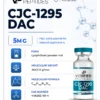


CJC-1295 DAC Peptide (5MG)
This batch of CJC-1295 DAC has been third party lab tested and verified for quality.

TESTED FOR:

purity
weight
TFA FREE
sterility
endotoxins(lps)
$41.99
| Quantity | Price | |
|---|---|---|
| 0% | 1 - 4 | $41.99 |
| 10% | 5 - 9 | $37.79 |
| 20% | 10 - 19 | $33.59 |
| 30% | 20 + | $29.39 |
This product comes as lyophilized powder and is not reconstituted. All products and materials sold on this site are for Research Use Only and not for human use; subject to our Terms and Conditions.

2-Day Shipping
Order by 2:00 PM ET

INSULATED SHIPPING
Ice foam-box shipping available
| Peptide vial specifications | Results | |
|---|---|---|
Not reconstituted | ||
Bottle type: | Vial - sealed - flip top | |
Form: | Powder (lyophilized) | |
Vial size: | 3ML | |
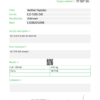
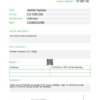
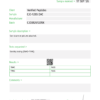
CJC-1295 DAC Certificate of Analysis (COA) Test Result
| Date Tested: | |
|---|---|
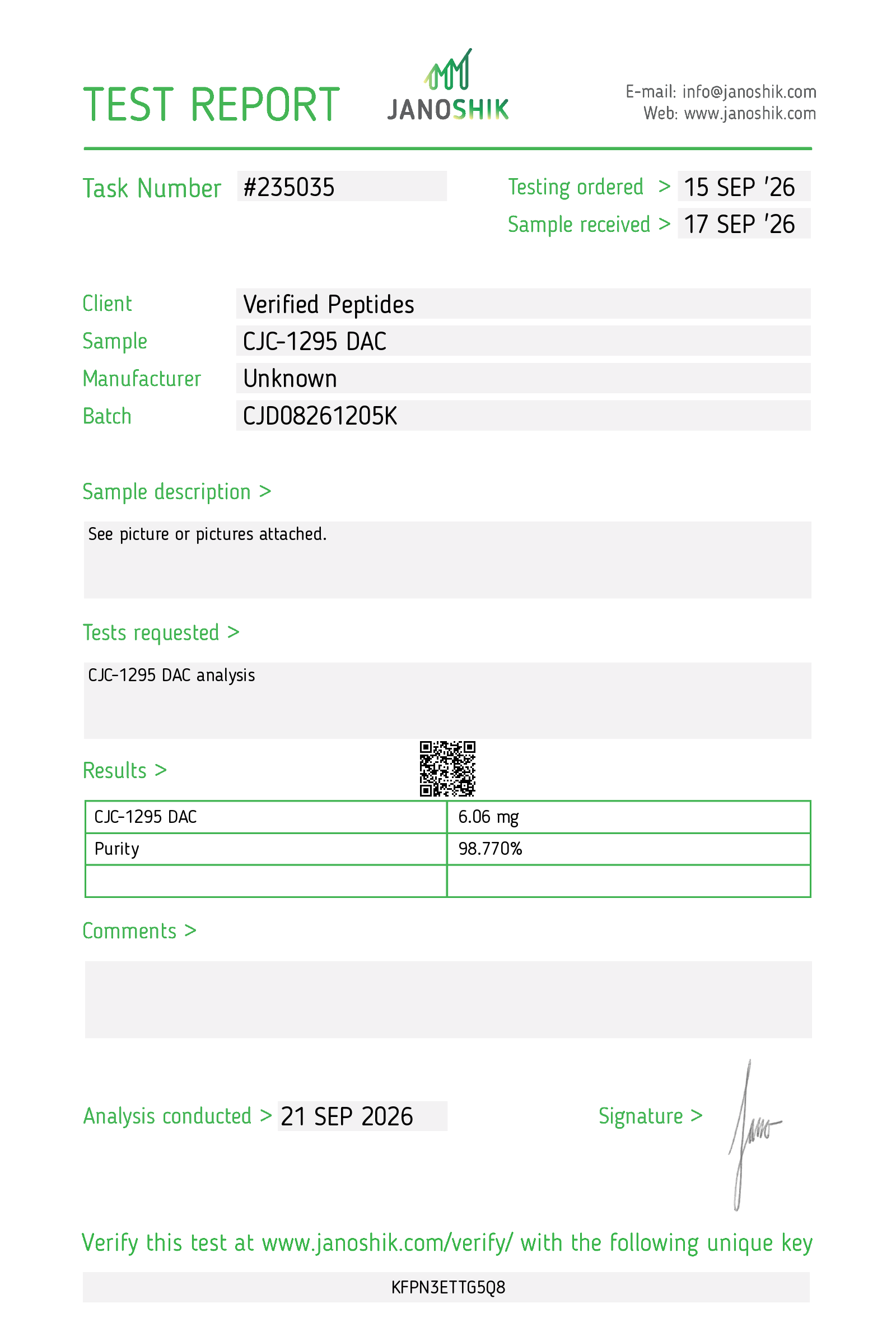
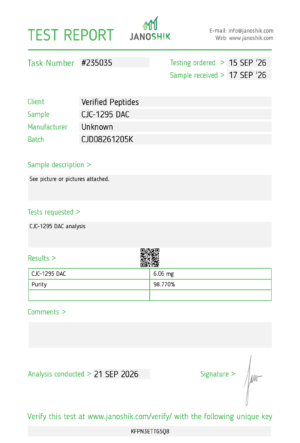
| Purity: | 98.770% |
| Weight: | 6.06mg |
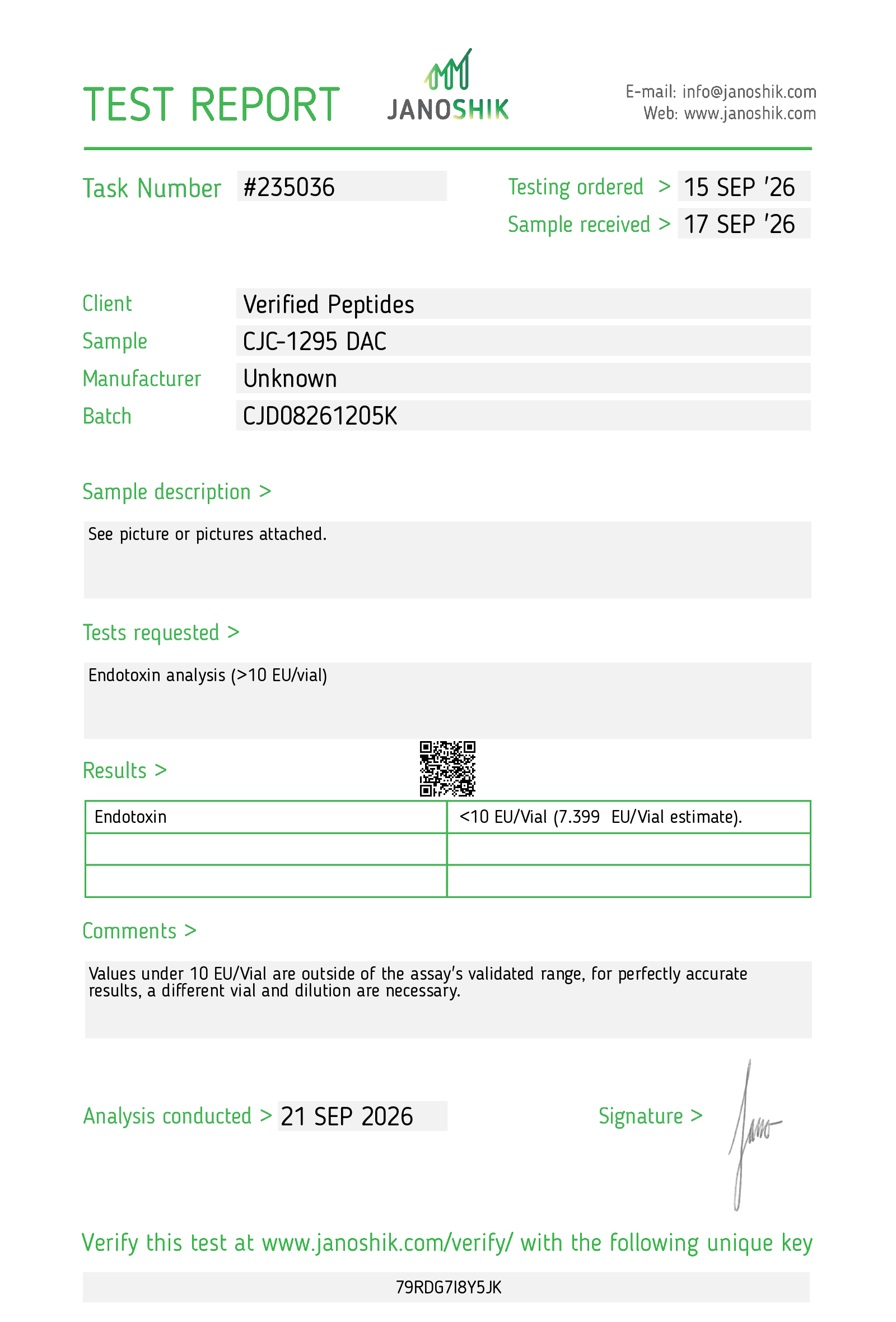
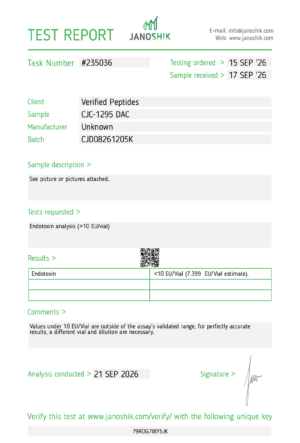
| Endotoxins (LPS): | Pass |
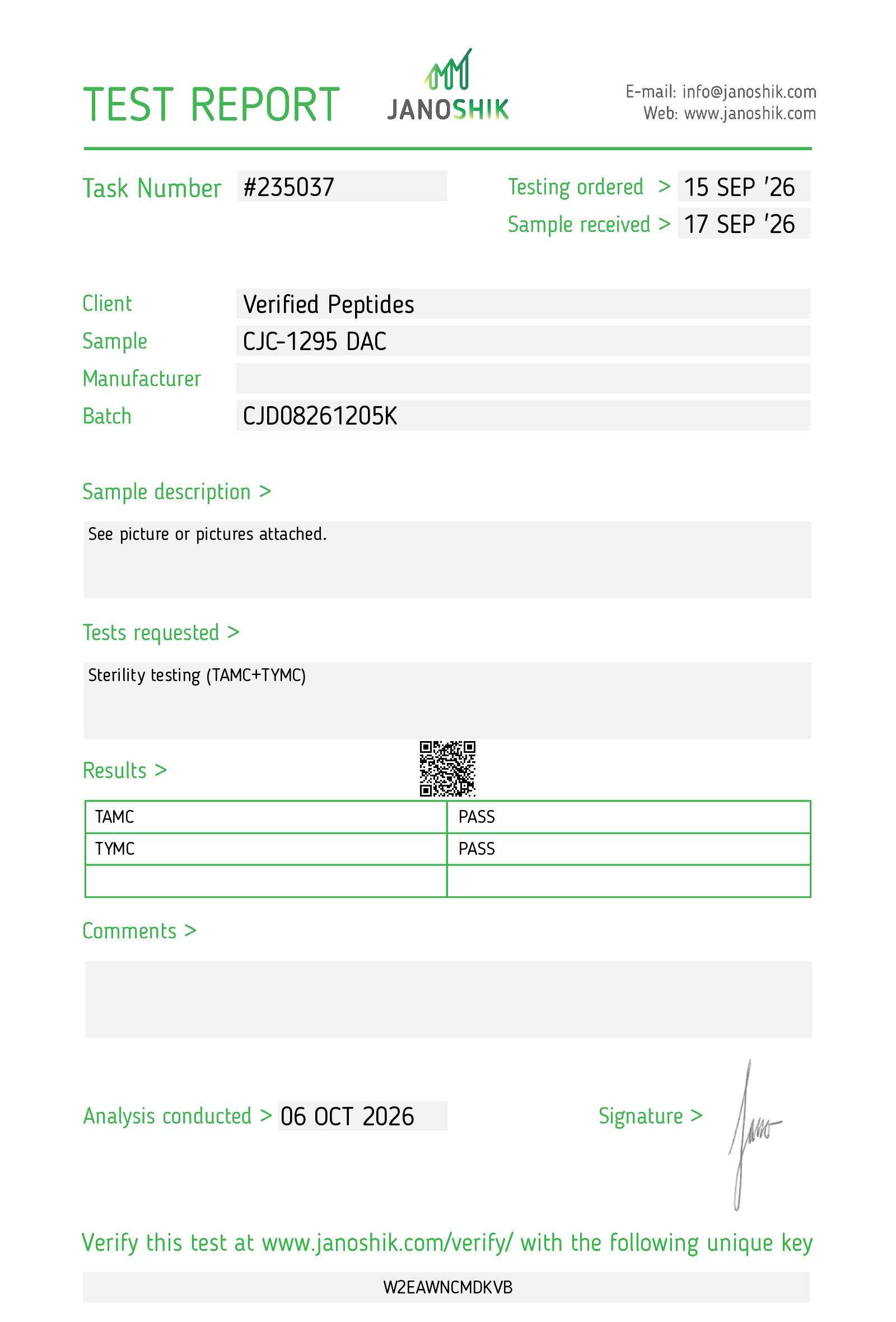
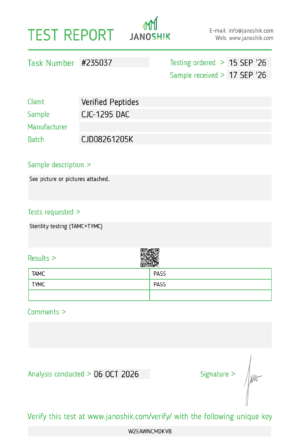
| Sterility: | Pass |
| TFA: | Not detected |
| Batch #: | CJD08261205K |
| Testing Lab: | Janoshik |
| COA Verified Link: | Purity Report Endotoxin Report |
| Testing Methods: | HPLC, LAL, TAMC/YAMC USP <71> |
CJC-1295 with DAC Specifications: Molecular Weight, CAS Number & Sequence
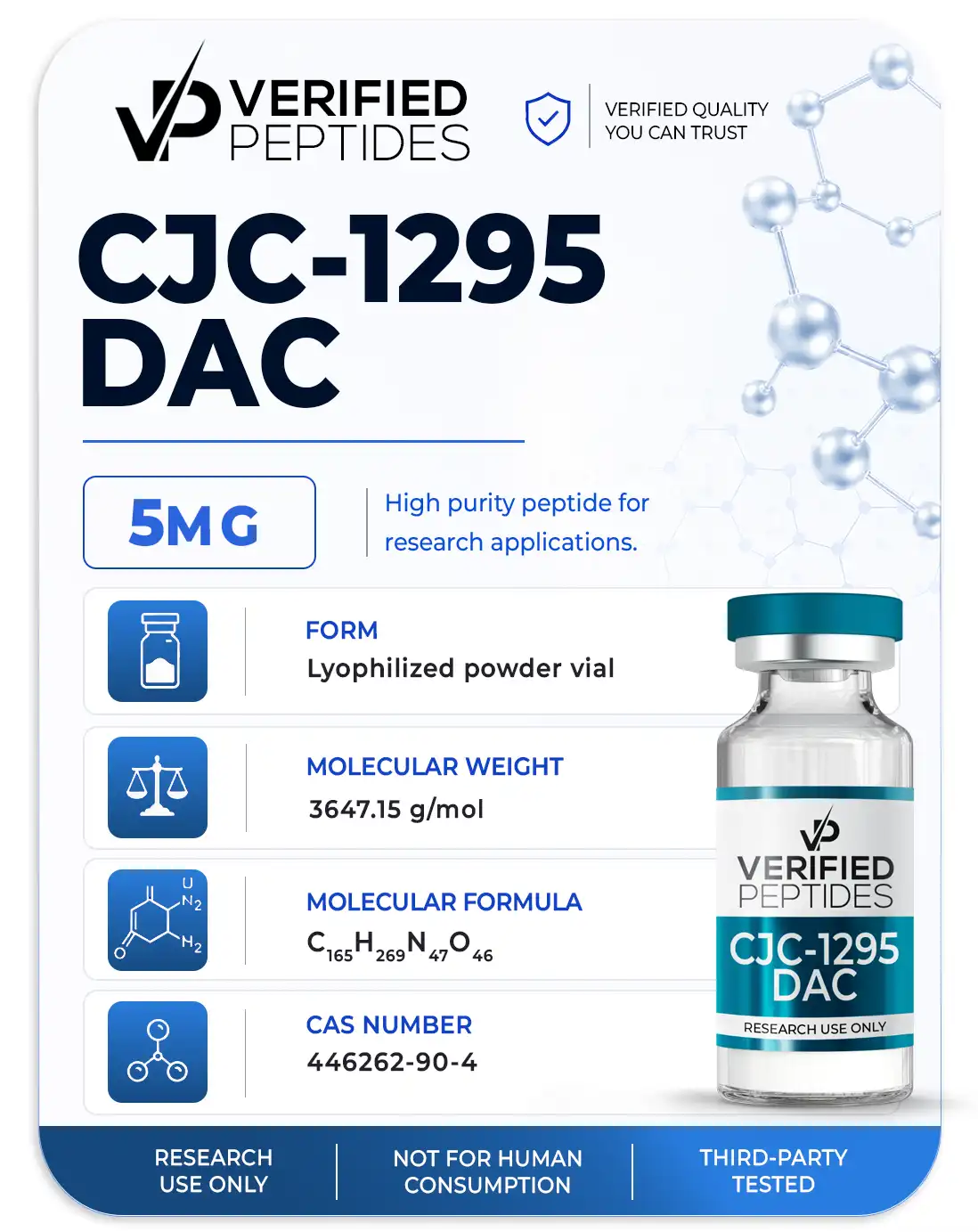
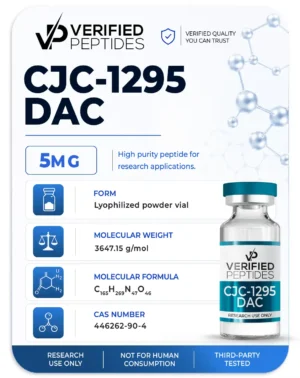
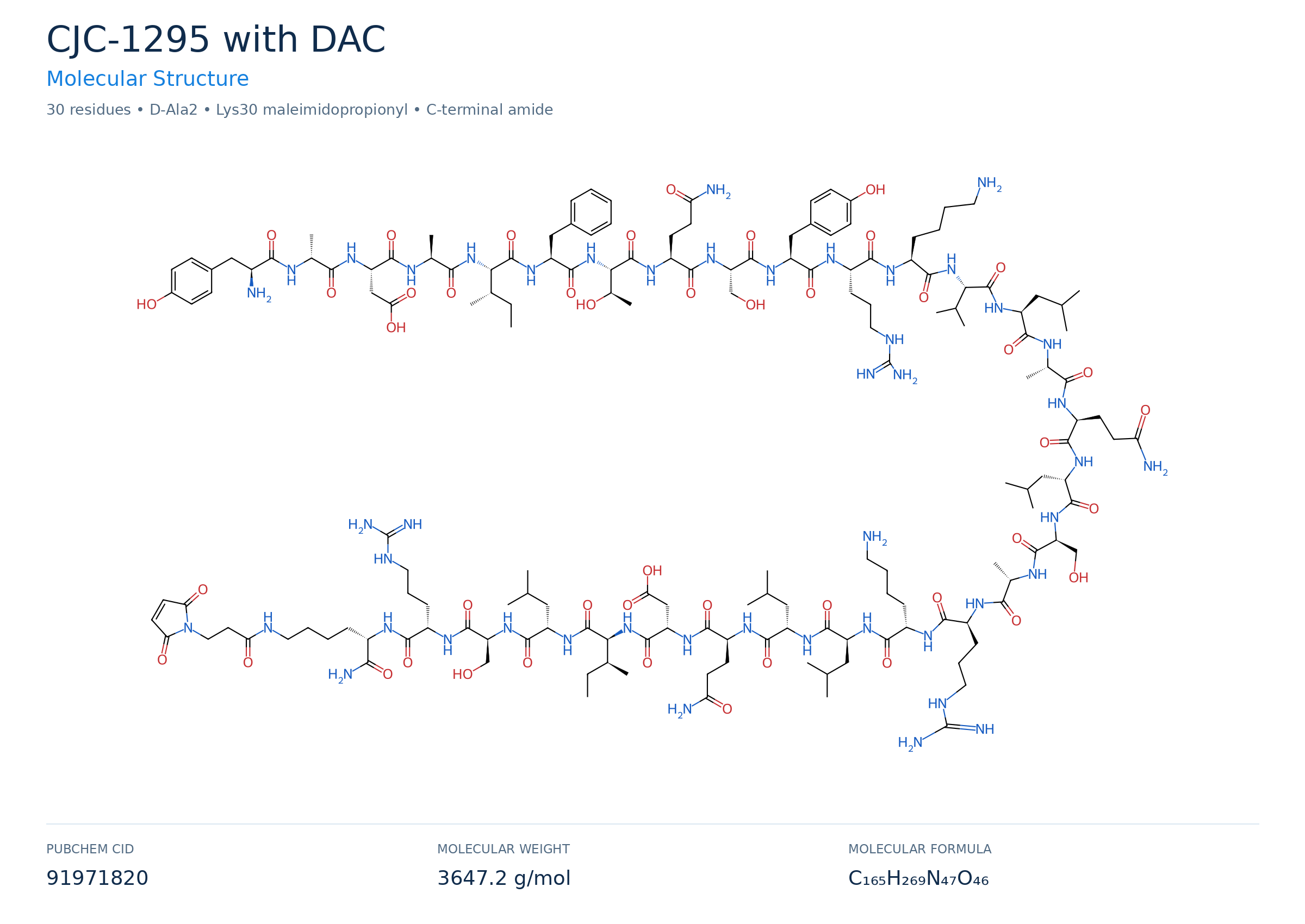
CJC-1295 with DAC (CAS 446262-90-4) is a research peptide with the molecular formula C165H269N47O46 and a molecular weight of 3647.25 g/mol.
| Form: | Powder (lyophilized) |
|---|---|
| Weight: | 5mg |
| Appearance: | White lyophilized powder |
| CAS Number: | 446262-90-4 |
| Molecular Formula: | C165H269N47O46 |
| Molecular Weight: | 3647.25 g/mol |
| PubChem CID: | 91971820 |
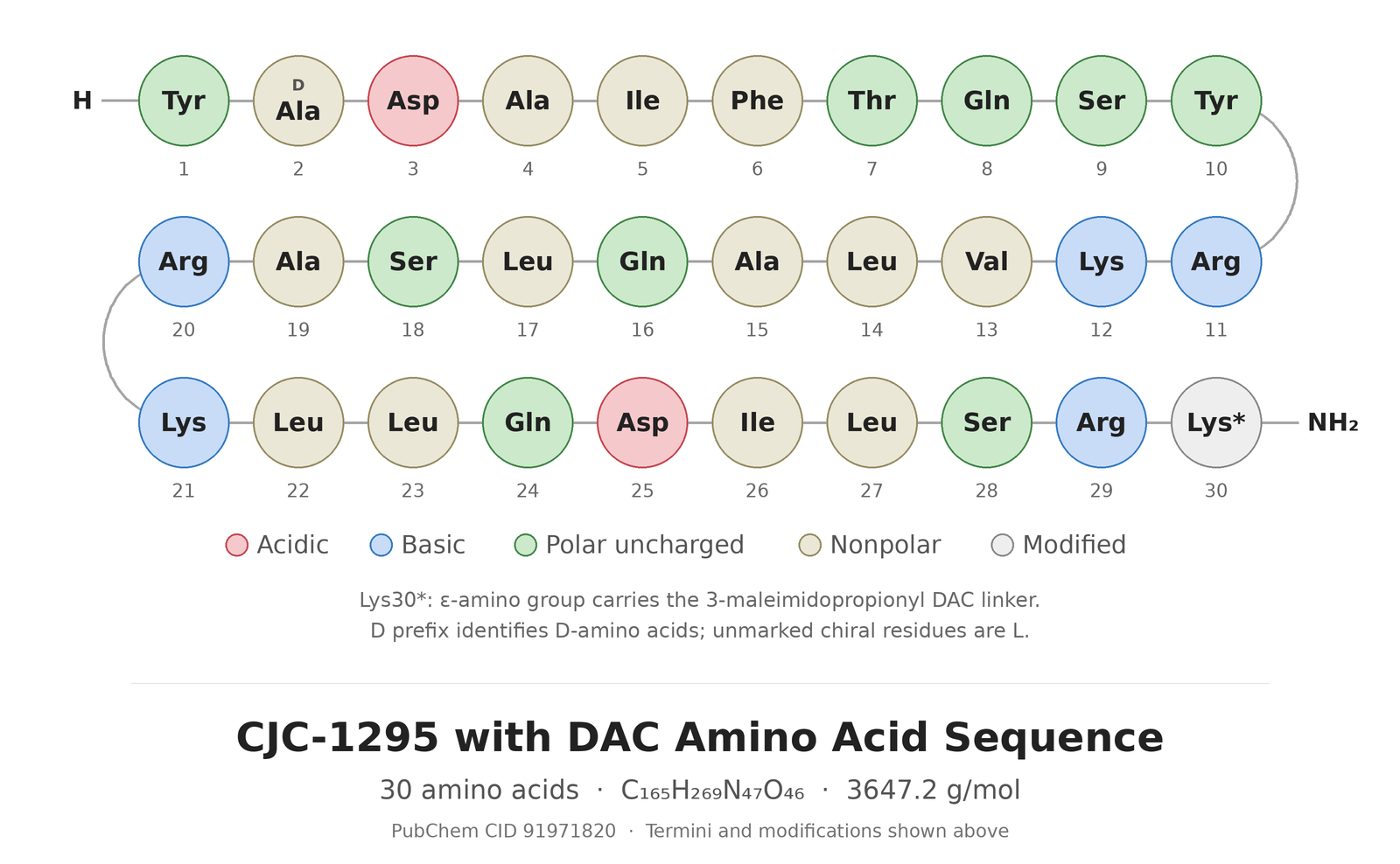
| Sequence: | Tyr-D-Ala-Asp-Ala-Ile-Phe-Thr-Gln-Ser-Tyr-Arg-Lys-Val-Leu-Ala-Gln-Leu-Ser-Ala-Arg-Lys-Leu-Leu-Gln-Asp-Ile-Leu-Ser-Arg-Lys(Maleimidopropionyl)-NH2 |
| Other Names: | CJC1295, CJC-1295 with DAC, CJC-1295 DAC, DAC:GRF |
| Terms: | Subject to our Terms and Conditions. This material is sold for laboratory research use only. Not for human consumption, animal, or medical use. |
CJC-1295 DAC Molecular Structure
CJC-1295 DAC Amino Acid Sequence

The industry's most trusted source for research peptides
The Leader In Peptide Testing
500+ Certificates of Analysis
You can be sure we don't cut corners on testing every single batch.
Visit our Lab Reports page.
An Established, Trusted Company
6+ Years of Peptides
We pioneered third party lab testing and have stood the test of time. Our first lab report dates back to 2019 proving our track record.
Fair market pricing
Competitively priced cost per milligram for verified quality.
Peptides Tested For More Than Purity
We conduct an array of analytical testing for our peptides:
purity, weight, endotoxins(LPS), sterility (bacteria & mold/yeast), and TFA content.
Transparent. Consistent. Reliable.
- Batch number on every vial
- Published Certificates of Analysis
- Expert customer service
- Satisfaction and quality guarantee
- Cold pack foam-lined shipping
Explore Other High-Purity Peptides
Peptide Blends
Price range: $65.00 through $107.00
Peptides
$49.99
Peptides
$44.99
Peptides
$62.00
Peptides
$119.00
Peptides
Price range: $43.00 through $77.00
Peptides
$34.99
Hear What Our Customers Say
Trusted by thousands of researchers for high-quality peptides

This is a first class operation. Quality products and the best customer service. There may be many similar type of companies out there, but this one is trusted and affordable. [...] I highly recommend this company.
Verified Peptides is hands down my favorite website for these products. I can always count on the products to be legitimate and effective, all while being affordable. Will continue to give them my business.
Outstanding product, outstanding price, outstanding shipping
What is CJC-1295?
CJC-1295 is a synthetic analog of growth hormone-releasing hormone (GHRH), developed by ConjuChem. It carries a reactive chemical group, known as a drug affinity complex (DAC), that lets it bind covalently to albumin in the blood after it is administered. The binding extends its half-life compared with native GHRH, which is cleared within minutes. Researchers have used CJC-1295 in animal studies of the GHRH–GH–IGF-I axis.
CJC-1295 Research Studies
Summaries of peer-reviewed research. For research and educational purposes only.
📚 Peer-Reviewed Study · Knockout Mouse Model
CJC-1295 Study in GHRH Knockout Mice: Growth, Body Composition and Pituitary Response (Alba et al., American Journal of Physiology, 2006)
Overview of the CJC-1295 Study
This 2006 study in the American Journal of Physiology – Endocrinology and Metabolism (Alba et al., Johns Hopkins University, with co-authors from ConjuChem) tested CJC-1295 in mice lacking the GHRH gene (GHRHKO mice). These mice have an underdeveloped pituitary, few GH-producing cells (somatotrophs) and reduced growth.
Young knockout mice received CJC-1295 at three different dosing intervals for 5 weeks. The researchers compared them with placebo-treated knockout mice and with heterozygous littermates that grow normally. They measured growth, body composition, pituitary GH and prolactin expression, pituitary histology and serum IGF-I.
Scope: This was a study in genetically modified mice. It did not test CJC-1295 in people.
CJC-1295 Study at a Glance
- Citation: Alba M, Fintini D, Sagazio A, et al. Am J Physiol Endocrinol Metab. 2006;291(6):E1290–E1294.
- Animals: Male GHRH knockout mice (C57BL/6–SV129 background), treated from 1 week of age, plus heterozygous littermate controls
- Groups: CJC-1295 every 24 h (n = 8), every 48 h (n = 8), every 72 h (n = 7), knockout placebo (n = 8), and heterozygous placebo
- Administration in the study: Subcutaneous, for 5 weeks
- Measurements: Body weight, nose-to-anus length, femur and tibia length, lean and fat mass, pituitary RNA, GH and prolactin mRNA, GH protein, immunohistochemistry, serum IGF-I
- Disclosure: Two authors were affiliated with ConjuChem, the developer of CJC-1295.
Background: GHRH and the GHRH Knockout Mouse
GHRH is a 44-amino-acid hypothalamic peptide that stimulates GH release and the growth of somatotroph cells in the pituitary. Its activity comes from the 1–29 N-terminal region. Native GHRH has a very short half-life, so earlier animal studies needed repeated daily doses or infusion pumps.
In earlier work, the same group found that a potent GHRH analog given twice daily only partly corrected growth in GHRHKO mice. This study asked whether a longer-acting, albumin-binding analog could correct the growth phenotype, and how the interval between doses affected the result.
Experimental Design and Methodology
Three groups of 1-week-old GHRHKO mice received the same amount of CJC-1295 (2 µg per dose, as reported in the paper) every 24, 48 or 72 hours for 5 weeks. Placebo-treated knockout and heterozygous mice received daily vehicle. Because each group received the same amount per dose, the 48- and 72-hour groups received one-half and one-third as much in total.
At the end of treatment, mice in each group were euthanized 24, 48 or 72 hours after their last dose. The researchers then measured:
- Final body weight, nose-to-anus length, and femur and tibia length
- Lean mass, visceral fat and subcutaneous fat as a percentage of body weight
- Total pituitary RNA, GH and prolactin mRNA (Northern blot) and GH protein (Western blot)
- GH-positive cells by immunohistochemistry
- Serum IGF-I by radioimmunoassay
What Did the CJC-1295 Study Find? Growth and Body Composition
Every 24 hours: Knockout mice reached body weight, nose-to-anus length, and femur and tibia lengths similar to heterozygous controls.
Every 48 hours: Body weight and length were greater than in placebo knockout mice but remained below controls. Femur and tibia length were similar to controls.
Every 72 hours: Growth measures were greater than in placebo knockout mice, but none reached control levels.
Relative lean mass and subcutaneous fat mass were similar to controls in all three treated groups. Visceral fat did not differ among the five groups. The authors reported no evidence of local or systemic toxicity in the treated mice.
Pituitary Results
Compared with placebo knockout mice, total pituitary RNA rose 13-fold, 9-fold and 7-fold in the 24-, 48- and 72-hour groups. GH mRNA rose 11-fold, 8-fold and 6-fold. Adjusted for total amount given, the GH mRNA increases were similar across groups. GH protein also increased.
Immunohistochemistry showed larger pituitaries and more GH-positive cells in all treated groups. Prolactin mRNA rose much less (about 2.3–2.5-fold), and there was no clear change in prolactin-producing cell mass.
Serum IGF-I Results
Serum IGF-I was measured at the end of each group's interval. The 24-hour group had significantly higher IGF-I than heterozygous controls. IGF-I in the 48- and 72-hour groups was not significantly different from placebo knockout mice, even though their growth measures had improved. The authors noted that similar mismatches between IGF-I and growth have been reported before.
Authors' Interpretation
The authors attributed the weaker effect at longer intervals to two factors. First, mouse albumin has a short half-life (about 20–24 hours), so little CJC-1295 likely remained after a day. Second, the longer-interval groups received less in total. They also suggested that body composition may respond at lower GH activity than longitudinal bone growth does.
Limitations and Research Context
- Groups were small (7–8 mice), all male, and treatment lasted 5 weeks in very young mice.
- The GHRH knockout mouse is a specific genetic model of GHRH deficiency.
- Albumin half-life differs between species, so the timing results are specific to mice.
- IGF-I was measured once, at a different time after the last dose in each group.
- Two authors were affiliated with the compound's developer.
- Mouse findings do not establish effects, safety or dosing in people.
Conclusion
Alba et al. (2006) found that CJC-1295, an albumin-binding GHRH analog, given every 24 hours for 5 weeks, brought growth measures in GHRH knockout mice to control levels and increased pituitary GH expression and GH-cell numbers. Longer intervals between doses produced partial effects on growth, while lean and subcutaneous fat proportions were similar to controls in all treated groups.
This summary is provided for research and educational purposes. Statements on this page have not been evaluated by the FDA. Research compounds offered on this site are for laboratory research use only. They are not intended for human or veterinary use, or to diagnose, treat, cure, mitigate or prevent any disease.
Frequently Asked Questions
What is CJC-1295?
CJC-1295 is a synthetic GHRH analog with a drug affinity complex (DAC) that binds covalently to albumin after it is administered. This extends its activity compared with native GHRH.
What did the 2006 CJC-1295 knockout mouse study find?
In GHRH knockout mice treated for 5 weeks from 1 week of age, CJC-1295 every 24 hours was associated with body weight, length and bone length similar to normal littermates. It also increased pituitary GH mRNA by 11-fold and GH-cell numbers.
What is a GHRH knockout (GHRHKO) mouse?
It is a mouse with the GHRH gene disrupted. These mice have an underdeveloped pituitary with few somatotroph cells, reduced growth and altered body composition. Researchers use them to study the GHRH–GH axis.
Why did the dosing interval matter in this mouse study?
The authors attributed the weaker effect of 48- and 72-hour intervals to the short half-life of mouse albumin (about 20–24 hours) and to the smaller total amount given to those groups. This explanation is specific to the mouse model.
How does albumin binding affect a GHRH analog?
Native GHRH is cleared within minutes. By binding covalently to circulating albumin, CJC-1295 stays in circulation longer, so its duration depends partly on the half-life of albumin in the species studied.
Study Reference
Alba M, Fintini D, Sagazio A, Lawrence B, Castaigne JP, Frohman LA, Salvatori R. Once-daily administration of CJC-1295, a long-acting growth hormone-releasing hormone (GHRH) analog, normalizes growth in the GHRH knockout mouse. Am J Physiol Endocrinol Metab. 2006;291(6):E1290–E1294. doi:10.1152/ajpendo.00201.2006
https://pubmed.ncbi.nlm.nih.gov/16822960/
IN THE KNOW
Join over 5,000 active members and get updates on new arrivals and latest lab reports.