
An Overview of HPLC Modes for Peptide Separation
Author: Dr. Numan S. Date: November 27, 2025
High-performance liquid chromatography (HPLC) is a cornerstone technique for peptide separation and purification in biochemistry. By exploiting different chemical interactions, HPLC can be configured in various “modes” optimized for separating peptides based on properties like hydrophobicity, charge, or size. Understanding these HPLC modes – and knowing which is best for a given peptide – is critical for achieving high-purity peptide products and reliable analytical results. In this overview, we define the major HPLC modes, discuss their mechanisms, and provide guidance on selecting the right chromatographic approach for peptide separation in research.
What Are HPLC Modes?
HPLC modes refer to the different separation mechanisms or chromatographic strategies that can be employed in an HPLC system. Each mode is defined by the type of stationary phase and the principle by which analytes are retained and eluted. Common HPLC modes include reversed-phase chromatography, normal-phase chromatography, ion-exchange chromatography, size-exclusion chromatography, affinity chromatography, and others. In essence, the HPLC mode dictates how compounds interact with the column. For example, reversed-phase HPLC uses a nonpolar stationary phase and polar mobile phase (the opposite of normal-phase), ion-exchange uses charged resins to separate ions, and size-exclusion uses porous beads to separate molecules by size. By choosing an appropriate mode of chromatography, scientists can target specific peptide properties to achieve effective separation. In practice, reversed-phase HPLC is by far the most widely used mode for peptide purification and analysis, while other modes serve specialized roles.
How to Choose the Right HPLC Mode for Your Peptide
Selecting the optimal HPLC mode for a given peptide or peptide mixture depends on the properties of the peptides and the separation goal. A few guidelines can help researchers choose the right approach:
Start with Reversed-Phase for most peptides: In the majority of cases, RP-HPLC is the first choice for peptide separation and purification. If your peptide is at least moderately hydrophobic or if you need high resolution to distinguish closely related species, a C18 reversed-phase column with a water/acetonitrile (or water/methanol) gradient will typically provide excellent results. RP-HPLC’s broad applicability means it works for a wide range of peptide lengths and sequences. Most peptides in synthetic libraries or protein digests can be separated by RP unless there is a very specific issue (such as extreme hydrophilicity or identical hydrophobicity of variants).
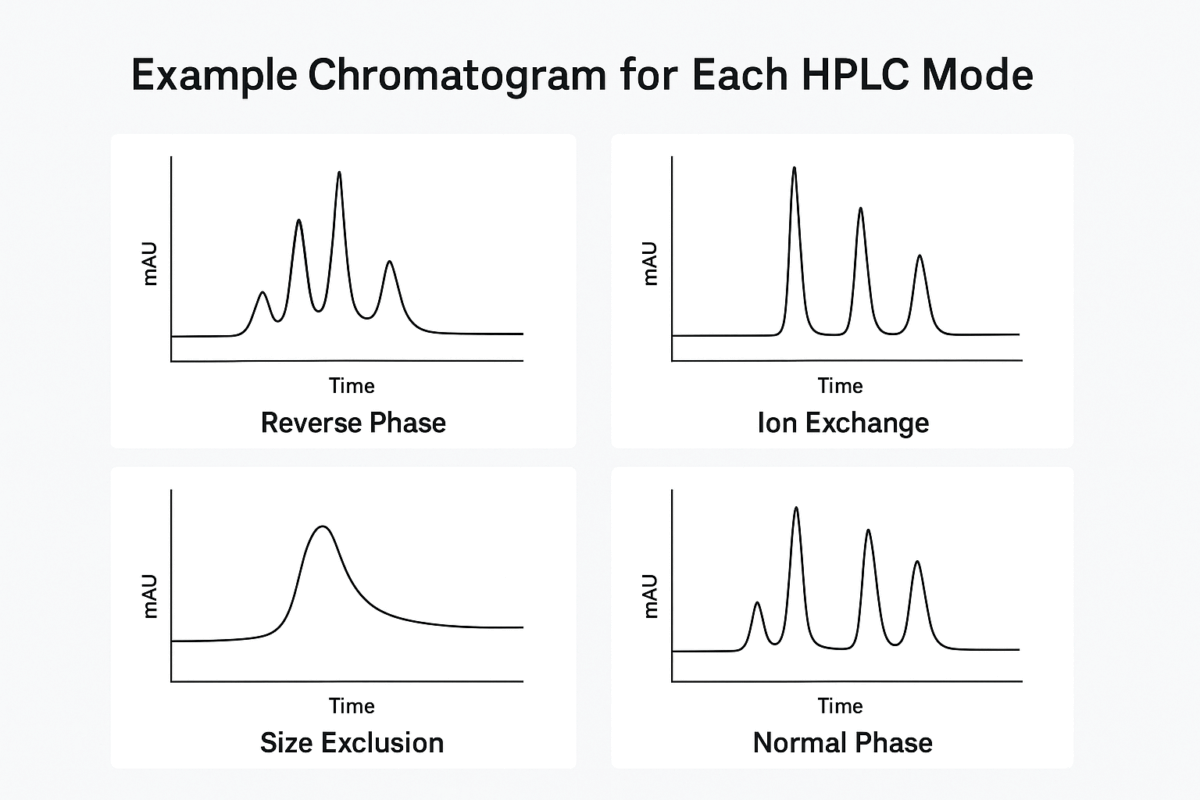
Figure 1: Example Chromatogram for each HPLC mode.
Consider peptide charge and polarity: If a peptide is extremely hydrophilic, highly charged, or if reversed-phase runs show the peptide eluting near the void (no retention), an alternative mode may be warranted. Ion-exchange chromatography should be considered when separating peptides primarily by charge – for example, separating acidic from basic peptide species or resolving peptide variants that differ in net charge (such as different deamidation or phosphorylation states). As a rule of thumb, acidic peptides (with negative charges) are well-suited to anion-exchange columns, whereas basic peptides (with positive charges) are suited to cation-exchange columns [2]. The mobile phase pH is adjusted so that the peptide of interest carries the opposite charge of the stationary phase (ensuring it binds). Ion-exchange is especially useful if you need to isolate a peptide from others that have similar hydrophobicity but different charge. On the other hand, if the peptide is highly polar and neutral (or if it simply doesn’t retain on RP), HILIC can be a smart choice since it will retain very polar peptides that RP-HPLC washes out [4]. For instance, short polar peptides or hydrophilic peptide metabolites might require HILIC to achieve any separation at all.
Use orthogonal methods for challenging separations: Sometimes no single mode is sufficient to obtain the desired purity. In such cases, multiple HPLC modes can be employed in sequence. A common strategy for difficult peptide purifications is to do an initial separation by ion-exchange or SEC (to group peptides by charge or remove large impurities), followed by a second separation of the fractions using RP-HPLC for fine-resolution [2]. This two-dimensional approach can dramatically improve the purity of a target peptide from a complex mixture. The choice of mode thus also depends on where you are in the purification workflow – e.g., ion-exchange might serve as a first capture step to concentrate or group peptides, while reversed-phase serves as the final polishing step to achieve high purity.
In summary, researchers should match the HPLC mode to their peptide’s characteristics: use reversed-phase HPLC in most cases, but switch to ion-exchange for charge-based separation, HILIC for extremely polar peptides, or size-exclusion for situations where molecular size is the primary differentiator. By understanding the strengths of each mode, one can make an informed choice that maximizes separation performance and efficiency.
Key Factors Affecting Separation Performance
Even after choosing an appropriate HPLC mode, the separation performance – resolution, peak shape, and recovery of peptides – is influenced by several key factors. Researchers should keep the following factors in mind, as optimizing them can greatly improve peptide separation results:
Stationary Phase Characteristics: The chemistry and physical properties of the column packing (particle type, pore size, ligand density) determine peptide interactions. For instance, different bonded phases (C4 vs C18, phenyl, etc.) can subtly alter selectivity in RP-HPLC [2], and using a wide-pore column is important for larger peptides or small proteins.
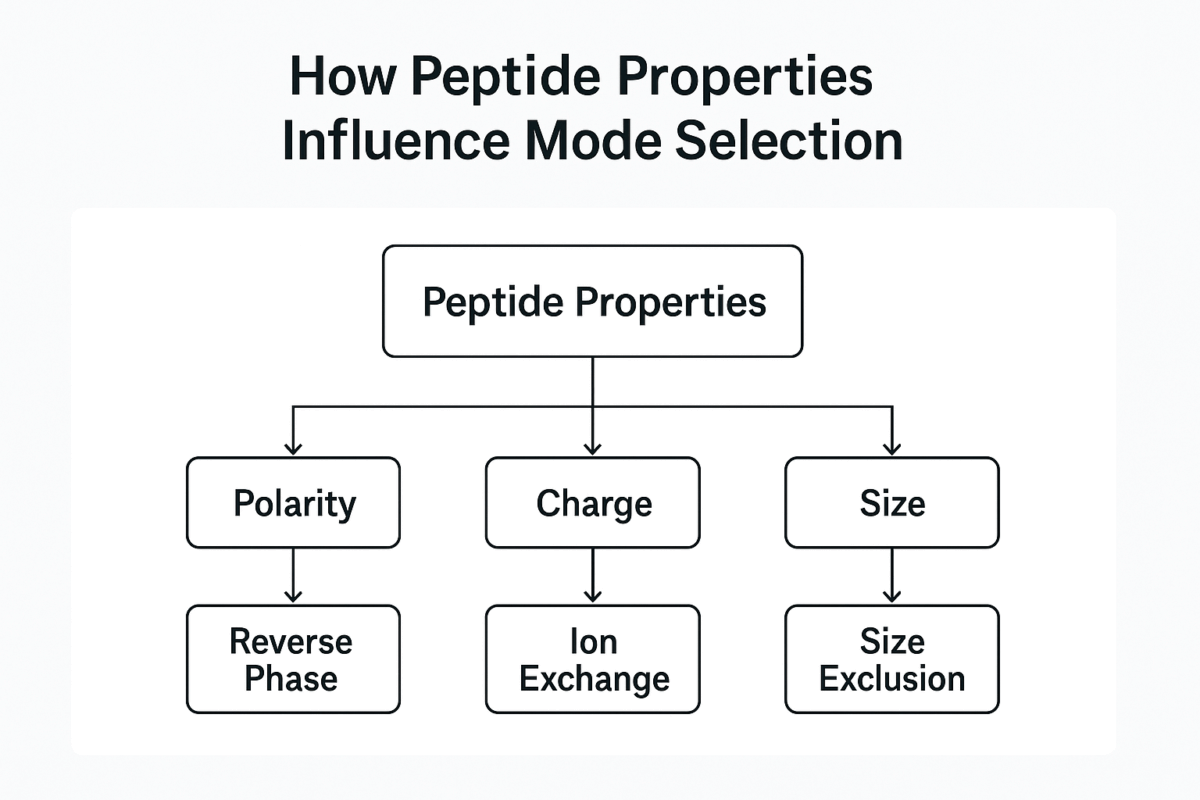
Figure 2: How Peptide Properties Influence Mode Selection
Mobile Phase Composition and pH: The solvents, additives, and pH of the mobile phase directly impact peptide retention and separation. In reversed-phase, the proportion of organic solvent (e.g., acetonitrile) controls elution strength – a steeper gradient can shorten run time but may sacrifice resolution, whereas a shallow gradient can improve separation of similar peptides. The mobile phase pH is especially critical for peptides because it affects the charge state of amino acid residues.
Column Temperature: Temperature has a notable effect on peptide separations. Increasing the column temperature generally decreases overall retention times slightly, but more importantly it can change the selectivity between peptides [3]. In other words, the relative spacing of peptide peaks can shift with temperature – some peptide pairs resolve better at one temperature versus another [1].
Peptide Properties: Every peptide’s unique sequence and structure will influence how it behaves chromatographically. Important peptide-specific factors include hydrophobicity, charge, size, and conformational flexibility. Hydrophobicity (largely dictated by the amino acid composition – e.g., the presence of bulky nonpolar residues like Phe, Leu, Trp) increases retention on RP-HPLC, whereas highly hydrophilic or charged peptides elute earlier.
Flow Rate and Instrument Parameters: The flow rate can impact resolution and peak capacity – lower flow generally improves resolution in HPLC (allowing more time for interactions), though in gradient separations one must also adjust gradient time accordingly to maintain the same separation power. Extremely high flow rates can reduce separation time but at a cost of resolution if not compensated. Detector settings (wavelength for UV, sensitivity) and injection solvent strength (injecting a peptide in a very strong solvent can cause peak broadening or fronting) are additional factors to watch [3].
How Verified Peptides Uses HPLC for Quality Assurance
Quality assurance of research peptides relies heavily on analytical HPLC to verify purity and identity. Verified Peptides, as a supplier of research-grade peptides, employs HPLC in multiple ways to ensure every batch meets strict quality standards. In fact, every peptide batch at Verified Peptides is analytically verified with HPLC as part of its Certificate of Analysis (COA), confirming that the purity, content, and identity match the product specification [5]. High-performance liquid chromatography is used to determine the peptide purity percentage – typically, products are expected to be ~99% pure by HPLC analysis, and this is guaranteed through third-party testing. The HPLC chromatogram of each peptide batch is reviewed to check for any impurity peaks; a clean chromatographic profile with one major peak indicates that the peptide is of high purity. These chromatograms and purity results are provided to customers in the COA, giving researchers confidence that the peptide will behave as expected in experiments.
Importantly, Verified Peptides uses independent third-party labs to perform these HPLC analyses (along with complementary methods like mass spectrometry), an approach that adds objectivity and credibility to the results [5]. By using HPLC modes appropriately – most often RP-HPLC for purity assays – the company can detect even trace-level impurities in a peptide sample. This rigorous HPLC-based quality control is central to Verified Peptides’ mission of transparency and reliability. For researchers, this means the peptides arrive as verified pure (per HPLC quantification) and ready for use, with full documentation. In summary, HPLC is not just for purification during manufacturing; it is also a critical quality assurance tool. Verified Peptides’ use of HPLC in issuing COAs exemplifies how understanding and leveraging chromatographic techniques leads to higher confidence in research reagents and ultimately more reproducible research outcomes [5].
Conclusion: Understanding HPLC Modes Leads to Better Research Outcomes
In the realm of peptide science, knowing the different HPLC modes and their proper applications can significantly elevate the efficiency and success of both peptide purification and analysis. We began by asking “What are the modes of HPLC?” and saw that each mode of chromatography offers a unique mechanism to separate peptides by hydrophobicity, charge, hydrophilicity, or size. We also addressed “Which HPLC mode is best for peptides?” – finding that while RP-HPLC is the dominant method for most peptide separation tasks [2], other modes like ion-exchange and HILIC fill important niches. A practical understanding of how techniques such as reversed-phase HPLC work (e.g., peptides binding to hydrophobic surfaces and eluting with organic solvent) and what ion-exchange chromatography is used for (e.g., isolating peptides by charge) allows researchers to design smarter purification schemes and troubleshooting strategies. Moreover, recognizing the factors that affect peptide separation – from mobile phase pH and temperature to the peptide’s own properties – means one can fine-tune conditions rather than resort to trial-and-error. Ultimately, proper selection and optimization of HPLC modes translates to better research outcomes: purified peptides with higher yields and purities, chromatograms that cleanly resolve target peptides from impurities, and analytical assays that accurately reflect a peptide’s identity and purity. This knowledge directly supports more reproducible experiments and credible results in the lab.
Finally, the example of Verified Peptides demonstrates how mastery of HPLC techniques underpins quality assurance in the peptide supply chain. When suppliers use the appropriate HPLC methods to validate purity and composition, researchers benefit by receiving peptides that perform reliably – no unexpected contaminants or unknowns. In turn, experiments run more smoothly and data integrity is upheld. In conclusion, a solid grasp of HPLC modes for peptide separation is an empowering tool for any scientist working with peptides. It enables one to choose the right method for the right peptide, avoid pitfalls, and achieve the high-purity preparations that cutting-edge peptide research and therapeutics demand. By integrating this chromatographic savvy into both laboratory practice and supplier quality programs, the peptide research community can ensure that peptide purification is no bottleneck at all, but rather a well-controlled step leading to successful outcomes.
Frequently asked questions (FAQs) about HPLC Modes and Peptide Separation
What are the primary HPLC modes and how do they differ?
- The primary HPLC modes used for peptide separation include reverse-phase (RP-HPLC), ion-exchange (IEX-HPLC), size-exclusion (SEC-HPLC), and hydrophilic interaction chromatography (HILIC). Each mode separates peptides based on a different dominant property—hydrophobicity for RP, net charge for IEX, molecular size for SEC, and polarity for HILIC. These modes also differ in their stationary phases, mobile phase compositions, and the mechanisms that drive retention and elution.
Which HPLC mode is best for separating different types of peptides?
- Reverse-phase HPLC is the most widely used mode for general peptide separation because most peptides differ strongly in hydrophobicity. Ion-exchange HPLC is preferred when resolving peptides with similar hydrophobicity but different charge states. Size-exclusion is ideal for separating peptides from larger proteins, aggregates, or excipients. HILIC is often used for highly polar or very short peptides that may elute early or poorly on reverse-phase systems.
How do polarity, charge, and size influence mode selection?
- Peptide polarity determines how strongly it interacts with hydrophobic or hydrophilic stationary phases; hydrophobic peptides retain longer on RP columns, while polar peptides may elute too quickly without HILIC. Charge influences retention in ion-exchange systems, where peptides are separated based on differences in net charge at a given pH. Size becomes the dominant factor in SEC, which separates molecules based on their hydrodynamic radius rather than chemical interactions.
What factors affect separation efficiency in HPLC?
- Separation efficiency is influenced by column chemistry, particle size, flow rate, temperature, gradient design, mobile phase composition, and peptide solubility. Narrow-bore columns and smaller particle sizes improve resolution but may increase backpressure. Gradient steepness, pH, and organic solvent strength also affect how peptides interact with the stationary phase, impacting peak shape and resolution.
How is HPLC used to verify peptide purity and identity?
- HPLC verifies peptide purity by resolving impurities, truncated sequences, oxidized variants, and synthetic by-products into separate chromatographic peaks. Purity is reported as the percentage of total peak area corresponding to the main peptide. Identity verification can be supported by retention-time matching to reference standards and, when coupled with MS, by confirming the molecular weight and fragmentation pattern of the eluted peptide.
References
- Mant CT, et al. HPLC Analysis and Purification of Peptides. Methods Mol Biol. 2007;386:3-55. waters.comhplc.eu
- Waters Corporation. Practical Chromatography for Peptide Isolation. (Technical Primer, 2021) waters.com
- Descamps A, et al. Beyond Molecular Weight: Peptide Characteristics Influencing Retention in RP-HPLC. ACS Omega. 2025;10:27089-27097. pubmed.ncbi.nlm.nih.gov
- Jasco. HPLC Separation Modes – Principles and Applications. (Primer, 2020) waters.com
- Verified Peptides. A Trusted Leader in High-Purity Peptides – Lab Testing Protocols. (Company Website, accessed Nov 2025) verifiedpeptides.com