
Environmental Monitoring in Peptide Manufacturing Cleanrooms
Author: Dr. Numan S. Date: December 18, 2025
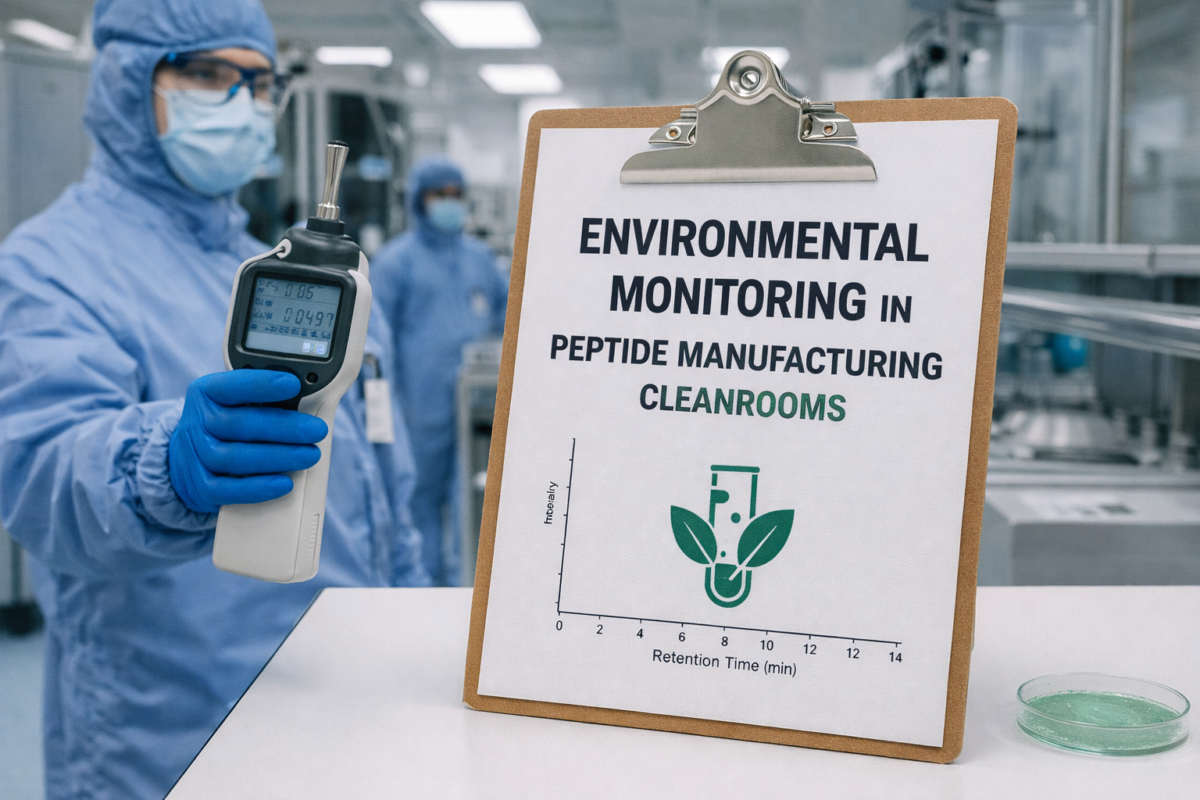
What Are Manufacturing Cleanrooms?
Manufacturing cleanrooms are specialized facilities designed to maintain extremely low levels of particulates and microbes through strict environmental controls. They are used in pharmaceuticals (including peptide production), biotechnology, and other industries to prevent airborne particles, microorganisms, and other contaminants from compromising sensitive processes and products. Key engineering features of manufacturing cleanrooms include HEPA-filtered air supply (often unidirectional laminar flow), smooth easily-cleaned surfaces, and a layout that separates areas by cleanliness class. Cleanrooms are classified by the International Standards Organization (ISO) based on air cleanliness; for example, ISO Class 7 or 8 rooms are typical for many pharmaceutical manufacturing cleanrooms, with more stringent ISO Class 5 zones for aseptic operations. These ISO cleanroom standards provide a framework to design and operate the facility so that it meets stringent cleanliness requirements and optimal conditions for contamination control.
Peptide manufacturing usually involves multi-step synthesis and purification processes that must be conducted in a controlled environment. Cleanrooms and controlled environments are mandatory for peptide synthesis to prevent contamination and ensure a sterile product [4]. In practice, this means peptide manufacturing cleanrooms have continuously monitored air quality, temperature, and humidity levels per strict Good Manufacturing Practice (GMP) guidelines [4]. By keeping these environmental parameters within defined limits, the integrity of sensitive peptide products is preserved. For example, excess moisture or particles in the air could introduce impurities or affect chemical reactions during peptide synthesis, so the cleanroom’s HVAC system maintains stable low-humidity, particle-free air. Overall, manufacturing cleanrooms provide the contamination-controlled setting needed to produce high-quality, research-grade peptides consistently.
Why Environmental Monitoring Matters in Peptide Manufacturing
Maintaining a cleanroom’s integrity requires more than just design – it demands vigilant environmental monitoring. Environmental monitoring (EM) in cleanrooms is the systematic sampling and analysis of the air and surfaces to detect microbial and particulate. It is essentially the “eyes” of contamination control, continuously verifying that the cleanroom environment remains within specified cleanliness limits. A properly implemented environmental monitoring program provides crucial information about the manufacturing cleanroom environment, preventing the release of potentially contaminated products.
In peptide manufacturing, where products may be injected into research models or patients, any contamination could not only ruin a batch but also pose serious safety risks. By tracking environmental data, the facility can catch deviations early – for instance, a rise in airborne particles or a positive microbial sample – and correct the issue before peptide product quality is affected. In this way, environmental monitoring underpins both product integrity and patient safety, and it ensures ongoing compliance with sterility requirements.
Equally important, environmental monitoring is now an expectation of regulators and quality auditors. Under U.S. regulations (21 CFR 211), manufacturers must have a “system for monitoring environmental conditions” in production areas [1]. Regulatory guidelines from the FDA, USP <1116>, and EU GMP Annex 1 all detail how cleanrooms should be monitored for viable and non-viable contamination [1]. Inspectors typically look for robust EM programs as part of a facility’s contamination control strategy. In fact, regulatory agencies have issued observations to companies that lacked adequate systems for monitoring environmental conditions (e.g. no routine sampling plan or defined alert/action levels). This is especially pertinent in peptide manufacturing, which often involves complex chemistries and open handling steps – a scenario that can invite contamination if not carefully controlled. Regulators expect manufacturers to demonstrate a proactive approach: show that contamination risks are identified, controlled, and continuously monitored across the process. In summary, environmental monitoring matters in peptide manufacturing because it is the primary tool for contamination control, it safeguards the purity of the peptide product, and it fulfills critical quality and compliance requirements.
Integration with Quality Control and Sterility Testing
Environmental monitoring in manufacturing cleanrooms works hand-in-hand with other quality control measures, especially when it comes to sterility assurance of peptide products. While final sterility testing of the product (e.g. USP <71> sterility tests or rapid microbial methods on finished vials) provides a definitive check for contamination in the batch, it is impractical and unsafe to rely on end-product testing alone. Cleanroom monitoring fills this gap by giving ongoing assurance that the manufacturing environment remains conducive to producing sterile, contamination-free products [3]. Think of sterility testing as the safety net and environmental monitoring as the constant guide rail that keeps the process on track. A robust EM program greatly reduces the chance that a sterility test will fail, because it maintains control over the environment at all times.
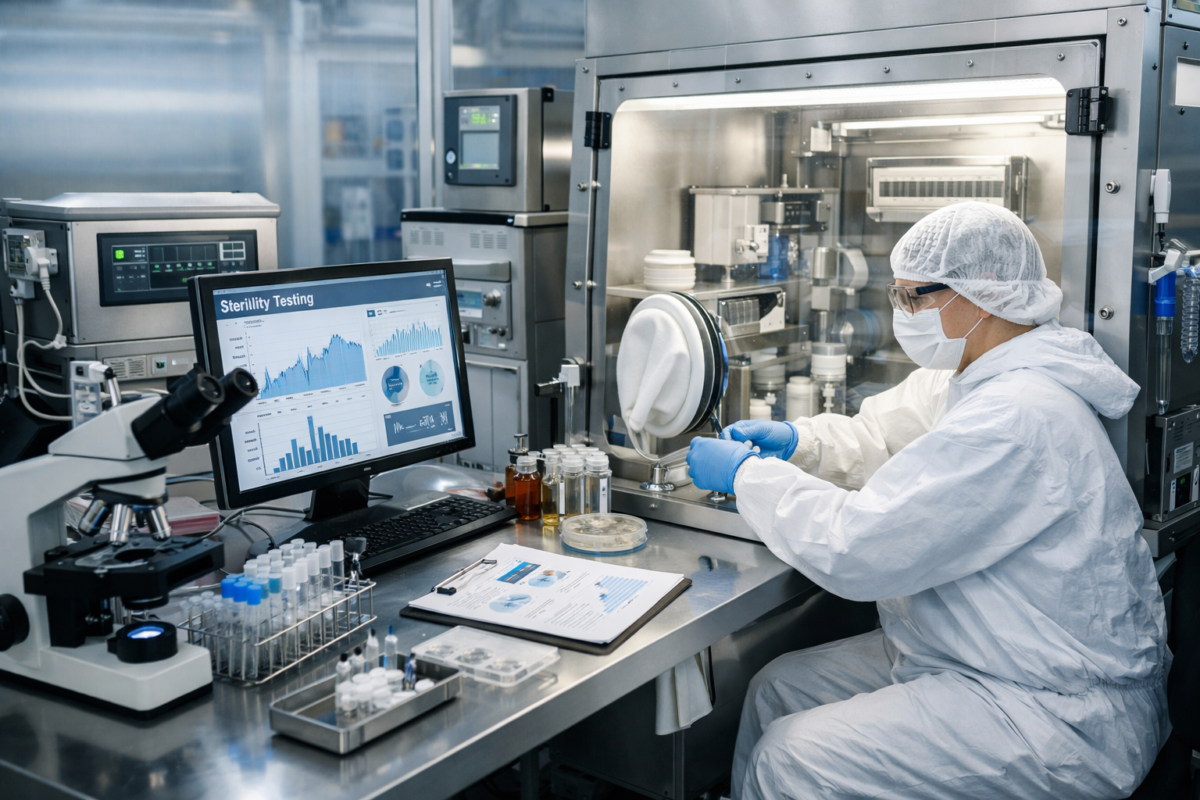
Figure 1: Sterile testing in a pharmaceutical lab
In peptide API manufacturing, not all processes yield a sterile final product (some peptides are made for research use or will undergo sterile filtration later). However, when sterile drug products are the goal (for example, peptide injectables or vaccines), environmental monitoring becomes part of the total sterility assurance system. All critical cleanroom data are reviewed as part of batch release: if there was an excursion in the ISO 5 compounding hood during filling of a peptide vial, that batch would likely be held or subjected to extra scrutiny even if the vial sterility tests come back negative, because the environmental data indicated a potential risk. Many companies won’t release a lot unless the environmental monitoring results for the manufacturing period are within specs, underscoring how EM integrates with quality control decisions.
Environmental monitoring data also prove invaluable when investigating any sterility-related deviations. If a peptide product fails a sterility test (indicating contamination in the batch), the first place investigators look is the environmental monitoring records. These can reveal, for instance, that during that batch, there was an unexpected high CFU count in an incubator or a faulty HVAC reading that went unnoticed. One case described an incident where two peptide product batches showed microbial contamination; upon investigation, additional EM samples inside an incubator (which were not routinely taken) found counts above acceptable range, leading to the discovery of a contaminated humidity chamber in the incubator as the root cause [1]. This finding prompted corrective actions like replacing the incubator’s components and adding that location to the routine monitoring plan. Thus, EM played a direct role in identifying and correcting a hidden contamination source that was affecting product sterility.
It’s worth noting that numerous studies (and industry experience) have shown no direct one-to-one correlation between routine environmental monitoring counts and final product sterility outcomes [1] – in other words, a batch can pass sterility testing even if an EM sample had an excursion, and vice versa. This is because sampling is limited and the product might not directly “see” the same microbes the plates do. However, the absence of correlation does not diminish the value of EM. Instead, environmental monitoring provides assurance that the cleanroom’s operational controls are in a state of control and functioning effectively [1]. It’s a preventive measure. When all environmental data are consistently within limits, one has a high degree of confidence that the cleanroom is not contributing contaminants to the process. Conversely, if environmental data start trending poorly, it’s a warning sign that the process may soon be at risk, and interventions should be made before product quality is compromised. Regulatory auditors will often begin their inspections by reviewing environmental monitoring trend charts and deviations, because these are bellwethers of whether the facility’s contamination control is truly under control. In summary, environmental monitoring is tightly integrated with quality control – it supports sterility assurance by maintaining the cleanroom conditions that allow sterile or high-purity peptides to be made, and it provides critical evidence and investigative data whenever a quality issue related to contamination arises.
Regulatory and Quality Expectations
Authorities worldwide impose strict expectations on environmental monitoring in manufacturing cleanrooms. In the U.S., the FDA’s Current Good Manufacturing Practices (cGMP) regulations explicitly require cleanroom environmental control. For example, 21 CFR §211.42 and §211.46 mandate appropriate air filtration systems and environmental monitoring in aseptic processing areas. FDA guidance documents (such as the 2004 “Guidance for Industry: Sterile Drug Products Produced by Aseptic Processing”) provide more detailed recommendations, including typical alert/action limits and qualifications for an environmental monitoring program. Similarly, the European Medicines Agency (EMA) Annex 1 for sterile medicinal products lays out specific cleanroom classes (Grades A–D, roughly equivalent to ISO 5–8) and the required monitoring for each. USP <1116> is another key reference, offering advisory microbiological monitoring levels for cleanrooms and discussing the interpretation of results. In essence, regulatory bodies expect manufacturers to have a documented, routine environmental monitoring program and written procedures covering sampling locations, frequencies, and defined alert/action limits. Failure to meet these expectations can result in observations or even production stoppages. For instance, companies have been cited for not monitoring during actual operations or not investigating out-of-limit EM results, as this undermines sterility assurance.
In addition to GMP regulations, manufacturers must adhere to ISO cleanroom standards as part of industry best practices and often to satisfy clients or international requirements. The ISO 14644 series is the cornerstone: ISO 14644-1:2015 defines the air cleanliness classes by allowable particle counts, and ISO 14644-2:2015 outlines how cleanrooms should be monitored and tested to verify they remain in compliance. For example, ISO 14644-2 might require periodic particle count mapping and re-certification of the cleanroom at set intervals (typically yearly). Although ISO standards are technically voluntary, they are almost universally followed in pharmaceutical cleanrooms and can be enforced indirectly through regulatory expectations (EU GMP refers to ISO classification, for instance). Adhering to ISO cleanroom standards helps demonstrate that a facility meets globally recognized benchmarks for contamination control. This not only satisfies auditors but also ensures a high level of quality. Cleanroom operations that consistently meet ISO Class criteria and have active monitoring in place greatly reduce the risk of batch contamination or regulatory non-compliance. Moreover, quality auditors will expect to see thorough documentation: calibration records for particle counters and air sensors, training records for personnel who conduct EM, and trend reports that show the cleanroom is under control.
Overall, the quality expectation is that environmental monitoring is treated as an integral part of the manufacturing process control, not an optional or cursory exercise. Companies are expected to use the EM data in their quality system – for example, as part of ongoing environmental trend reviews and annual product quality reviews. If a trend indicates a decline in environmental control, proactive action should be taken (and documented). By meeting these regulatory and ISO expectations, peptide manufacturers demonstrate that they have a robust contamination control strategy. This instills confidence that the peptides produced are of high purity and safety. In summary, compliance with environmental monitoring requirements isn’t just about avoiding regulatory citations; it directly correlates with maintaining the quality, safety, and efficacy of the peptide products being manufactured.
Frequently asked questions (FAQs) about Environmental Monitoring in Peptide Manufacturing Cleanrooms
Why is a diagram of cleanroom zones and airflow important?
A diagram of cleanroom zones and airflow visually explains how controlled air movement minimizes contamination risk in peptide manufacturing environments. These diagrams typically illustrate pressure differentials between ISO-classified areas, unidirectional (laminar) airflow, and the separation of cleaner and less-clean zones. Understanding airflow patterns helps manufacturers prevent particulate and microbial migration into critical processing areas, supporting consistent environmental control and product integrity.
What information does a cleanroom monitoring parameter checklist provide?
A monitoring parameter checklist outlines the specific environmental variables that must be routinely tracked in peptide manufacturing cleanrooms. These commonly include airborne particle counts, viable microbial levels, temperature, relative humidity, and differential pressure. The checklist ensures monitoring programs remain comprehensive and standardized, reducing the risk of overlooking conditions that could compromise peptide stability, sterility, or analytical reproducibility.
What does an infographic on cleanroom contamination sources illustrate?
An infographic on cleanroom contamination sources highlights the primary origins of particulate and microbial contamination, such as personnel, materials, equipment, and facility infrastructure. By visually mapping these sources, the infographic reinforces why gowning protocols, material transfer controls, and routine cleaning are essential components of environmental monitoring programs in peptide manufacturing facilities.
How does a visual workflow of environmental monitoring processes support quality control?
A visual workflow of environmental monitoring processes shows how sampling, data collection, data review, and corrective actions are integrated into a facility’s quality system. This type of visual clarifies the relationship between routine monitoring activities and broader quality control and quality assurance functions. For peptide manufacturers, it demonstrates how environmental data are translated into actionable decisions that help maintain consistent research-grade product quality.
References
- Tanna JG, et al. Environmental Monitoring of cGMP Cleanroom Facilities for Manufacturing of Cellular Therapy Products in an Academic Hospital Setting. Cytotherapy. 2024;26(11):1421–1428pmc.ncbi.nlm.nih.govronmental Monitoring Methods in Cleanrooms. American Pharmaceutical Review. 2018;21(3)americanpharmaceuticalreview.com
- Warang R. Environmental Monitoring in Cleanrooms: A Step-by-Step Guide. Pharma Now (Online). 2025pharmanow.live
- Intavis Peptide Services. Introduction to GMP and Its Importance in Peptide Production (Insights blog). 2025 Dec 24intavispeptides.com
- Eurofins Infinity Labs. Top 10 Reasons Environmental Monitoring Programs Go Wrong (Blog). 2024 Mar 29infinitylaboratories.com