
How Peptide Purification and Handling Affects Endotoxin Load
Author: Dr. Numan S. Date: January 21, 2026
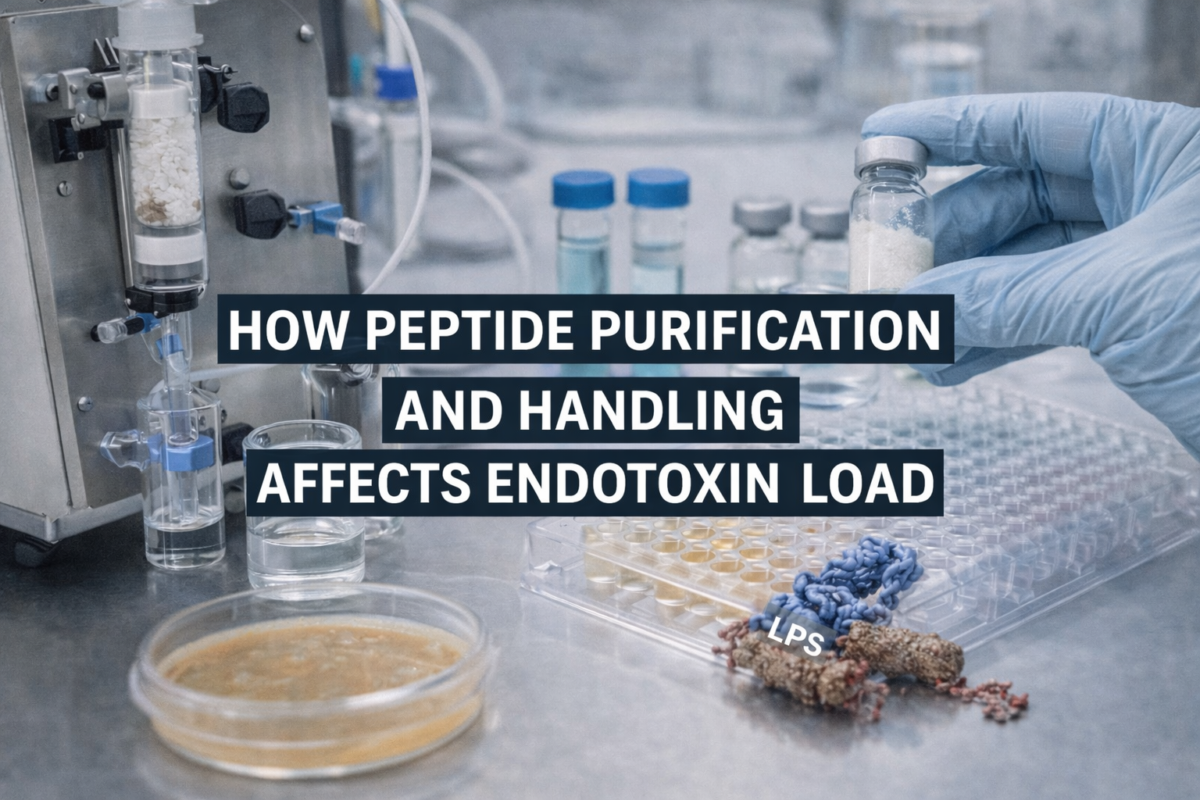
What Is Endotoxin Load (and Why Does It Matter in Peptide Research)?
Endotoxin “load” refers to the total amount of bacterial endotoxins present in a sample or workflow, typically measured in endotoxin units (EU). Endotoxins are lipopolysaccharides (LPS) shed from the outer membrane of Gram-negative bacteria such as E. coli. Even at trace levels, these LPS endotoxins can trigger potent immune reactions – inducing fever, inflammation, and shock in vivo. In peptide research, a high endotoxin load is problematic because it can interfere with experimental outcomes [3]. For example, endotoxin contamination in peptide preparations can activate immune cells or confound cell culture assays, leading to misleading results. Because of their pyrogenic effects in animals and their ability to disrupt common in vitro workflows (like cell culture and transfection), monitoring and minimizing endotoxin load is a must in peptide research. Keeping endotoxin levels low ensures that any biological effects observed are due to the peptide itself and not an unintended inflammatory response.
Common Sources of Endotoxin Contamination in Peptide Workflows
Endotoxin contamination can creep into peptide workflows from surprisingly many sources. Gram-negative bacteria are ubiquitous in the lab environment and continuously release endotoxins from their cell walls. Water and buffers used in peptide synthesis or purification are common culprits – if they are not sterile or endotoxin-free, they can introduce significant endotoxin load. In fact, using non-validated water or lab reagents often seeds endotoxin into “clean” peptide solutions. Laboratory glassware and tubing are another major source: without proper depyrogenation (endotoxin destruction), residues from prior bacterial presence can leach LPS into your peptide prep.
During peptide purification steps, equipment contamination is a risk – chromatography columns, filters, and vessels can all accumulate endotoxins over time if not thoroughly cleaned. Even researchers themselves contribute: handling peptides without gloves or using ordinary lab benches (as opposed to clean benches) exposes samples to dust and airborne bacteria. Protective clothing and good hygiene are essential because people and their lab attire can shed particulates that carry endotoxins. In short, any contact with non-sterile materials post-synthesis – be it contaminated solvents, dirty equipment, or environmental exposure – can raise the endotoxin load of peptide samples.
Importantly, endotoxin load is often a workflow problem, not just a product specification. Even peptides made by solid-phase chemical synthesis (which inherently avoids bacteria) can end up with endotoxin contamination during downstream handling. For instance, after cleavage and initial processing, the peptide is usually in an aqueous solution where it’s vulnerable to environmental endotoxins. Thus, controlling bioburden at each step is critical. By recognizing common contamination sources, researchers can take proactive steps (like using certified endotoxin-free reagents and sterilized containers) to prevent a high endotoxin load from sneaking into peptide workflows.
How Peptide Purification Can Influence Endotoxin Load
Peptide purification steps play a pivotal role in determining final endotoxin levels. In some cases, purification can reduce endotoxin load by separating the desired peptide from endotoxin contaminants. For example, peptides produced via recombinant expression in E. coli often carry significant endotoxin contamination and must be purified extensively. Techniques like ion-exchange chromatography can bind and remove negatively charged endotoxins quite effectively. Likewise, phase separation methods (e.g. using detergents such as Triton X-114) or ultrafiltration (using a membrane with ~10 kDa cutoff) are known to strip endotoxins from protein/peptide solutions by exploiting differences in size or solubility. In essence, a well-designed purification can significantly lower endotoxin load, which answers the common question: can peptide purification reduce endotoxin? – yes, it can, provided the methods used are capable of separating or adsorbing endotoxins.
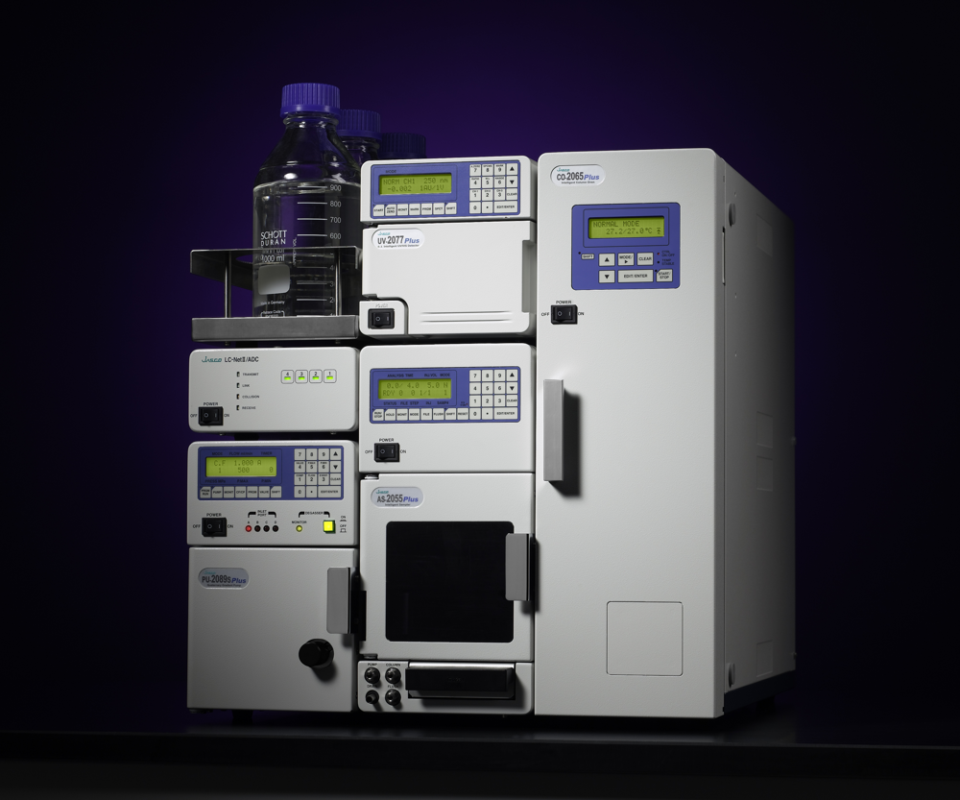
Figure 1: JASCO high-performance liquid chromatography (HPLC) system used for peptide purification.
However, purification is also a juncture where new endotoxin contamination can be introduced if one isn’t careful. Many peptide purifications involve aqueous buffers, and if those buffers or the purification apparatus carry endotoxins, the peptide will pick them up. In peptide manufacturing, the final chromatography step is often cited as the most critical point for endotoxin control. Using stale or non-pharmaceutical-grade buffers, or running on a chromatography column that wasn’t sanitized, can actually increase the endotoxin load of an otherwise clean peptide. Thus, while purification has the potential to reduce endotoxin levels, its net effect depends on rigorous control of reagents and equipment. Clean, endotoxin-tested buffers and thorough sanitation of purification equipment are essential to actually realize a reduction in endotoxin load during peptide purification.
HPLC Purification and Endotoxin Considerations
High-performance liquid chromatography (HPLC) is a workhorse for peptide purification – and it carries some specific endotoxin considerations. The good news is that reverse-phase HPLC can inherently help remove endotoxins. Endotoxin molecules (LPS) tend to bind strongly to the hydrophobic silica-based stationary phase of HPLC columns. As a result, many endotoxins are left behind on the column while the purified peptide elutes, meaning a properly executed HPLC run can yield peptide with a much lower endotoxin load than the crude feed. In fact, researchers have reported cases where running a recombinant peptide through reverse-phase HPLC abolished biological activities that were traced to endotoxin – demonstrating that the HPLC step effectively removed the LPS that was causing the spurious activity. For synthetic peptides, which typically start with low endotoxin levels, HPLC usually ensures the final product meets endotoxin specs for research use.
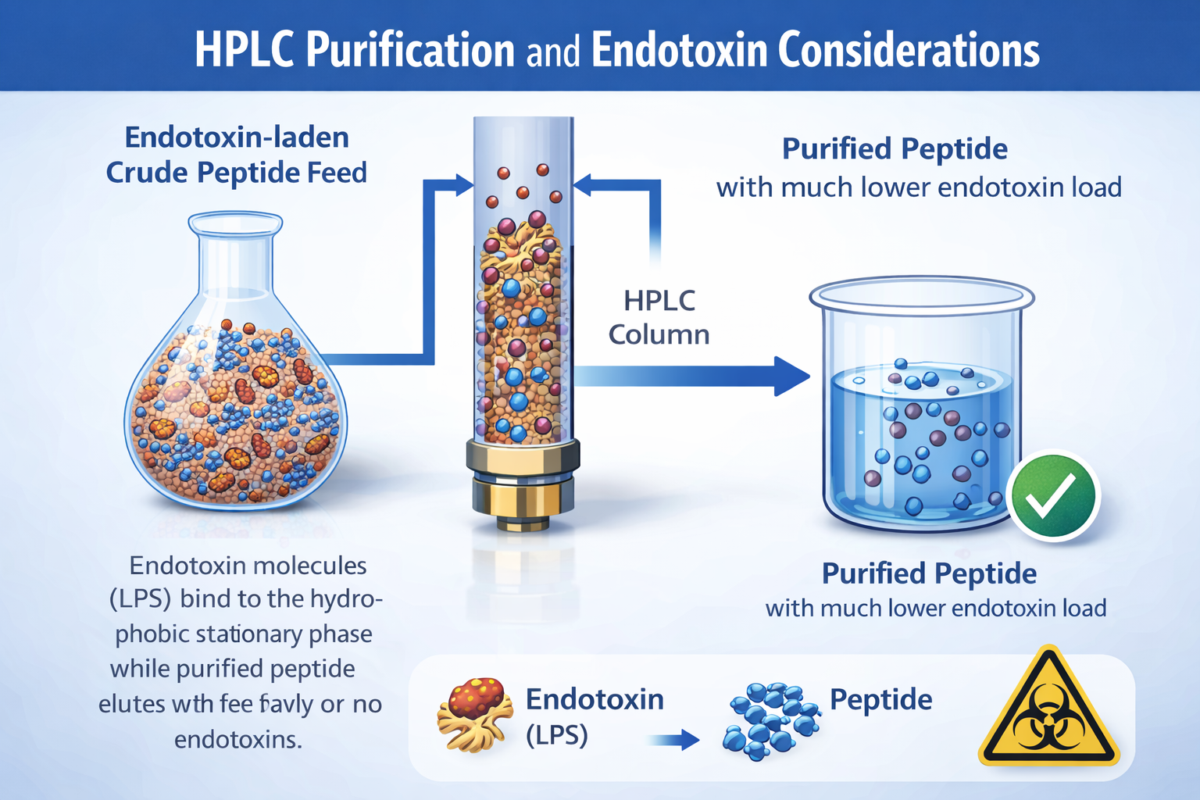
Figure 2: Schematic diagram of a preparative HPLC system for peptide purification.
However, one must also prevent HPLC from becoming a source of endotoxin. Endotoxins that bind to a chromatography column do not simply disappear – they can accumulate in the column resin. If the HPLC column is reused without proper cleaning, those trapped endotoxins might later elute into subsequent peptide batches. It’s a known risk that an HPLC column can “shed” previously bound endotoxin if conditions change or if it becomes overloaded. Therefore, after each peptide purification run, columns should be thoroughly sanitized (e.g. flushed with strong NaOH or acidic organic solutions known to strip endotoxins). Modern peptide facilities often include an endotoxin test on rinse fractions of HPLC systems as part of column clean-out verification. Additionally, using fresh ultrapure solvents and ensuring the HPLC system (tubing, injectors, fraction collectors) is maintained in a clean state will prevent introducing endotoxins during the purification. In summary, HPLC can reduce endotoxin load effectively if managed well – it removes endotoxins via binding, but demands vigilant cleaning to avoid re-contamination of peptides from endotoxin-laden columns.
Handling Factors That Increase Endotoxin Load After Purification
Even after a peptide has been purified and filtered, improper handling can raise its endotoxin load. One major factor is exposure to non-sterile environments. For instance, transferring a peptide solution in an open beaker on the lab bench invites airborne dust and microbes. Endotoxins are hardy and can reside in dust particles; when those particles settle into your peptide solution, they boost the endotoxin load. Handling purified peptide solutions should therefore occur in a laminar-flow hood or cleanroom environment whenever possible. In peptide production facilities, final solution handling is done in ISO class 7 or 5 cleanrooms to minimize such contamination.
Another handling factor is the cleanliness of containers and tools. Using non-depyrogenated vials, pipette tips, or lyophilizer equipment can introduce endotoxins. For example, if lyophilization trays or flasks weren’t endotoxin-free, the act of drying the peptide could deposit LPS onto the product. Similarly, a rotary evaporator used to concentrate peptide solutions can contaminate the batch if the evaporator or its connections have residual endotoxin from previous use. Breaking vacuum or opening containers improperly (allowing unfiltered air in) is another subtle way endotoxins sneak in during handling. Furthermore, human contact must be minimized – touching the inside of caps or using fingers to reseal a peptide vial, for example, could transfer endotoxins.
Employee practices and lab hygiene thus critically impact endotoxin load. Wearing powder-free gloves (and changing them regularly), using sterile tools, and conducting transfers quickly and in closed systems all help. Every moment a purified peptide solution is exposed to the open air or non-sterile surfaces is an opportunity for endotoxin contamination. In short, after purification, treat peptide solutions as highly susceptible to environmental LPS. Meticulous aseptic technique and only using containers/equipment certified as endotoxin-free are necessary to keep the endotoxin burden from climbing at the final stages.
Endotoxin Detection and Verification (High-Level)
How do you test endotoxin levels in lab samples? The gold-standard assay for endotoxin detection is the Limulus amebocyte lysate (LAL) test, a method that exploits an enzymatic clotting reaction from horseshoe crab blood cells. In practice, a small sample of peptide solution is mixed with LAL reagent; if endotoxin is present above a threshold, the mixture will clot or change color, indicating a positive result. The LAL assay is highly sensitive (able to detect endotoxin in the range of parts-per-billion) and is standardized in endotoxin units. For example, one endotoxin unit (1 EU) correlates to roughly 0.1 nanograms of a standard LPS. This assay has become the industry standard for bacterial endotoxin testing in pharmaceuticals and biomedical research. It can be performed in a qualitative gel-clot format or quantitatively using chromogenic or turbidimetric readings on a spectrophotometer.
In recent years, alternative endotoxin detection methods have emerged – such as recombinant Factor C assays (which use a synthetic version of the horseshoe crab protein) – but the LAL test remains the most widely used and accepted. Endotoxin detection in a peptide workflow typically involves testing critical points: for instance, the final purified peptide solution might be tested to ensure endotoxin load is below an acceptable limit (commonly, <0.25 EU/mL for lab-use peptides, or stricter if for in vivo use). Some labs also test incoming reagents like water or buffers for endotoxins using LAL to catch issues early. It’s important to include an endotoxin verification step especially if peptides will be used in vivo or in cell-based assays that are sensitive to pyrogens. In interpreting the results, remember that endotoxin can adsorb to labware – so proper positive and negative controls (using endotoxin-free water and known endotoxin standards) are run to verify the assay isn’t inhibited or giving false negatives. Overall, integrating a high-level endotoxin detection step in your workflow is key to confirming that your endotoxin minimization measures are effective and that your peptide’s endotoxin load is under control.
Best Practices to Minimize Endotoxin Load in Peptide Handling
By now it’s clear that endotoxin load arises from how we handle and process peptides. The good news is that with careful practices, you can keep endotoxin contamination to a minimum. Below is a checklist of best practices for an “endotoxin-smart” peptide workflow:
-
Use Endotoxin-Free Reagents: Always prepare peptide solutions with ultra-pure water (e.g. USP water for injection or endotoxin-tested water). Use buffers and salts that are certified endotoxin-free or made fresh and sterilized. This prevents introducing LPS from common lab reagents.
-
Sanitize and Depyrogenate Equipment: Before purification or storage, ensure all glassware, columns, and containers are depyrogenated. Techniques include baking glass at ≥180°C, using 0.1N NaOH rinses, or specialty endotoxin removal solutions. For HPLC, flush the system and column with strong cleaning solvents after each run to strip any bound endotoxin. Equipment that contacts peptides (filters, pipette tips, vials) should be sterile and pyrogen-free.
-
Work in Clean Environments: Perform critical peptide handling (post-purification transfers, aliquoting, dissolving lyophilate) in a laminar flow hood or cleanroom if available. This reduces airborne endotoxin contamination dramatically. If working on the bench, minimize exposure time and keep containers covered. Wear gloves, lab coat, and face mask as needed to avoid shedding particles.
-
Implement Aseptic Technique: Treat purified peptide solutions like cell culture media. Use sterile pipettes and close containers promptly. Do not reuse septa or caps without cleaning. Whenever possible, use single-use endotoxin-free consumables (tubes, filters) and avoid touching any surface that will contact the sample. Good aseptic technique directly translates to lower endotoxin load.
-
Test and Monitor: Incorporate endotoxin testing at key stages. For example, test the final peptide solution with an LAL assay to verify endotoxin levels are within acceptable range. If a particular step (like a solvent exchange or a concentration step) is prone to contamination, test before and after to catch any endotoxin introduction. Monitoring provides feedback so you can pinpoint and fix weak links in the workflow.
Following these practices creates a peptide production and handling process that inherently keeps endotoxin load low. Remember that endotoxin load is largely a workflow issue, not just a materials issue – by designing an endotoxin-aware workflow, from synthesis through purification to storage, you ensure your peptides remain as free of endotoxin contamination as possible. This not only protects the integrity of your experiments but also is essential for any peptide destined for biological assays or therapeutic use.
Frequently asked questions (FAQs) about Peptide Purification
How can peptide purification influence endotoxin load?
- Peptide purification steps can either reduce or concentrate endotoxin depending on the methods used. Endotoxins are amphipathic molecules that may co-elute with peptides during reversed-phase chromatography, particularly when hydrophobic interactions are involved. Insufficient washing steps, overloaded HPLC columns, or reuse of contaminated purification hardware can allow lipopolysaccharides (LPS) to persist through purification. Conversely, optimized gradient design, rigorous column cleaning, and use of endotoxin-controlled solvents can significantly lower endotoxin carryover during peptide purification.
What handling behaviors most commonly increase endotoxin contamination?
- Endotoxin contamination most often arises from poor handling practices rather than synthesis errors. Common contributors include using non–endotoxin-certified water or reagents, repeated opening of peptide containers, pipetting without filtered tips, and working on open benches rather than controlled environments. Endotoxins readily adsorb to plastic and glass surfaces, so reuse of labware or contact with non-validated surfaces can introduce LPS even when sterile technique is followed.
Why doesn’t sterile filtration solve endotoxin problems?
- Sterile filtration is designed to remove viable microorganisms, not endotoxins. LPS molecules are much smaller than bacteria and easily pass through standard 0.22 µm or 0.45 µm filters. In addition, endotoxins are heat-stable and can remain biologically active after filtration or sterilization. As a result, a peptide solution may be sterile yet still contain clinically or experimentally relevant levels of endotoxin.
What endotoxin detection methods are used and what are their limitations?
- The most widely used detection methods include Limulus Amebocyte Lysate (LAL) assays and recombinant factor C (rFC) assays. LAL assays are sensitive but can be affected by peptide interference, β-glucans, or LPS-binding proteins that suppress or enhance signal. rFC assays reduce reliance on animal-derived reagents and are more specific to endotoxin, but they can still be influenced by certain buffers or peptide matrices. In complex samples, method validation and interference testing are essential to avoid false negatives or misleading results.
What SOP-style steps reduce endotoxin load in peptide workflows?
- Effective endotoxin control relies on standardized procedures throughout the workflow. Key steps include using endotoxin-controlled water and solvents, dedicating purification columns and tubing to low-endotoxin work, implementing rigorous cleaning protocols with validated depyrogenation agents, and minimizing open handling steps. Routine endotoxin testing of intermediates, combined with documented handling and storage SOPs, helps ensure endotoxin levels remain consistently low across peptide production and research use.
References
-
Bononi I, Balatti V, Gaeta S, Tognon M. Gram-Negative Bacterial Lipopolysaccharide Retention by a Positively Charged New-Generation Filter. Appl Environ Microbiol. 2008;74(20):6470-6472.
-
R&D Editors. Controlling Endotoxin Contamination During Peptide Manufacturing. R&D World (Controlled Environments). November 2012.
-
Pusterla T. The LAL Assay: A Living Fossil Exploited to Detect Bacterial Contamination. BMG Labtech Blog. March 9, 2022.
-
Sigma-Aldrich (Merck). Technical Bulletin: Endotoxin Removal (TB299). MilliporeSigma, 2016.