
Peptide Lyophilization Protocol: A Step-by-Step Lab Guide
Author: Dr. Numan S. Date: August 12, 2025
Why Lyophilize Peptides? Understanding the Benefits
Peptide molecules are inherently prone to degradation in solution, undergoing hydrolysis, oxidation, or microbial breakdown over time. Lyophilization – also known as freeze-drying – removes water from peptides, dramatically improving their stability and shelf-life[^1]. In essence, converting a peptide to a dry powder prevents hydrolysis and reduces oxidation, thereby preserving its structural integrity and bioactivity [1]. This peptide drying method is gentler on sensitive sequences than heat-based drying, making it ideal for maintaining peptide stability during long-term storage. As a result, most synthetic peptides are delivered as lyophilized powders after peptide synthesis to ensure maximum longevity.
Another key benefit of freeze-drying peptides is the extended shelf life and easier storage. Without water, peptides become far less susceptible to temperature fluctuations or microbial growth. Lyophilized peptides are often stable for several years when stored properly (e.g. sealed at –20 °C in the dark) [3]. For example, one study showed a multi-peptide vaccine remained potent after 17 years of frozen storage in lyophilized form [2]. Removing water essentially “locks” peptides in a preserved state, often eliminating the need for continuous refrigeration; in fact, properly dried peptides can tolerate room temperature for short periods (days to weeks) with minimal loss of activity [4]. In summary, the purpose of peptide lyophilization is to create a stable, long-lasting form that can be stored and shipped more conveniently while maintaining peptide stability and potency[^2].
Materials and Equipment Checklist Before You Begin
Before starting the peptide lyophilization protocol, gather the necessary materials and equipment. Having everything prepared will ensure a smooth lab workflow:
- Freeze-Dryer (Lyophilizer) with Vacuum Pump: A laboratory lyophilizer capable of deep vacuum and low shelf temperatures (typically reaching ~–50 °C or lower). This is the core equipment for any peptide lab protocol involving freeze-drying. Ensure the condenser is clean and the vacuum pump oil is fresh.
- Freezing Apparatus: A –80 °C freezer, or a dry-ice/ethanol bath, or liquid nitrogen for snap-freezing samples. Rapid freezing is recommended when freeze-drying peptides to form small ice crystals and prevent degradation.
- Peptide Solution Vials: Clean, freeze-dry safe vials or cryotubes (glass serum vials with lyophilization stoppers are commonly used). Use sizes appropriate to your batch volume (e.g. 2 mL or 5 mL vials for small batches).
- Stoppers or Caps: If using lyophilization stoppers, have the matching caps ready. Vials are usually left partially stoppered during drying and then sealed after. Alternatively, use screw-cap vials and loosen the caps during drying to allow water vapor escape.
- Temperature-Probe (Optional): If your lyophilizer has a product probe, use it to monitor sample temperature. This helps ensure the sample stays below its collapse temperature during primary drying.
- Desiccant and Inert Gas: Desiccant packs (silica gel) for storage containers and an inert gas source (nitrogen or argon) for purging vials after lyophilization. These will help protect peptides from moisture and oxidation during storage.
Having this checklist ready will streamline your peptide lyophilization protocol and prevent interruptions once you begin the process.
Freezing Peptides for Lyophilization: Best Practices
Freeze the peptide solutions thoroughly before drying. Proper freezing is a crucial step in any peptide lyophilization protocol. To achieve optimal results, cool the peptide solution vials to a temperature well below their freezing point rapidly. The best practice is to snap-freeze the aliquoted vials by submerging them in a dry ice/ethanol bath or liquid nitrogen for a few minutes. Rapid freezing helps create smaller ice crystals and a more uniform frozen matrix, which in turn facilitates efficient sublimation during drying [6]. If a snap-freeze setup is not available, placing the vials in a –80 °C ultralow freezer for several hours (or overnight) is the next best option. Avoid slow freezing at –20 °C if possible, as slower cooling can lead to larger ice crystals and may increase the risk of peptide aggregation or “cake” collapse during drying.
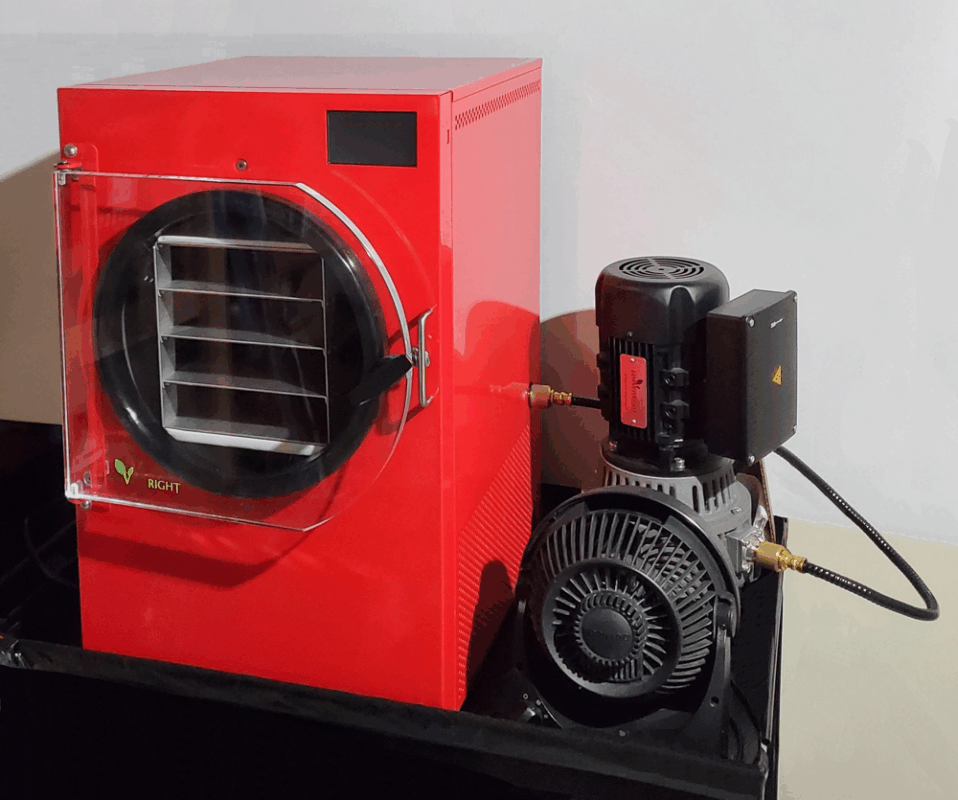
Figure 1: A benchtop laboratory freeze-dryer (lyophilizer) with an attached vacuum pump, used for freeze-drying peptides and other lab samples.
Ensure the samples are completely frozen solid – the solution should appear opaque or ice-like with no liquid pockets remaining. For reproducibility, keep freezing conditions consistent across all vials (e.g. all vials in the same freezing bath for the same duration). It can be helpful to freeze vials at a slight angle to increase surface area, but this is optional. Once frozen, handle the vials gently to avoid any thawing; frozen peptide samples should remain at ultra-low temperature until you are ready to start the lyophilization cycle. In summary, the ideal conditions for lyophilizing peptides start with a deep, rapid freeze: the colder and quicker, the better to preserve peptide structure and prepare for efficient water removal.
The Lyophilization Process: Step-by-Step
After freezing the peptides, follow these step-by-step stages in the lyophilization cycle to dry them into a stable powder:
- Primary Drying (Sublimation): Place the frozen peptide vials on the lyophilizer shelf. Start the freeze-drying run by pulling a deep vacuum in the chamber (often on the order of 0.1 mbar or 0.01 Torr). Once vacuum is established, gradually raise the shelf temperature to initiate sublimation of ice. In this phase, the bulk of the frozen water is removed as vapor. Keep the product temperature below its collapse temperature – practical lyophilization protocols often keep shelf temperature around –40 °C to –20 °C during primary drying [6]. You will observe ice from the samples condensing as frost on the lyophilizer’s condenser. Primary drying may take several hours to overnight, depending on volume and freezing thickness. A rule of thumb is that sublimation is complete when there is no visible ice in the vials and the chamber pressure and temperature have stabilized.
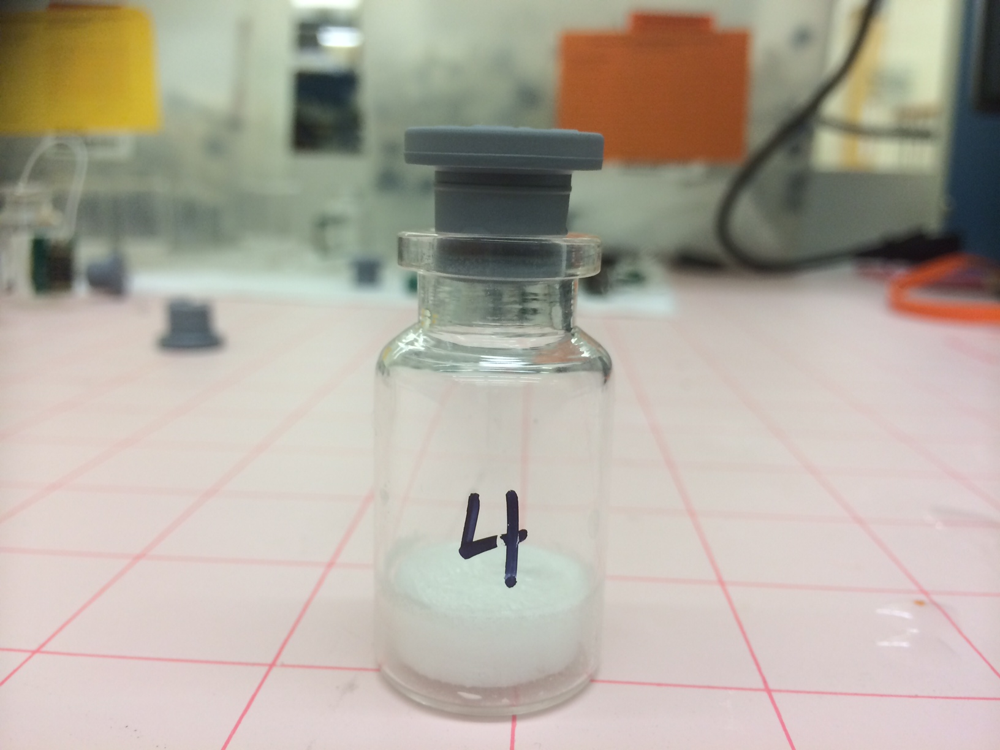
Figure 2: A vial containing a lyophilized peptide (white freeze-dried cake at the bottom). After lyophilization, proper handling and storage are crucial to maintain peptide stability.
- Secondary Drying (Desorption): After primary drying, typically >90% of water is removed, but peptides still hold some bound moisture. In secondary drying, increase the shelf temperature to a higher level (often +20 to +30 °C) while continuing to hold vacuum. This step drives off residual water molecules that are adsorbed to the peptide. Secondary drying usually lasts a few hours. Be cautious with heat – do not exceed temperatures that could degrade the peptide (many protocols stay below +40 °C). By the end of this phase, the peptide should be a dry, free-flowing or cake-like solid with minimal moisture content (often <1–3% residual water).
- Cycle Completion and Sealing: Once drying is complete, the chamber is returned to atmospheric pressure. Ideally, vent the chamber with an inert gas like nitrogen rather than moist room air, to avoid immediate moisture uptake by the dried peptide. If using lyophilization stoppers, stopper the vials under vacuum or inert gas before venting fully – many freeze-dryers have a stoppering mechanism to do this. If not, be ready to quickly cap or stopper the vials as soon as the chamber is back to ambient pressure. The dry peptide should be immediately sealed to prevent exposure to humidity. At this point, you have successfully obtained lyophilized peptides. Each vial contains the peptide as a fluffy dry powder (often called a “lyo cake”).
Following this step-by-step lab protocol ensures that peptides are uniformly and thoroughly dried. The result is a stable, lyophilized peptide product ready for long-term storage or distribution.
Post-Lyophilization Handling and Storage Tips
Immediate handling: Upon removing vials from the lyophilizer, quickly secure the caps or stoppers if not already done. Lyophilized peptides are often hygroscopic – they can rapidly absorb moisture from the air. To avoid this, do not leave dried vials open to the atmosphere. If the vials feel cold, allow them to warm to room temperature before opening any, to prevent condensation of water onto the peptide. Inspect the lyophilized cake; a uniform, dry appearance (usually white or off-white) indicates a successful freeze-dry. If the cake looks collapsed or wet, it may suggest incomplete drying (see common issues section below). It’s wise to purge the vial’s headspace with dry nitrogen or argon gas before sealing tightly, especially for peptides prone to oxidation (those containing cysteine, methionine, or tryptophan residues)[^3]. Once sealed, label the vials clearly with the peptide name, lot, and date of lyophilization for future reference.
Storage conditions: Store lyophilized peptides in a cold, dark, and dry environment to maximize their shelf life. The recommended long-term storage is –20 °C or colder (e.g. –80 °C) in a freezer [3]. Under these conditions, most lyophilized peptides remain stable for years without significant degradation [6]. For example, peptides kept at –20 °C or –80 °C in powder form have been shown to retain activity for 2–5+ years in research settings[^2][^4]. Always keep the peptides in tightly capped vials (preferably with a desiccant in the storage container) to minimize moisture exposure. Avoid repeated temperature cycling – it’s better to aliquot peptides into separate vials as done prior to lyophilization, so you can retrieve a single portion without warming the entire stock repeatedly. If peptides must be transported, short periods at room temperature are generally tolerated by lyophilized peptides (typically up to a few weeks), but for any extended shipment or storage, use cold packs or dry ice. Finally, note any special storage instructions related to the peptide’s sequence: peptides with sensitive amino acids (e.g. Met, Cys, Trp) should be stored under anaerobic (oxygen-free) conditions to prevent oxidation, and those with moisture-sensitive residues (Asp, Glu, Lys, Arg, His) benefit from storage in a desiccator. When handled and stored with these precautions, lyophilized peptides can maintain their integrity and bioactivity for a very long time. (If you ever find you reconstituted more peptide solution than needed, you can even re-freeze-dry the excess solution again – re-lyophilization is a valid approach to restore a peptide to a stable dry state.)
Common Issues During Peptide Freeze-Drying — and How to Fix Them
Even with a well-designed peptide lyophilization protocol, you may encounter some common issues. Here we outline frequent problems and troubleshooting tips to improve peptide stability and yield:
- Incomplete Drying (Residual Moisture): If the lyophilized peptide appears wet, sticky, or has collapsed into a glassy residue, there may be residual water due to an insufficient drying cycle. Fix: Extend the primary drying time and ensure secondary drying at a higher temperature to drive off bound water. Check that your vacuum reached the target pressure and that the condenser was cold enough. It may help to lyophilize for a longer period (e.g. an extra overnight in secondary drying) for especially large volumes or higher concentration samples. Using a thicker vial or too high a fill volume can also trap moisture – in the next run, try using smaller aliquots or flatter containers to aid water removal. A final residual moisture under ~3% is a good target for optimal peptide storage stabilitypci.com.
- Peptide Becoming Insoluble After Lyophilization: Occasionally, a peptide that was soluble before freeze-drying may be hard to re-dissolve afterward. This can happen with very hydrophobic peptides or those that formed aggregates or a dense “cake” during drying. Fix: When reconstituting, do not directly add a large volume of buffer. Instead, start by adding a small volume of water or a solvent: for example, add a minimal amount of 10–30% acetic acid (for basic or neutral peptides) or a few drops of organic solvent like acetonitrile or DMSO for highly hydrophobic peptides, then dilute with water/buffer graduallysigmaaldrich.comsigmaaldrich.com. Gentle agitation or brief sonication can help the peptide go back into solution. Using cryoprotectants or bulking agents in the original formulation can also improve the cake’s porosity – sugars like trehalose or mannitol make the dried matrix more porous and easier to dissolvepolarispeptides.com. For future preparations, if a particular peptide tends to cake into a glassy solid, incorporating ~5–10% mannitol or sucrose prior to lyophilization can yield a more easily reconstituted, fluffy powder (this is common in peptide drug formulations).
- Oxidation or Side-Reactions: Peptides containing cysteine (–SH groups), methionine, tryptophan, or other sensitive residues might undergo oxidation or other chemical changes during freeze-drying or storage. For instance, methionine can oxidize to sulfoxide if exposed to air, and cysteine can form disulfides. Fix: Add protective measures for labile sequences. Lyophilize under an inert gas blanket if possible, and always purge the vial with nitrogen before sealinggenscript.com. You can also include antioxidants or scavengers in the solution (a small amount of reducing agent for cysteine, or methionine analogs as scavengers for oxidation) if the peptide can tolerate them. Moreover, keep lyophilized peptides away from light (especially UV light) which can catalyze oxidation of Trp and others. If oxidation is detected (e.g. by mass increase of +16), you may need to synthesize the peptide with stabilizing modifications or store at even lower temperature. In general, meticulous oxygen exclusion and low-temperature storage are the best defenses against these peptide stability issues.
- Loss of Peptide Due to Container Adhesion: Sometimes the yield after lyophilization appears low – peptide can stick to the vial walls or to the lyophilizer chamber if bumped out. Static electricity can cause dry peptide powder to cling to caps or vials, especially for small peptide quantitiesbiomedgrid.combiomedgrid.com. Fix: To combat static, you can briefly ionize the environment (e.g. using an anti-static gun) when handling the dry powder. Also, ensure you gradually release the vacuum with inert gas; a rapid inrush of air can blow light peptide powder out of the vial. Rinsing the vial with a small volume of solvent can recover peptide that’s stuck to the walls – combine the rinsates if you had multiple vials, then lyophilize again to concentrate it. Using siliconized or specially coated vials can reduce peptide adsorption for very sticky peptides. Additionally, make sure to use the proper vial size – too large a vial for a tiny peptide amount may lead to excessive surface loss. Most peptides, however, don’t suffer significant losses if handled with care (using glass vials and scraping any visible residue into solution during reconstitution).
- Can all peptides be freeze-dried? Nearly all peptides can be successfully lyophilized; there is no inherent sequence that “cannot” be freeze-dried. Even large and sensitive peptides or small proteins are routinely preserved by lyophilizationpci.com. However, extremely hydrophobic peptides or those with unusual modifications may require the aforementioned additives or optimized protocols (e.g. slower cooling or special solvents) to yield a good lyophilized product. If a peptide is extraordinarily unstable (e.g. prone to instant degradation at any moisture), one might need to freeze-dry it in the presence of stabilizers (like a buffer at a specific pH or a protectant). In practice, freeze-drying is the gold-standard peptide drying method and is suitable for virtually any peptide, from short research peptides to long peptide-based therapeutics. The key is to adjust the protocol to the peptide’s properties as needed (for instance, adding cryoprotectants for long peptides or using mild conditions for peptides with sensitive bonds).
By anticipating these issues and applying the fixes, you can greatly improve your lyophilization outcomes. Troubleshooting is part of developing a robust lab protocol – each peptide can behave a bit differently, but the general strategies above will help maintain peptide stability and maximize your yield of lyophilized peptides.
Frequently asked questions (FAQs) about Peptide Lyophilization Protocols
What are the exact steps in a peptide lyophilization protocol?
A typical peptide lyophilization protocol includes:
- Dissolution – Dissolve the peptide in a suitable solvent (usually sterile water or dilute acid like 0.1% TFA).
- Aliquoting – Dispense the solution into pre-labeled, sterile vials to desired volumes.
- Pre-freezing – Snap-freeze aliquots using liquid nitrogen or dry ice/ethanol bath to ensure rapid solidification.
- Primary drying (sublimation) – Apply vacuum while gradually raising the temperature below the eutectic point to remove unbound water.
- Secondary drying (desorption) – Raise temperature further under vacuum to remove bound water.
- Stoppering and sealing – Seal vials under inert atmosphere (often nitrogen or argon) for long-term storage.
Why is freeze-drying necessary for peptides?
- Lyophilization is essential for peptides because it enhances their shelf life, chemical and physical stability, particularly against hydrolysis, oxidation, and microbial growth. It allows for long-term storage without refrigeration, preserves bioactivity, and facilitates accurate reconstitution for experimental or clinical use.
What materials and conditions are ideal for lyophilization?
Optimal lyophilization requires:
- Glass vials or lyophilization-compatible containers with minimal moisture permeability.
- A suitable cryoprotectant or bulking agent (e.g., mannitol or trehalose) when needed for peptide integrity or visual structure.
- Ultra-pure solvents, such as sterile Milli-Q water or volatile acids, to avoid residual contamination.
- Controlled freezing rates and vacuum pressures (typically below 100 mTorr) during sublimation.
- Low residual moisture content post-process, ideally below 1–2%.
How does lyophilization impact peptide stability and shelf life?
- Lyophilization significantly improves peptide stability by removing water, which is often a catalyst for degradation pathways. The resulting dry powder form can remain chemically stable for months to years when stored properly, especially under low-humidity, low-temperature, and light-protected conditions.
How should lyophilized peptides be stored and reconstituted?
- Lyophilized peptides should be stored in airtight vials at –20°C or below, preferably under inert gas and protected from light. Reconstitution should be done with sterile solvents (e.g., water, buffer, or dilute acetic acid), and care should be taken to minimize freeze-thaw cycles post-reconstitution. Once reconstituted, peptides are best used immediately or stored in aliquots at –80°C for short durations.
References
- Kuril AK, et al. Identifying Trending Issues in Assay of Peptide Therapeutics During Stability Study. Am J Biomed Sci & Res. 2021;13(6):500-504.biomedgrid.com
- Dalvi SV, et al. Stability of Multi-Peptide Vaccines in Conditions Enabling Accessibility in Limited Resource Settings. Int J Pept Res Ther. 2024;29(1):1-11.link.springer.com
- GenScript (Technical Bulletin). Peptide Storage and Handling Guidelines. GenScript USA Inc.; accessed 2025.genscript.com
- AltaBioscience. Peptide solubility and storage – how long can you store peptides & how to dissolve them. AltaBioscience Article; accessed 2025.altabioscience.com
- Sigma-Aldrich (Merck). Handling and Storage of Synthetic Peptides (Technical Document). Merck KGaA; accessed 2025.sigmaaldrich.com
- PCI Pharma Services. A Guide to Lyophilization Cycle Development (Blog Article). PCI Services; 2023.