
Verified Peptides: Trusted Peptides & Third-Party Validation
Author: Dr. Numan S. Date: November 13, 2025
What Is Third-Party Validation in Peptide Research?
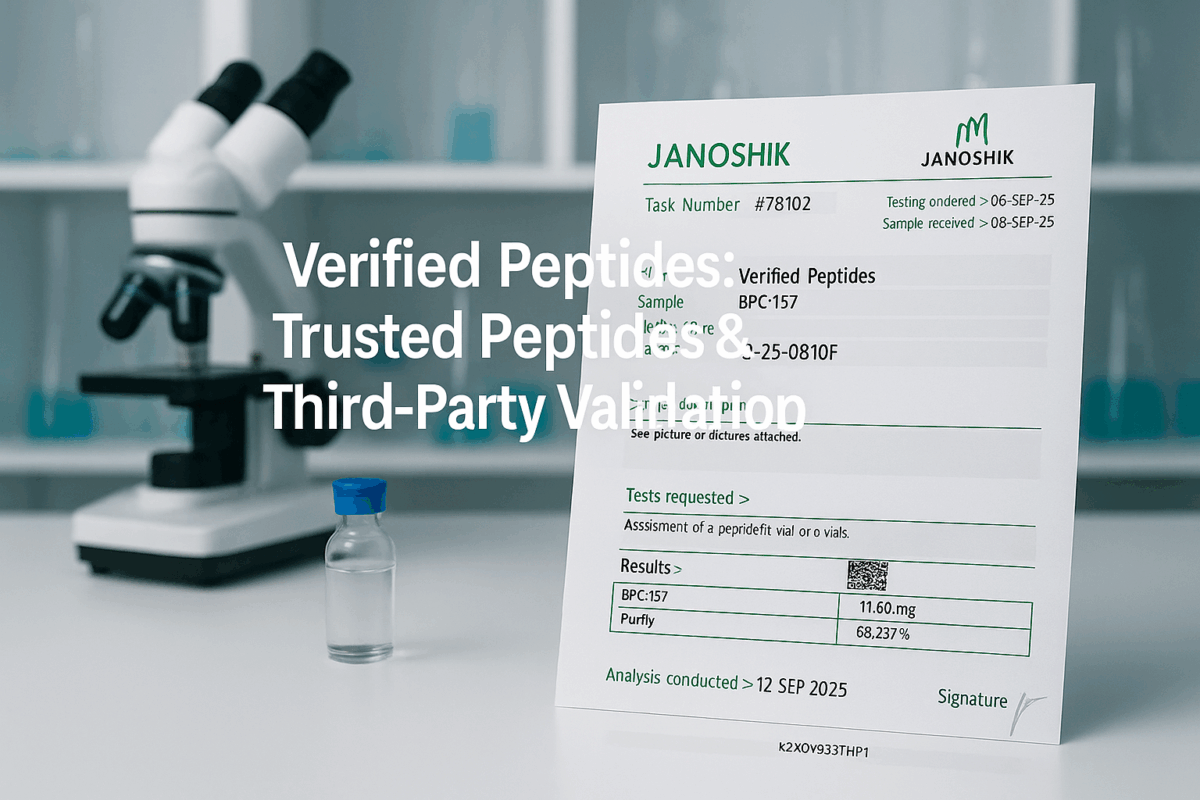
Third-party validation in peptide research refers to an independent laboratory confirming a peptide’s identity, purity, and composition through rigorous scientific tests [2]. Unlike in-house testing by the manufacturer, third-party validation is performed by an external lab with no stake in the product, ensuring impartial, unbiased results [2]. This added layer of independent testing provides objective evidence that the peptide “contains what the label claims” [2]. In practice, third-party validation means every batch of a research peptide is analyzed by an independent testing lab to verify that the peptide’s sequence and purity match the supplier’s specifications. This process is crucial because the peptide supply market is often unregulated – without outside verification, suppliers might unknowingly (or in some cases, unscrupulously) provide impure, mislabeled, or even counterfeit material. By having each batch validated externally, peptide research suppliers like Verified Peptides confirm that their research-grade peptides are authentic and high-purity, which is vital for experimental validity and safety. In summary, third-party validation is a quality safeguard: an independent lab double-checks the peptide’s identity and peptide purity before it reaches the researcher, ensuring the product is exactly what it purports to be.
Why Third-Party Testing Is Critical for Research Integrity
Independent testing of peptides is critical for maintaining scientific integrity because even tiny impurities or sequence errors can derail an experiment’s accuracy. Studies have documented that peptide impurities as low as ~1% can produce false-positive results in biological assays [1]. For example, one analysis found that a synthetic HIV peptide was unknowingly contaminated with ~1% of an unrelated peptide, causing spurious immune responses in a vaccine trial assay [1]. This kind of artifact underlines how peptide purity directly impacts data – if researchers use unvalidated peptides, they risk chasing effects that are caused by contaminants rather than the peptide of interest. More broadly, the scientific community is grappling with a reproducibility crisis, and poor-quality reagents are a known contributor.
It’s estimated that irreproducible preclinical research wastes billions of research dollars annually, often due to substandard or mischaracterized materials. Third-party validation helps tackle this problem by functioning as rigorous quality control: it ensures the peptide’s quality before any experiment begins, so researchers can trust that experimental results are attributable to the peptide itself and not an unknown impurity [4]. Experts have increasingly called for thorough independent testing of reagents like peptides to improve reproducibility in science [2]. In fact, journals and funding agencies now often ask for Certificates of Analysis or proof of identity/purity for critical reagents, reflecting how essential third-party validation has become for research integrity. By using peptides that have passed third party validation, scientists greatly reduce the risk of irreproducible or misleading results, thereby upholding the credibility of their research outcomes.
How Third-Party Labs Test and Validate Peptides
When a peptide batch undergoes third-party validation, the independent lab employs a suite of analytical techniques to verify the peptide’s composition. A cornerstone method is High-Performance Liquid Chromatography (HPLC), which is considered the gold standard for assessing peptide purity [2]. In an HPLC analysis, the peptide sample is run through a chromatographic column to separate its components: the target peptide will appear as a primary peak on the chromatogram, while any impurities or by-products show up as additional peaks. This allows the lab to precisely quantify the peptide purity by calculating the main peak’s area as a percentage of all detected peaks [2]. Notably, HPLC can detect even minute impurities (down to <1% of the sample), so it provides a very sensitive measure of peptide quality [2]. For example, if a peptide is 99% pure by HPLC, that implies only ~1% combined impurities – an indicator of a research-grade preparation.
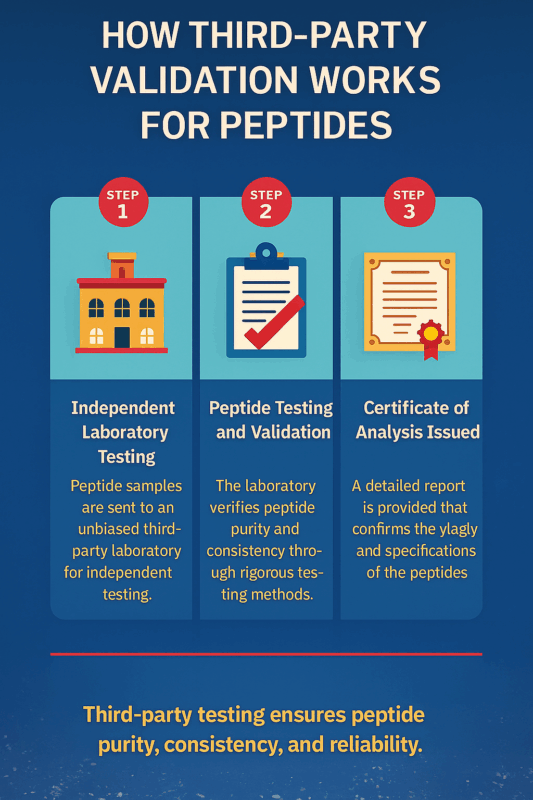
Figure 1: Third-Party Validation Process for Peptides.
Transparent COAs for Every Batch
Every validated peptide batch is accompanied by a Certificate of Analysis (COA) – a formal lab report that transparently details all the test results for that batch. A COA serves as proof of quality control, summarizing what the independent validation found. For a research peptide, the COA typically includes the peptide’s identity (often listing the sequence or molecular formula and a matching MS result) and the purity percentage as determined by HPLC [4]. For example, a COA might state that a peptide is “≥99% pure by HPLC” and give the exact measured molecular weight from MS, confirming the peptide’s identity. Other information on a peptide COA can include the batch number, quantity of peptide, and sometimes additional analyses such as amino acid content or solvent content. In the case of clinical- or GMP-grade peptides, COAs are even more extensive – they may report visual appearance, water content, residual solvents, endotoxin levels, and other safety-related parameters. Researchers should always review the COA before using a peptide: it tells you at a glance how pure the peptide is and that it was indeed verified by a lab. Importantly, the COA is signed by an authorized analyst and indicates which lab performed the testing, adding to its credibility [2].
Transparency is key when it comes to COAs – reputable suppliers make these documents readily available for each batch. Verified Peptides, for instance, provides a third-party tested COA for every batch of peptide it sells, and these are easily accessible to researchers. This means that for any vial of peptide, a scientist can obtain the corresponding COA and see the exact purity, identity confirmation, and date of testing for that batch. Such transparency allows researchers to trust that the product has been vetted. In fact, it’s ideal when the COA itself is issued by an independent lab (or at least indicates that an external lab performed the analyses) [2]. Verified Peptides adheres to this ideal – all of its peptides come with independently verified COAs, removing any guesswork about quality [2]. The third party validation data isn’t hidden: it’s right there in the open. This level of openness builds confidence that each batch is consistent. COAs ultimately serve as a peptide purity and identity guarantee. By reviewing the COA’s contents, researchers can proceed knowing the peptide meets the required specs, which reinforces experimental reproducibility [2]. In summary, transparent COAs for every batch ensure that nothing is taken on faith – every research peptide is backed by documented, third-party-verified quality results.
Independent Laboratory Partnerships
Achieving trustworthy validation results hinges on the caliber of the external labs performing the tests. This is why Verified Peptides relies on independent laboratory partnerships with highly qualified analytical labs. An ideal third-party lab is one with deep expertise in peptide analysis and recognized accreditations (for example, certification under ISO/IEC 17025, which signals competence in testing and calibration) [4]. Using accredited, specialized labs ensures that the testing methods are scientifically sound and the results are reliable. These labs employ skilled chemists and biochemists who understand peptide chemistry and follow strict protocols to avoid any errors. By partnering with such independent labs, Verified Peptides ensures that its peptide quality claims are always backed by impartial evidence.
The independence of these labs is critical – because they are not affiliated with manufacturing, their only job is to tell the truth about a peptide’s quality. This impartiality adds an extra layer of trust. Moreover, qualified third-party labs provide professionally documented reports (complete with chromatograms, spectra, and measurements), so researchers get full transparency into how the peptide was evaluated [2]. In essence, Verified Peptides’ strategy is to “trust, but verify” through external experts. By having every batch tested by an unbiased certified lab, they eliminate conflicts of interest and provide data that researchers can have confidence in [4]. These independent testing partnerships ultimately mean that when a scientist uses a Verified peptide, they are leveraging the credibility and rigor of not just one laboratory, but two – the manufacturer and an outside validator.
How Verified Peptides Ensures Quality from Synthesis to Shipping
Verified Peptides maintains a comprehensive quality assurance pipeline from synthesis to shipping to ensure that every peptide arriving at a researcher’s bench is of the highest quality. It begins at the synthesis stage: peptides are produced using high-purity starting materials and rigorously controlled protocols. During production, in-house quality checks monitor the peptide’s identity and purity as it is being made, so that any issues (like by-products or mis-sequencing) can be caught early. Once a peptide batch is synthesized and passes internal QC, Verified Peptides takes the crucial extra step of third-party validation. Each batch is submitted to an independent lab for testing – this is the Verified Peptides hallmark. The external lab runs the full battery of analyses discussed earlier (HPLC, MS, etc.), providing an unbiased confirmation of the peptide’s purity and identity. Only if the batch meets the strict quality criteria (typically research-grade peptides are expected to be ~98–99% pure or higher) will it move forward [4]. The independent lab’s Certificate of Analysis is then linked to that batch. Verified Peptides essentially uses this external validation as a gatekeeper for quality: any batch that doesn’t meet the claimed specifications would not be released. This practice ensures that customers receive peptides that have already been proven to be consistent and correct. It’s a level of quality control that extends beyond what many basic suppliers do.
After validation, Verified Peptides continues to safeguard the product during packaging and shipping. Peptides are generally provided in lyophilized (freeze-dried) form, which is very stable for transport. Lyophilized peptides can be shipped at ambient temperatures without degradation – studies show they remain stable for days to weeks at room temperature. Verified Peptides takes care to package peptides in airtight, moisture-resistant vials to maintain that stability. For added caution, sensitive peptides may be shipped with cooling packs, but in most cases the lyophilized form ensures the peptide’s integrity throughout transit. By controlling shipping conditions and using appropriate containers, the company prevents temperature or humidity fluctuations from affecting peptide purity. Upon arrival, the researcher receives a peptide that is in the same condition as when it left the lab – along with the certificate of analysis documentation of its quality. In essence, Verified Peptides’ end-to-end quality approach means that from the moment a peptide is synthesized to the moment it is delivered, every possible measure has been taken to verify and preserve its quality. This comprehensive process (synthesis under GMP-like standards, third-party lab validation, and careful shipping) guarantees that the peptide will perform as expected in experimental settings. Researchers can have peace of mind that third party validation wasn’t just a one-off event but part of an integrated quality system ensuring consistency at every step.
Frequently asked questions (FAQs) about Trusted Peptides & Third-Party Validation by Verified Peptides
What does third-party validation involve in peptide testing?
- Third-party validation refers to having an independent, accredited laboratory analyze a peptide sample to confirm its purity, identity, and composition. This typically includes methods such as HPLC, mass spectrometry, microbial testing, and residual solvent analysis. The results are documented in a Certificate of Analysis (COA) that objectively verifies the peptide meets specification.
How does independent verification benefit researchers?
- Independent verification provides unbiased confirmation that a peptide is accurately synthesized and free of contaminants, which allows researchers to trust the starting material in their experiments. This reduces variability, strengthens data quality, and ensures experimental outcomes reflect true biological effects rather than impurities or synthesis errors.
What testing methods ensure peptide purity and identity?
- Common analytical methods include high-performance liquid chromatography (HPLC) for purity, mass spectrometry (MS) for molecular identity, amino-acid analysis, UV-Vis spectroscopy, and testing for endotoxins or microbial contamination. These tests collectively confirm that the peptide is structurally correct and sufficiently pure for research use.
Why does Verified Peptides prioritize external lab validation?
- Verified Peptides emphasizes third-party validation to maintain full transparency and ensure researchers receive independently verified materials. External labs remove any conflict of interest, and their reports demonstrate that each batch meets strict quality standards. This approach reinforces trust and aligns with best practices in preclinical research.
How does third-party validation improve reproducibility and compliance?
- Independent testing ensures each lot meets defined purity and identity thresholds, which reduces variability between batches and supports consistent experimental results. It also helps researchers adhere to institutional, regulatory, and Good Laboratory Practice (GLP) expectations by providing objective documentation of material quality.
References
- Currier JR, et al. Peptide impurities in commercial synthetic peptides and their implications for vaccine trial assessment. Clin Vaccine Immunol. 2008;15(2):267-276mdpi.com
- von Herrath M, Pagni PP, Grove K, et al. Case Reports of Pre-clinical Replication Studies in Metabolism and Diabetes. Cell Metab. 2019;29(4):795-802verifiedpeptides.com
- de Marco A, Berrow N, Lebendiker M, et al. Quality control of protein reagents for the improvement of research data reproducibility. Nat Commun. 2021;12:2795nature.com
- Begley CG, Ellis LM. Raise standards for preclinical cancer research. Nature. 2012;483(7391):531-533verifiedpeptides.com
- Bosc-Bierne G, Weller MG. Investigation of impurities in peptide pools. Separations. 2025;12(2):36mdpi.com
- AmbioPharm Inc. What data is provided on the Certificate of Analysis (CoA)? (FAQ). Accessed 2025ambiopharm.com