
Tesofensine (400 mcg, 60 units)
What a Good Peptide COA Should Include: 12 Non-Negotiables
Author: Dr. Numan S. Date: June 4. 2026
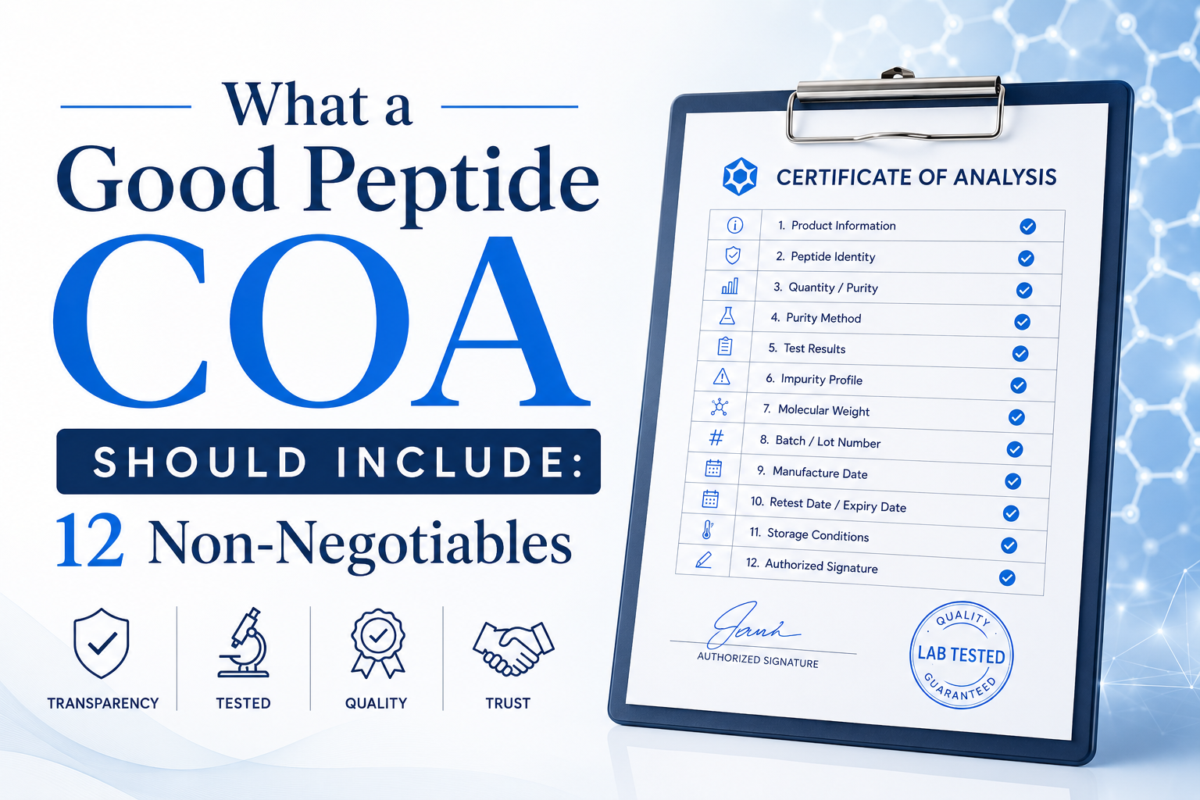
A peptide COA is the most important quality control document associated with any research peptide. Before researchers evaluate a supplier, compare batches, or review analytical data, the Certificate of Analysis serves as the primary record demonstrating that a specific lot of material has undergone testing against established specifications. A complete peptide Certificate of Analysis should identify the batch being tested, confirm peptide identity through mass spectrometry, report purity through HPLC with the supporting chromatogram, disclose net peptide content, provide sterility and endotoxin results where appropriate, identify the testing laboratory, include relevant dates, and contain a verifiable authorization record. When one or more of these elements is missing, the value of the document decreases significantly because researchers lose the ability to independently evaluate the quality claims being made [1-4].
The challenge is that not all COAs are created equally. Some suppliers publish detailed, batch-specific reports supported by independent analytical testing, while others provide simplified documents containing only a purity percentage and product name. Understanding what should appear on a peptide COA helps researchers distinguish between comprehensive analytical documentation and paperwork that offers little meaningful verification. This guide explains the twelve non-negotiable elements every peptide COA should contain, why each element matters, and what researchers should do when important information is absent.
Quick Answer: What a COA Is and Why It Matters
A Certificate of Analysis is a quality document issued by a manufacturer or analytical laboratory confirming that a specific batch of material has been tested and evaluated against predetermined specifications. The purpose of the COA is to provide traceable evidence regarding identity, purity, and other quality attributes relevant to the material being supplied. Documentation practices surrounding Certificates of Analysis closely mirror broader Good Manufacturing Practice principles, where analytical results, batch traceability, and record integrity are essential components of quality assurance systems [4].
For research peptides, the COA often represents the single most important quality control artifact available to a buyer. Researchers rarely have direct access to manufacturing records, raw synthesis data, or internal quality investigations. Instead, they rely on the analytical information presented within the COA to determine whether a batch appears suitable for research purposes.
The strength of a COA depends not only on the reported results but also on the transparency of the supporting data. A manufacturer-issued report may provide useful information, but independent third-party testing adds another layer of verification because the laboratory performing the analysis operates separately from the company producing the material. As a result, many researchers consider third-party tested peptides to represent the strongest documentation standard available within the research peptide industry.
The 12 Non-Negotiables
Each of the following elements answers a specific question that researchers should be able to answer before evaluating a peptide batch.
1. Batch or Lot Number
A batch or lot number is the foundation of traceability. Every legitimate peptide COA should clearly identify the production lot associated with the analytical results being reported. Without batch identification, there is no reliable way to connect a Certificate of Analysis to the vial being evaluated.
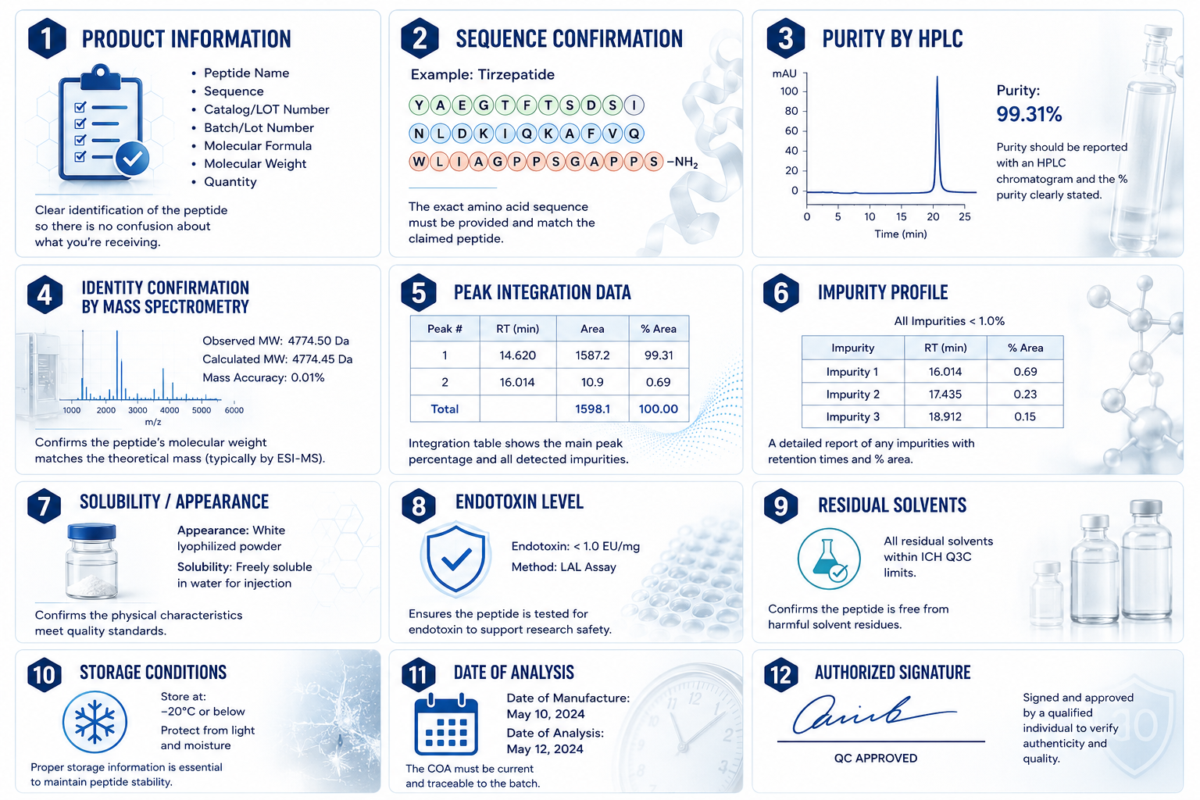
Figure 1: 12 Non-Negotiables for a reputable Peptide COA.
Traceability is important because analytical results are only meaningful when they can be linked to a specific manufacturing run. If multiple batches exist for the same peptide, purity, identity, endotoxin levels, and other quality attributes may vary from one lot to another. A batch-specific COA allows researchers to verify that the report corresponds directly to the material they received rather than a generic product specification sheet. One of the most common warning signs is the use of a single COA across multiple unrelated lots. Reputable suppliers typically publish batch-specific documentation so that researchers can verify the exact material associated with each report.
2. Peptide Name, Sequence, and CAS or Molecular Formula
The next requirement is clear identification of the material itself. A complete peptide COA should specify the peptide name and provide supporting information such as the amino acid sequence, molecular formula, molecular weight, and CAS number when available.
These identifiers establish what the manufacturer intended to synthesize and provide the reference information necessary for subsequent analytical testing. Molecular weight calculations, for example, are essential for identity confirmation by mass spectrometry, while sequence information provides context for purity analysis and peptide characterization. Although this section may appear straightforward, it plays an important role in preventing ambiguity. Researchers should be able to determine exactly which peptide was analyzed without relying on marketing names or abbreviated product descriptions.
3. Identity Confirmation by Mass Spectrometry
Identity testing is one of the most important analytical sections on any peptide COA. The purpose of identity testing is to confirm that the synthesized material is actually the intended peptide rather than a different molecule that happens to appear highly pure. Mass spectrometry techniques such as LC-MS and MALDI-MS are widely used for peptide identity testing because they allow analytical laboratories to compare the observed molecular weight of a sample against the theoretical molecular weight of the target compound [5,6]. When the observed and theoretical values align appropriately, researchers gain evidence that the intended peptide was successfully synthesized.
This distinction is important because purity and identity are not interchangeable concepts. A sample can contain a single dominant component and therefore appear highly pure yet still be the wrong compound. Identity testing answers the question of what the material is, while purity testing answers the question of how much of the sample consists of that material. For maximum transparency, a peptide COA should report both the theoretical mass and observed mass. Some laboratories also provide representative spectra that allow researchers to review the underlying analytical evidence supporting the identity claim.
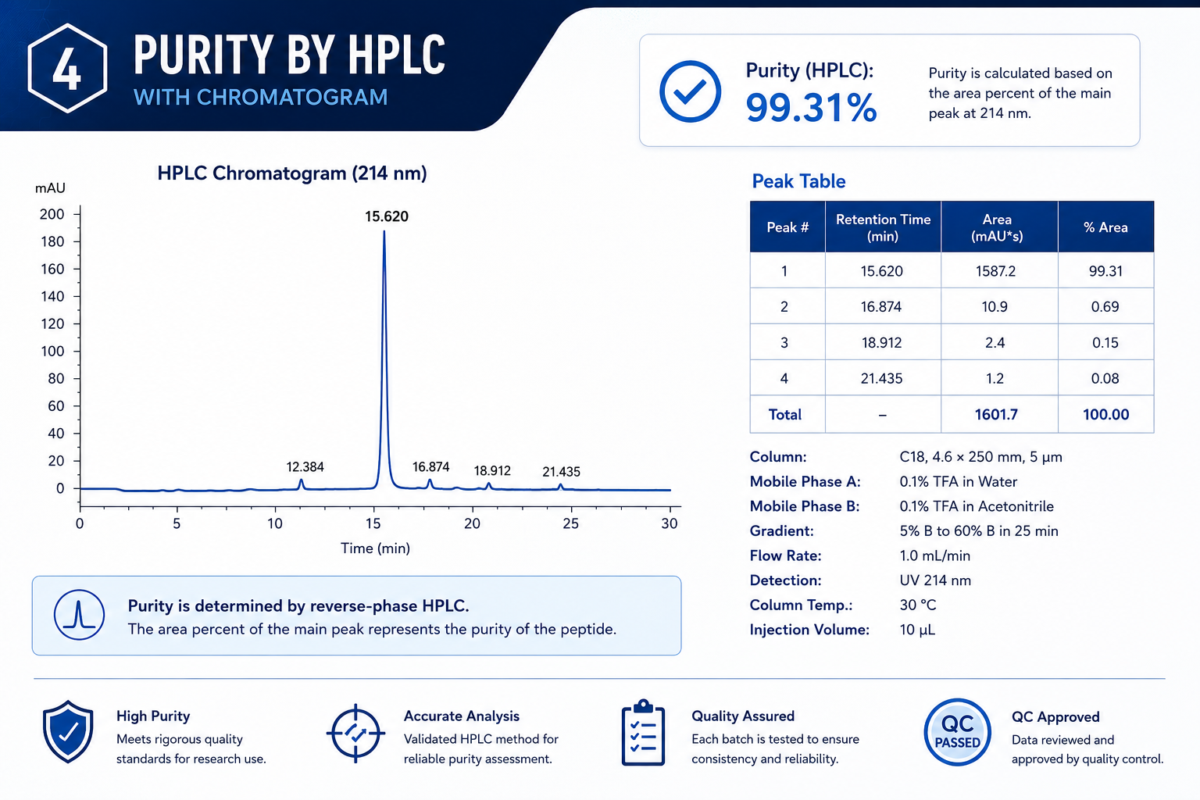
Figure 2: Visual of Purity analysis assessment by HPLC with Chromatogram.
4. Purity by HPLC With the Chromatogram
Purity analysis is another foundational component of peptide quality assessment. High-Performance Liquid Chromatography, particularly reversed-phase HPLC, is one of the most commonly used analytical techniques for evaluating peptide purity [3,7].The purity percentage itself is important, but the chromatogram is equally critical. A chromatogram provides a visual representation of the separation profile generated during analysis and allows researchers to examine the peaks that contribute to the reported purity calculation. Without the chromatogram, a purity percentage becomes difficult to independently evaluate.
A complete peptide purity report should include the chromatographic method used to generate the result. Information such as column type, detection wavelength, mobile phases, gradient conditions, and flow rate helps establish confidence in the analytical procedure. These details also demonstrate that the analysis was performed using a documented methodology rather than a simplified screening process. When researchers ask how to read a peptide COA, the HPLC chromatogram is often one of the most informative sections because it provides insight into the overall impurity profile of the sample rather than simply reporting a single number.
5. Net Peptide Content
Net peptide content is frequently misunderstood because it is often confused with purity. While purity measures the percentage of the sample consisting of the target peptide, net peptide content measures the actual amount of peptide present within the vial [8].
This distinction matters because moisture, salts, counterions, and other non-peptide components can contribute to total weight without affecting purity calculations. As a result, a sample may be highly pure while containing less peptide mass than expected. Analytical laboratories may determine net content using amino acid analysis, nitrogen analysis, UV quantification, or other validated quantitative techniques. Researchers evaluating multiple suppliers should consider net content independently from purity because the two measurements answer different questions and provide different insights into the material being supplied.validated quantitative techniques. Researchers evaluating multiple suppliers should consider net content independently from purity because the two measurements answer different questions and provide different insights into the material being supplied.
6. Sterility Test Result
Sterility testing evaluates whether viable microorganisms are present in the sample. Although sterility testing is not always required for every research application, it can be particularly relevant for laboratories conducting cell culture experiments or other contamination-sensitive workflows.
A complete COA should identify both the testing methodology and the analytical result. Common approaches include membrane filtration techniques and procedures aligned with USP <71> Sterility Tests [1]. By documenting the method used and reporting the outcome, the laboratory provides evidence that viable microbial contamination was not detected during testing. Sterility results should not be viewed as a substitute for endotoxin testing, however, because the two analyses evaluate fundamentally different quality attributes.
7. Endotoxin (LPS) Test Result
Endotoxin testing evaluates the presence of bacterial lipopolysaccharides, commonly referred to as LPS. These endotoxins originate from Gram-negative bacteria and can influence research outcomes even when no viable organisms remain present within the sample [2]. This is why sterility and endotoxin testing are often reported separately. A material may pass sterility testing while still containing measurable endotoxin contamination.
Most peptide endotoxin testing is performed using Limulus Amebocyte Lysate methodologies described within USP <85> [2]. A meaningful endotoxin section should identify the analytical method used, the reported value, the units of measurement, and the detection limit associated with the assay. Researchers conducting cell-based studies frequently review endotoxin data carefully because endotoxins can alter biological responses and complicate interpretation of experimental results.
8. Appearance and Physical Description
Appearance testing provides a simple but useful quality checkpoint. Most peptide COAs include a brief physical description such as white lyophilized powder or off-white lyophilized powder.Although visual inspection cannot confirm identity or purity, it provides confirmation that the material matched expected physical characteristics at the time of analysis. This information can also serve as a practical comparison point when researchers inspect the material upon receipt.
9. Date of Analysis and Date of Manufacture
Every Certificate of Analysis should include both a manufacture date and an analysis date. Together, these dates provide important context regarding the history of the material and the timing of the analytical work performed. The manufacture date identifies when the batch was produced, while the analysis date indicates when testing occurred. Without these dates, researchers cannot determine whether a report reflects recent testing or whether significant time elapsed between manufacturing and analysis. Undated analytical reports should always be approached cautiously because they reduce transparency regarding the testing timeline.
10. Testing Laboratory Identification
The analytical laboratory responsible for testing should be clearly identified within the report. Laboratory identification typically includes the organization’s name, contact information, and in some cases accreditation credentials.This information allows researchers to verify the existence of the laboratory and evaluate the independence of the testing process. Anonymous testing claims or reports lacking laboratory identification provide limited accountability and make authenticity verification significantly more difficult. Independent laboratory identification is particularly important when evaluating third-party tested peptides because it allows researchers to confirm that the testing organization operates separately from the supplier.
11. Storage and Handling Recommendations
Storage recommendations are often overlooked, but they remain an important component of peptide quality documentation. Peptides are sensitive molecules whose stability can be affected by temperature, moisture, and handling conditions. A complete quality package should provide guidance regarding storage of both lyophilized and reconstituted material. These recommendations help researchers maintain material integrity and reduce the likelihood of degradation occurring after the product leaves the supplier’s control. While storage guidance may appear less important than identity or purity testing, it contributes to the overall quality framework supporting reliable peptide research.
12. Authorized Signature, Digital Identifier, or Verifiable Reference
The final non-negotiable element is verification. A legitimate COA should contain evidence that the report was reviewed, approved, and released by an authorized individual. This verification may appear as an analyst signature, quality assurance approval, digital authentication code, or unique document reference number. Regardless of the format used, the goal is the same: providing a mechanism that allows researchers to confirm the authenticity of the report. An unsigned PDF lacking any form of verification should not be considered equivalent to a properly authorized Certificate of Analysis.
What to Do When a COA Is Missing Elements
A missing element is not automatically disqualifying, but it should prompt further investigation. Critical omissions such as the absence of batch identification, identity testing, purity testing, laboratory identification, or claimed third-party verification significantly reduce the value of the document because researchers lose the ability to independently assess the quality claims being presented.
Other omissions may be less severe. Missing storage recommendations or endotoxin data for non-cell-culture applications may justify requesting additional information rather than dismissing the supplier outright. Cosmetic issues such as formatting inconsistencies or missing letterhead are generally less concerning when the underlying analytical data remains complete and verifiable.
The key principle is that researchers should evaluate the substance of the documentation rather than the appearance of the document itself.
Why Third-Party Testing Changes the Picture
The primary difference between manufacturer-issued reports and third-party analytical reports is independence. Manufacturer-generated COAs may contain accurate data, but they are ultimately produced by the same organization responsible for manufacturing the material.
Third-party laboratories provide external verification and reduce potential conflicts of interest. Because the testing organization operates independently from the supplier, researchers gain additional confidence that the reported results reflect the material analyzed rather than a marketing claim [4].
The strongest documentation packages often include both manufacturer records and independent laboratory reports for the same batch. Together, these documents provide multiple layers of analytical evidence supporting identity, purity, and overall quality.
Frequently asked questions (FAQs) about What a Good Peptide COA Should Include
What is a peptide Certificate of Analysis?
- A peptide Certificate of Analysis is a document confirming that a specific peptide batch has undergone analytical testing and has been evaluated against predetermined specifications.
What is the most important element on a peptide COA?
- Identity confirmation through mass spectrometry and purity assessment through HPLC are generally considered the two foundational analytical elements because they establish what the material is and how pure it is [5-7].
Is net peptide content the same as purity?
- No. Purity measures the percentage of the sample consisting of the target peptide, while net peptide content measures the actual amount of peptide present within the vial [8].
What is endotoxin testing on a peptide COA?
- Endotoxin testing measures bacterial lipopolysaccharides that may remain in a sample. Results are commonly generated using LAL methodologies and reported in endotoxin units [2].
Can I trust a COA issued by the manufacturer alone?
- Manufacturer-issued reports can provide useful information, but independent third-party testing is generally considered stronger because it introduces external verification [4].
How do I verify a peptide COA is authentic?
- Researchers should look for laboratory identification, contact information, report reference numbers, and analyst authorization records. Reputable laboratories can often verify authenticity upon request.
What if my COA is missing the HPLC chromatogram?
- A purity percentage without the supporting chromatogram is difficult to independently evaluate. Researchers should request the chromatographic data before relying on the reported result.
References
- United States Pharmacopeia (USP). General Chapter <71> Sterility Tests. https://www.usp.org
- United States Pharmacopeia (USP). General Chapter <85> Bacterial Endotoxins Test. https://www.usp.org/harmonization-standards/pdg/general-methods/bacterial-endotoxins
- United States Pharmacopeia (USP). General Chapter <621> Chromatography. https://www.usp.org
- U.S. Food and Drug Administration. Q7 Good Manufacturing Practice Guidance for Active Pharmaceutical Ingredients. https://www.fda.gov/regulatory-information/search-fda-guidance-documents/q7-good-manufacturing-practice-guidance-active-pharmaceutical-ingredients-guidance-industry
- Thermo Fisher Scientific. Mass Spectrometry Solutions for Peptide Characterization. https://www.thermofisher.com/us/en/home/industrial/mass-spectrometry.html
- Waters Corporation. Peptide Analysis Using LC-MS and MALDI-MS Technologies. https://www.waters.com
- Waters Corporation. Best Practices for Peptide Analysis by Reversed-Phase HPLC. https://www.waters.com/nextgen/us/en/library/application-notes.html
- European Directorate for the Quality of Medicines & HealthCare (EDQM). European Pharmacopoeia Standards and Analytical Testing Resources. https://www.edqm.eu/en/european-pharmacopoeia