
Tesofensine (400 mcg, 60 units)
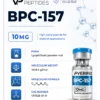


BPC-157 Peptide (10MG)
This batch of BPC-157 has been third party lab tested and verified for quality.

TESTED FOR:

purity
weight
TFA FREE
sterility
endotoxins(lps)
$53.00
| Quantity | Price | |
|---|---|---|
| 0% | 1 - 4 | $53.00 |
| 10% | 5 - 9 | $47.70 |
| 20% | 10 - 19 | $42.40 |
| 30% | 20 + | $37.10 |
This product comes as lyophilized powder and is not reconstituted. All products and materials sold on this site are for Research Use Only and not for human use; subject to our Terms and Conditions.

2-Day Shipping
Order by 2:00 PM ET

INSULATED SHIPPING
Ice foam-box shipping available
| Peptide vial specifications | Results | |
|---|---|---|
Not reconstituted | ||
Bottle type: | Vial - sealed - flip top | |
Form: | Powder (lyophilized) | |
Vial size: | 3ML | |
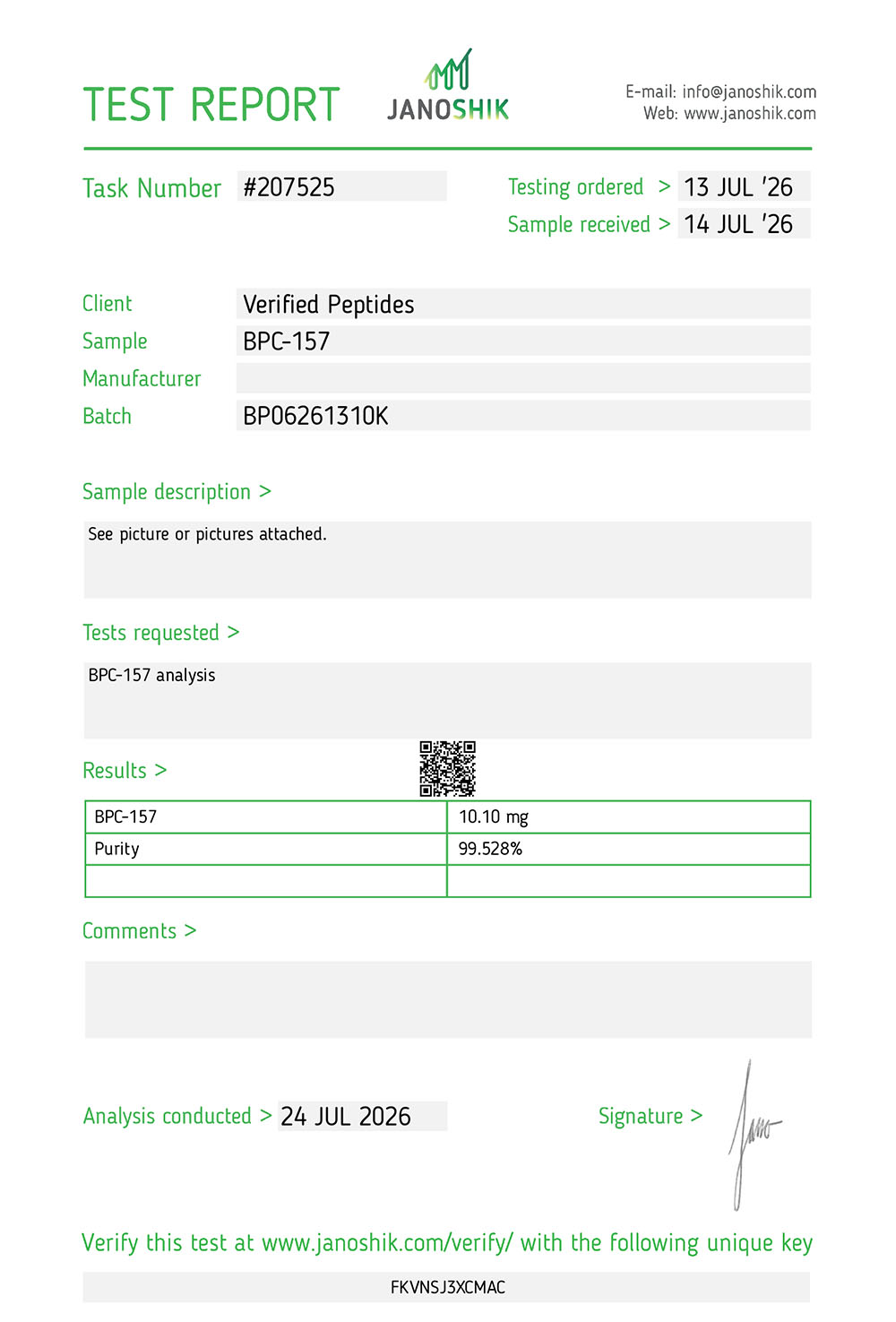
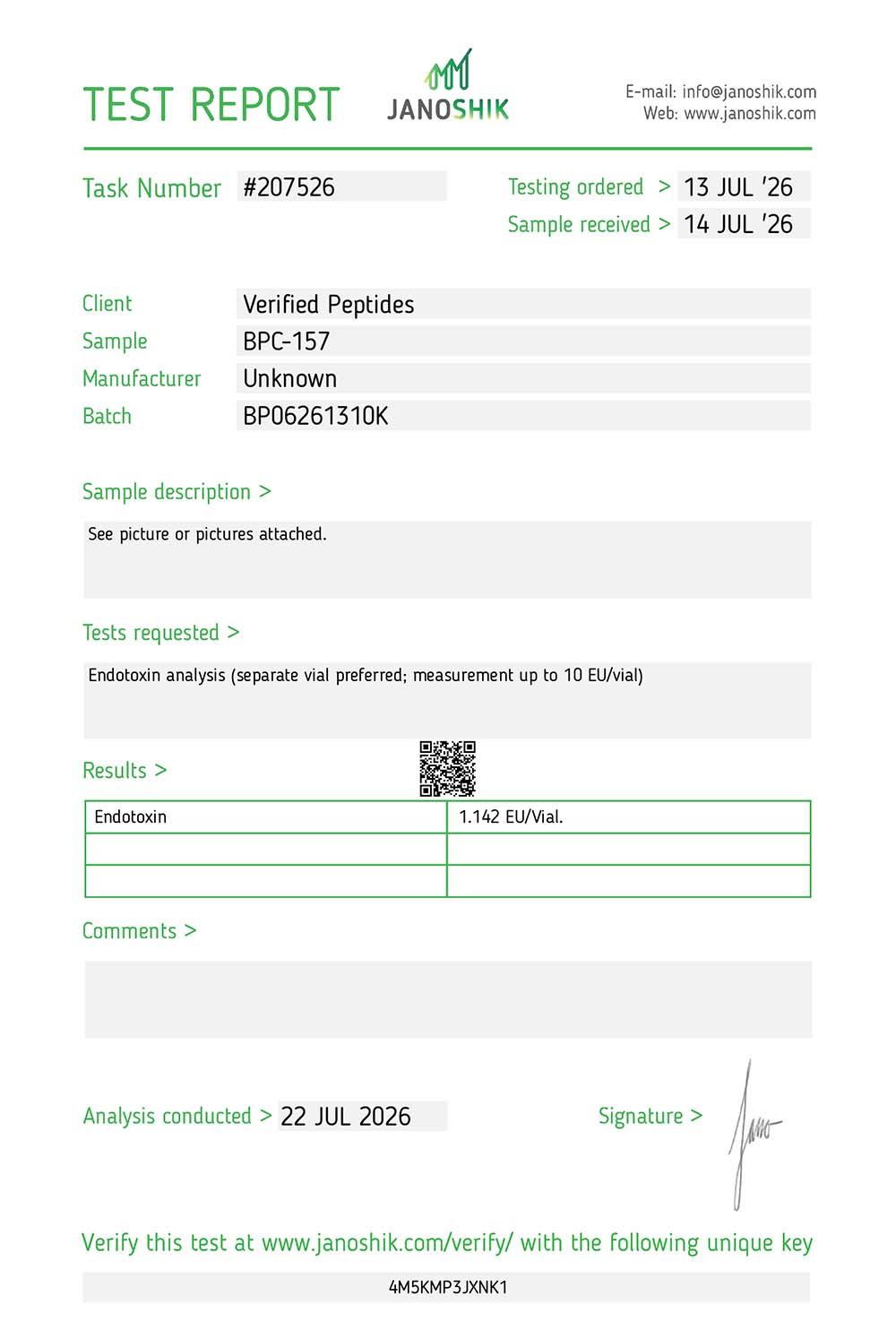
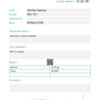
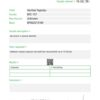
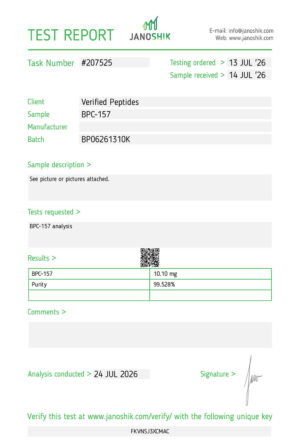
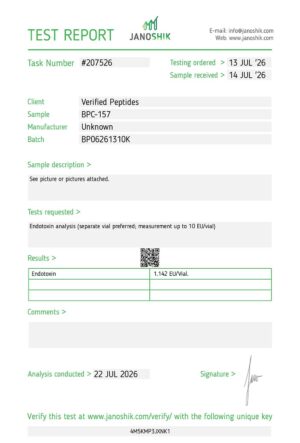
BPC-157 Certificate of Analysis (COA) Test Result
| Date Tested: | |
|---|---|
| Purity: | 99.528% |
| Weight: | 10.10mg |
| Endotoxins (LPS): | Pass |
| Sterility: | Pass |
| TFA: | Not detected |
| Batch #: | BP06261310K |
| Testing Lab: | Janoshik |
| COA Verified Link: | Purity Report Endotoxin Report |
| Testing Methods: | HPLC, LAL, TAMC/YAMC USP <71> |

BPC-157 Specifications: Molecular Weight, CAS Number & Sequence
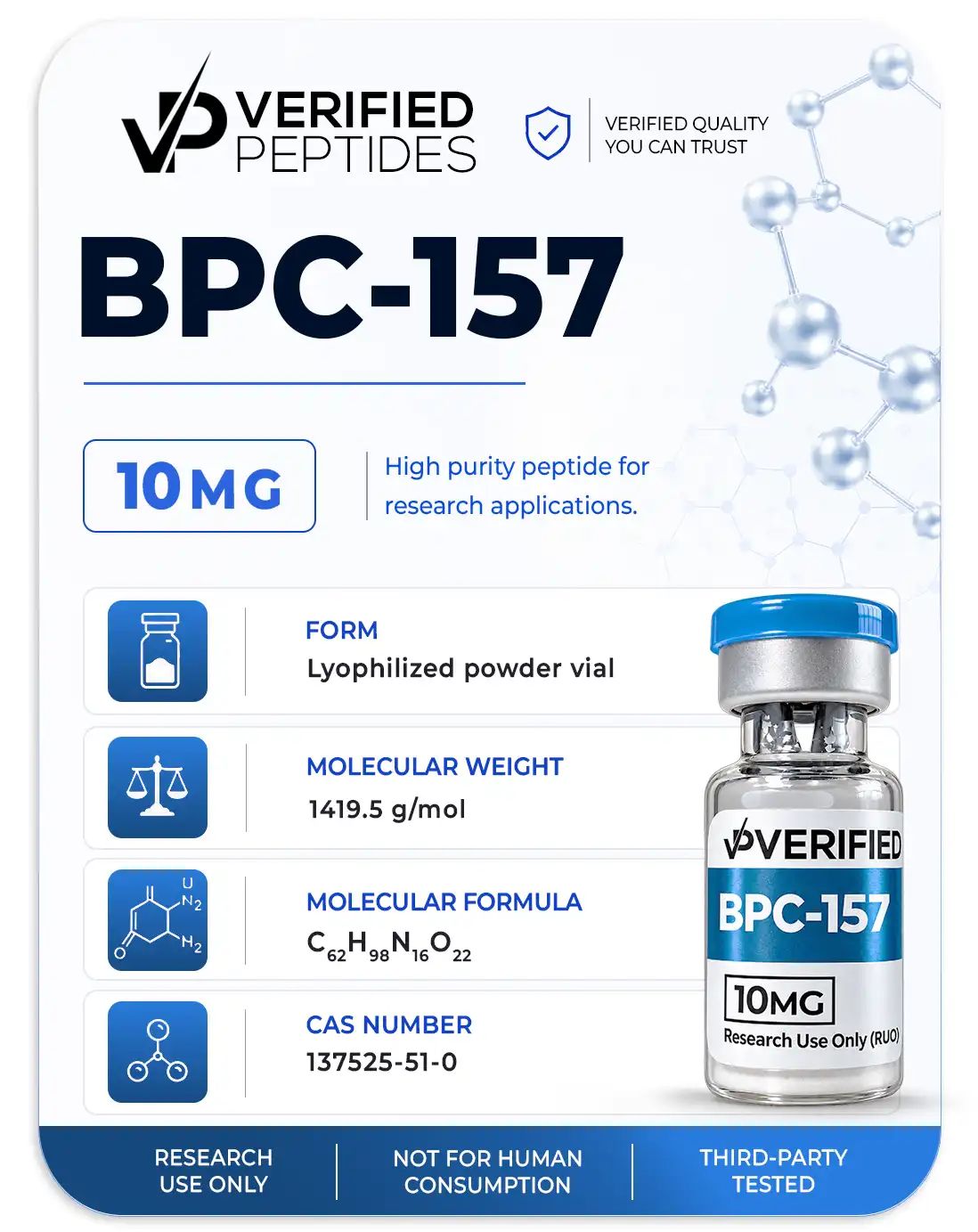
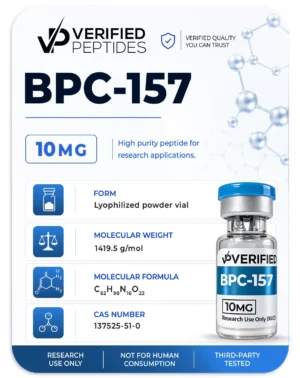
BPC-157 (CAS 137525-51-0) is a synthetic pentadecapeptide with the molecular formula C62H98N16O22 and a molecular weight of 1419.535 g/mol.
| Form: | Powder (lyophilized) |
|---|---|
| Weight: | 10mg |
| Appearance: | White to off-white lyophilized powder |
| CAS Number: | 137525-51-0 |
| Molecular Formula: | C62H98N16O22 |
| Molecular Weight: | 1419.535 g/mol |
| PubChem CID: | 9941957 |
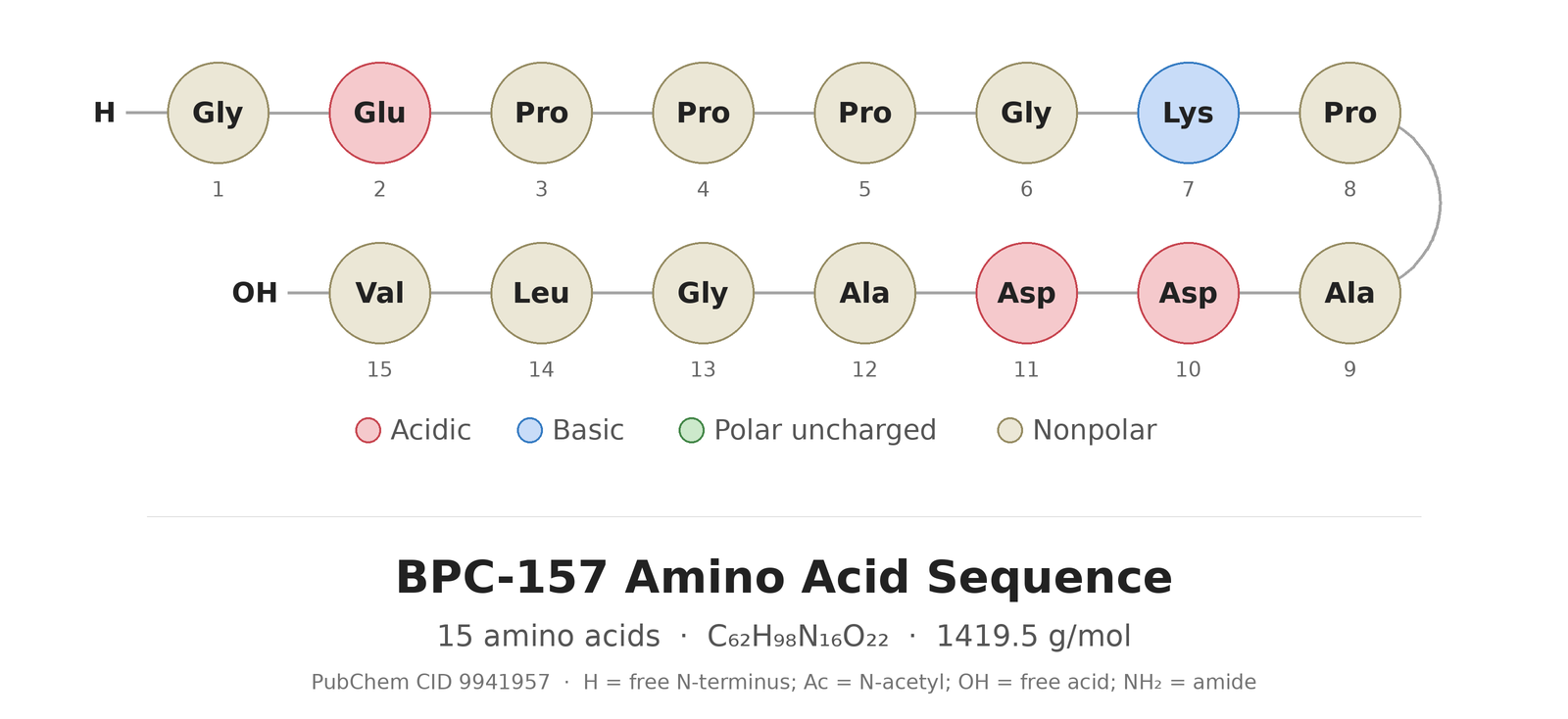
| Sequence: | Gly-Glu-Pro-Pro-Pro-Gly-Lys-Pro-Ala-Asp-Asp-Ala-Gly-Leu-Val |
| Other Names: | BPC157, BPC 157 |
| Terms: | Subject to our Terms and Conditions. This material is sold for laboratory research use only. Not for human consumption, animal, or medical use. |
BPC-157 Molecular Structure
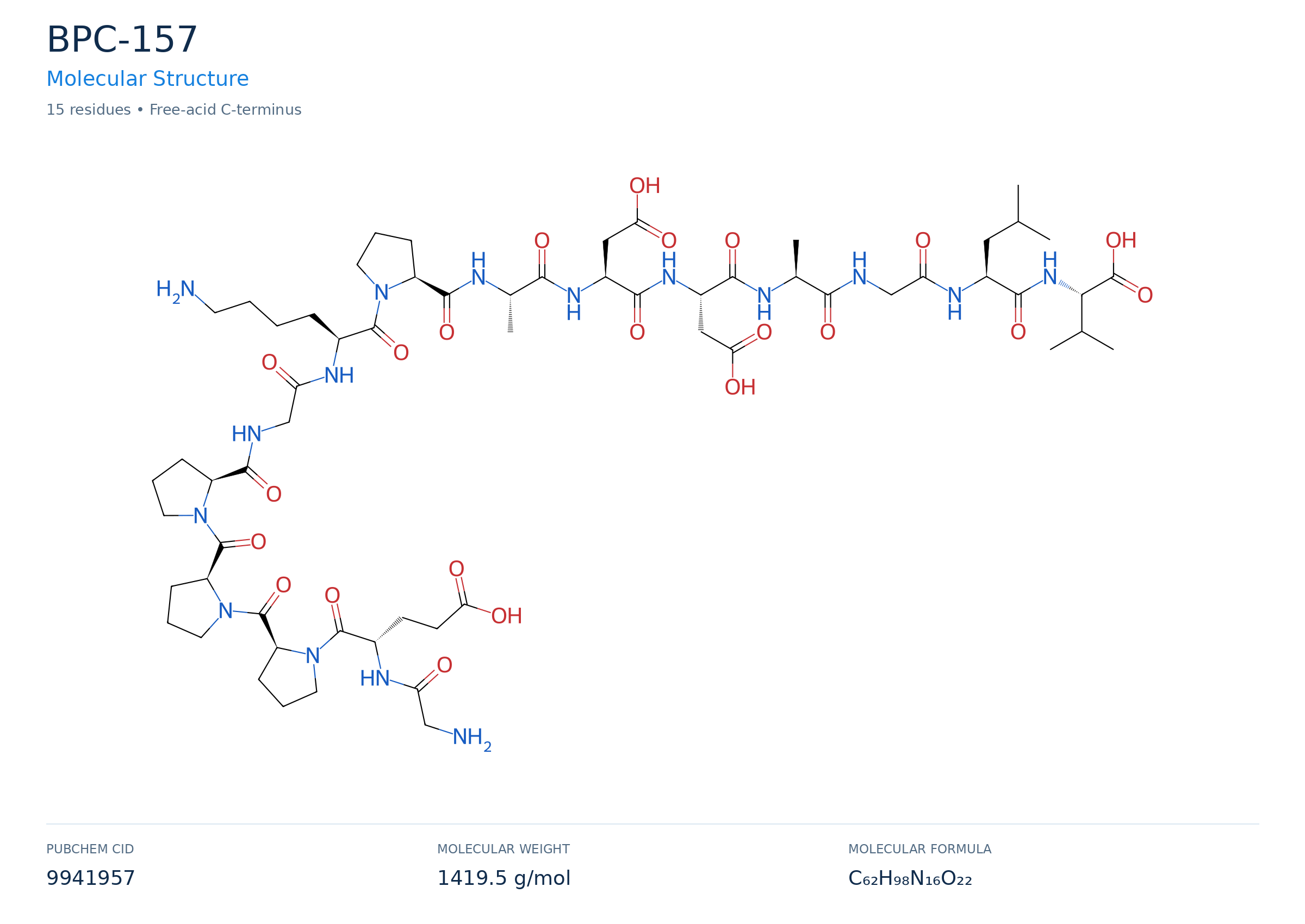
BPC-157 Amino Acid Sequence

The industry's most trusted source for research peptides
The Leader In Peptide Testing
500+ Certificates of Analysis
You can be sure we don't cut corners on testing every single batch.
Visit our Lab Reports page.
An Established, Trusted Company
6+ Years of Peptides
We pioneered third party lab testing and have stood the test of time. Our first lab report dates back to 2019 proving our track record.
Fair market pricing
Competitively priced cost per milligram for verified quality.
Peptides Tested For More Than Purity
We conduct an array of analytical testing for our peptides:
purity, weight, endotoxins(LPS), sterility (bacteria & mold/yeast), and TFA content.
Transparent. Consistent. Reliable.
- Batch number on every vial
- Published Certificates of Analysis
- Expert customer service
- Satisfaction and quality guarantee
- Cold pack foam-lined shipping
Explore Other High-Purity Peptides
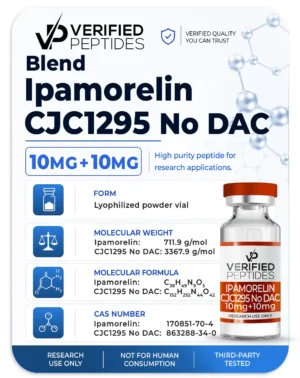
Peptide Blends
Price range: $65.00 through $107.00
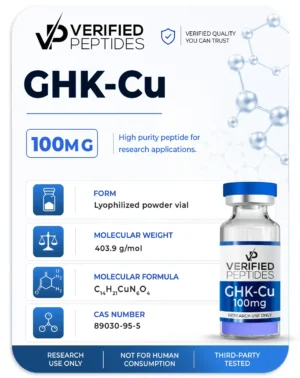
Peptides
$49.99
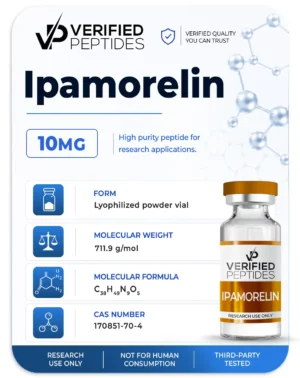
Peptides
$44.99
Peptides
$62.00
Peptides
$119.00
Peptides
Price range: $43.00 through $77.00
Peptides
$34.99
Hear What Our Customers Say
Trusted by thousands of researchers for high-quality peptides

This is a first class operation. Quality products and the best customer service. There may be many similar type of companies out there, but this one is trusted and affordable. [...] I highly recommend this company.
Verified Peptides is hands down my favorite website for these products. I can always count on the products to be legitimate and effective, all while being affordable. Will continue to give them my business.
Outstanding product, outstanding price, outstanding shipping
What is BPC-157?
BPC-157, also called stable gastric pentadecapeptide BPC 157, is a synthetic 15-amino-acid peptide (sequence GEPPPGKPADDAGLV). Its sequence is a partial sequence of a protein found in gastric juice. Researchers have studied it mainly in rat models of muscle, tendon, ligament and bone injury, as well as in gastrointestinal models. Much of the published BPC-157 literature, including the study below, comes from one research group at the University of Zagreb.
BPC-157 Research Studies
Summaries of peer-reviewed research. For research and educational purposes only.
📚 Peer-Reviewed Study · Rat Model
BPC-157 Rat Study: Quadriceps Muscle-to-Bone Reattachment After Surgical Detachment (Matek et al., Pharmaceutics, 2025)
Overview of the BPC-157 Study
This 2025 study in Pharmaceutics (Matek et al.) tested BPC 157 in a rat surgical model. In this model, the quadriceps muscle is cut away from its attachments on the femur and pelvis. Without treatment, the detached muscle does not reattach in rats, which leaves lasting gait problems and knee contracture.
Rats given BPC 157 in drinking water after surgery were compared with rats given plain water. Over 90 days, the researchers tracked walking pattern, motor function, contracture, muscle diameter, ultrasound and MRI findings, biomechanical measures and tissue histology.
Scope: This was an animal study in male rats. It did not test BPC 157 in people.
BPC-157 Study at a Glance
- Citation: Matek D, Matek I, Staresinic E, et al. Pharmaceutics. 2025;17(1):119.
- Animals: Male albino Wistar rats, 12–16 weeks old, 6 rats per group per time point
- Model: Surgical detachment of the quadriceps: complete for rectus femoris, partial for the vastus muscles
- Administration in the study: Oral. One dose was given by stomach tube 5 minutes after surgery, then the peptide was given in drinking water until the end of each interval.
- Comparison: Plain drinking water
- Time points: 1, 2, 3, 5, 7, 14, 21, 28, 60 and 90 days after surgery
- Authors' disclosure: No conflicts of interest declared
Research Objective
The authors asked whether BPC 157, given by mouth from the time of surgery, would change the course of a quadriceps detachment injury in rats. Specifically, they looked at reattachment of the muscle to bone and recovery of walking.
The group had previously reported BPC 157 studies in other rat musculoskeletal models, including myotendinous junction and tendon-to-bone injuries. This study extended that work to a muscle-to-bone model.
Study Design and Methodology
Under anesthesia, the rectus femoris was fully detached from the iliac bone and the vastus muscles were partially detached from the femur. Rats then received BPC 157 at 10 µg/kg or 10 ng/kg, or water as a control. The first dose was given by stomach tube 5 minutes after surgery, and the rest in drinking water. These are the amounts reported in the paper's rat protocol.
The researchers assessed:
- Function: Walking Recovery Index (WRI), Motor Function Index (MFI) and gait analysis
- Structure: Thigh muscle diameter, gross gap assessment, ultrasound and 1.5 T MRI
- Tissue: Light microscopy and collagen (Sirius red) staining at the muscle–bone junction
What Did the BPC-157 Rat Study Find?
Walking and motor function: Control rats showed persistently impaired walking and permanent knee flexion. The authors reported that BPC 157-treated rats at both dose levels showed improved WRI and MFI scores and gait patterns at the time points assessed.
Contracture and muscle diameter: Leg contracture persisted in controls. The authors reported that it was eliminated in BPC 157-treated rats, and thigh muscle diameter was closer to normal than in controls.
Imaging: On ultrasound, the gap between the detached muscle and bone was smaller in treated rats from early time points onward. MRI and gross assessment were consistent with reattachment in treated rats, while a gap remained in controls.
Histology: By day 3, treated rats showed more mesenchymal cells and reactivation of the periosteum, the membrane covering bone. At 3 months, muscle fibers could be traced into newly formed bone at the reattachment site, with organized collagen.
Proposed Mechanisms
The authors discussed several processes that may relate to their findings. These come from the histology in this study and from the group's earlier research:
- Periosteal reactivation and mesenchymal cell activity at the injury site
- Effects on blood vessels and the nitric oxide (NO) system, which the authors' group has described in prior BPC 157 studies
- Healing that began on both the muscle side and the bone side of the detachment
The study did not directly measure these pathways. The authors present them as interpretation.
Limitations and Research Context
- This was a single rat study with 6 animals per group at each time point, all male.
- The surgical model is specific to experimental quadriceps detachment. Results do not show effects in other injuries, other species or people.
- Most published BPC 157 research comes from the same research group, so independent replication by other laboratories is limited.
- The paper reports findings in rats only. It does not establish safety, dosing or effects for any other use.
Conclusion
In this rat model of quadriceps muscle-to-bone detachment, Matek et al. reported that oral BPC 157 was associated with reattachment of muscle to bone, less contracture, and better walking and motor scores than in water-treated controls over 90 days. Ultrasound, MRI and histology supported these findings. The authors called for further study of these mechanisms.
This summary is provided for research and educational purposes. Statements on this page have not been evaluated by the FDA. Research compounds offered on this site are for laboratory research use only. They are not intended for human or veterinary use, or to diagnose, treat, cure, mitigate or prevent any disease.
Frequently Asked Questions
What is stable gastric pentadecapeptide BPC 157?
BPC 157 is a synthetic 15-amino-acid peptide (GEPPPGKPADDAGLV) based on a partial sequence of a protein found in gastric juice. It has been studied mainly in rat injury models.
What did the 2025 BPC-157 quadriceps study in rats find?
In male rats with surgically detached quadriceps muscles, the authors reported that BPC 157 in drinking water was associated with muscle-to-bone reattachment on imaging and histology, elimination of contracture, and better walking scores than in water-treated controls over 90 days.
How was BPC 157 given in the rat study?
The first dose was given by stomach tube 5 minutes after surgery. Treatment then continued in the rats' drinking water until each assessment time point. These details describe the published rat protocol only.
What measurements did researchers use to assess recovery in rats?
They used the Walking Recovery Index, Motor Function Index, gait analysis, thigh muscle diameter, ultrasound, MRI, biomechanical tests and microscopic tissue analysis at time points from day 1 to day 90.
What mechanisms did the authors propose for BPC 157 in this model?
Based on histology and their earlier research, the authors discussed periosteal reactivation, mesenchymal cell activity at the injury site, and effects on blood vessels and the nitric oxide system. The study did not directly test these pathways.
Study Reference
Matek D, Matek I, Staresinic E, Japjec M, Bojanic I, Boban Blagaic A, et al. Stable Gastric Pentadecapeptide BPC 157 as Therapy After Surgical Detachment of the Quadriceps Muscle from Its Attachments for Muscle-to-Bone Reattachment in Rats. Pharmaceutics. 2025;17(1):119. doi:10.3390/pharmaceutics17010119
https://pubmed.ncbi.nlm.nih.gov/39861766/
IN THE KNOW
Join over 5,000 active members and get updates on new arrivals and latest lab reports.