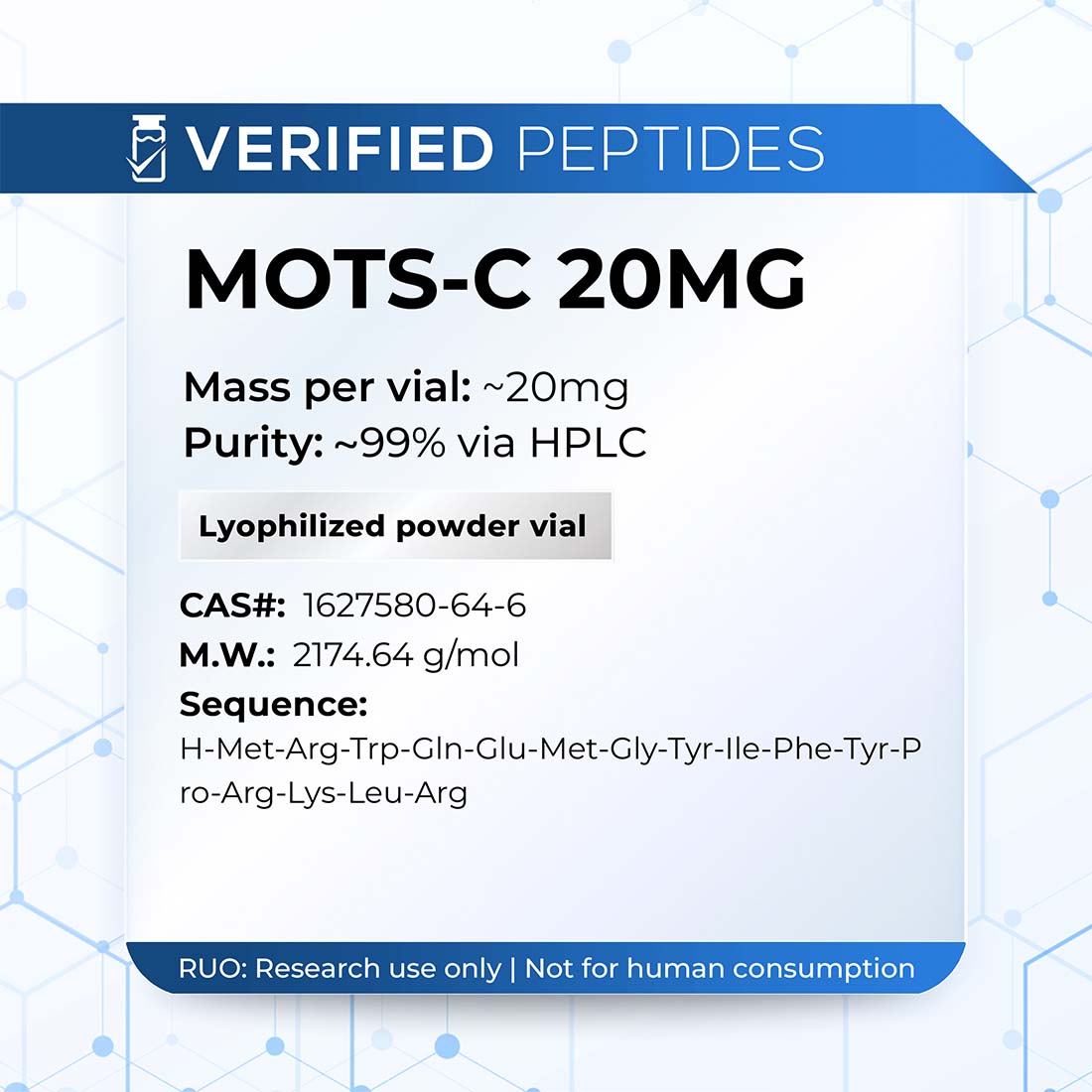
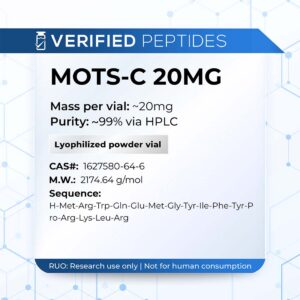
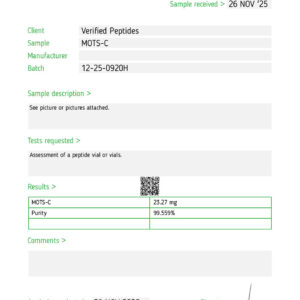
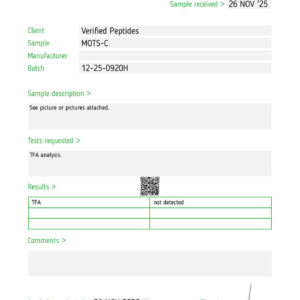
This product is in powder form and is not reconstituted.
All products and materials sold on this site are not for human consumption and subject to our Terms and Conditions.
SHIPS TODAY Order by 1:00 PM EST
FREE SHIPPING For orders over $200
ICE PACK SHIPPING Styrofoam box shipping available
This product is in powder form and is not reconstituted.
Why Choose Verified Peptides?
The industry's most trusted source for research peptides
The #1 Leader In Peptide Testing 300+ Certificates of Analysis
What does this mean for you? You can be sure we don't cut corners on testing every single batch. Visit our Lab Reports page.
A Long Standing Trusted Company 5+ Years of Peptides
We pioneered third party lab testing and have stood the test of time. Our first lab report dates back to 2019 proving our track record.
The Best $/mg Prices At The Highest Quality
You won't find this degree of testing and quality at this price.
Peptides Tested For More Than Just Purity
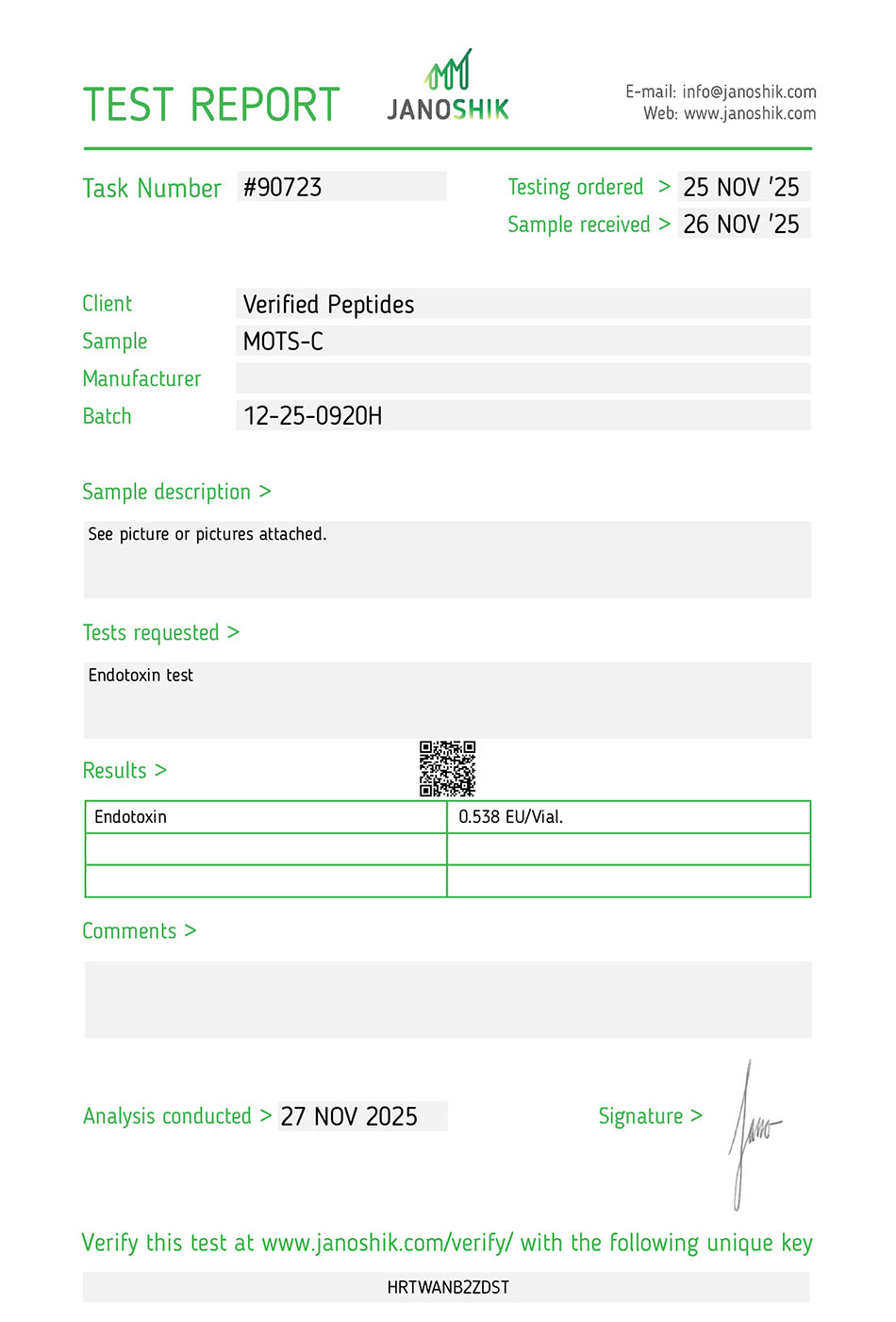
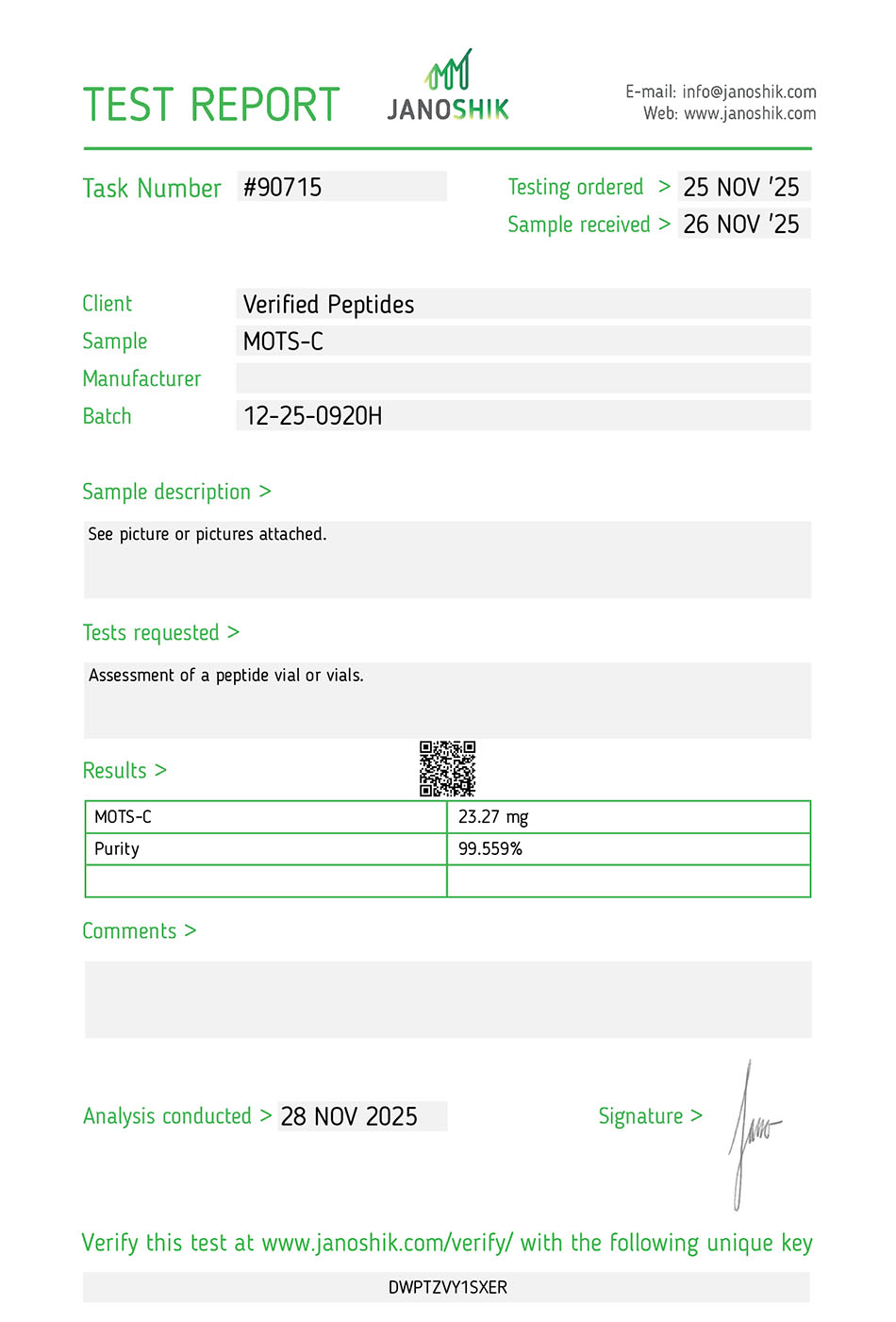
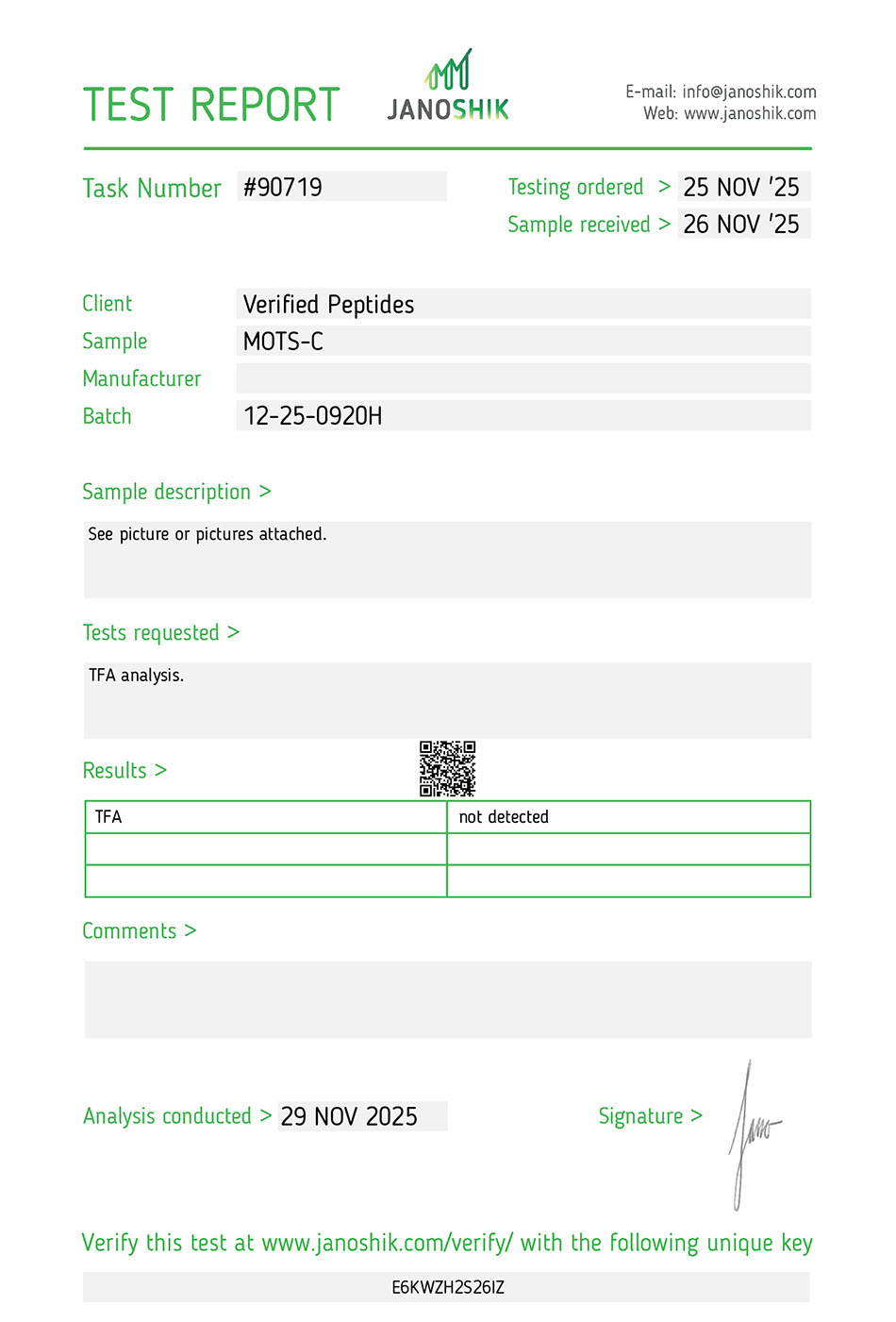
We conduct an array of tests via HPLC and other methods for our peptides: purity, weight, endotoxins(LPS), sterility (bacteria & mold/yeast), and TFA content.
This is a first class operation. Quality products and the best customer service. There may be many similar type of companies out there, but this one is trusted and affordable. No price gouging! I highly recommend this company!
Verified Peptides is hands down my favorite website for these products. I can always count on the products to be legitimate and effective, all while being affordable. Will continue to give them my business.
The MOTS-c peptide is a 16-amino acid mitochondrial-derived peptide encoded within the 12S rRNA region of mitochondrial DNA. As part of a recently recognized class of mitochondrial signaling peptides, MOTS-c participates in regulating cellular and whole-body metabolism. Research in cellular and animal models has shown its roles in supporting insulin sensitivity, glucose utilization, and broader metabolic homeostasis. MOTS-c uniquely links mitochondrial genome signaling to whole-body metabolic balance, making it a subject of growing scientific interest.
MOTS-c Peptide Research Studies
Peer reviewed research studies
📚 Peer-Reviewed Study
High-Fat Diet, Less Weight Gain: How MOTS-c Helped Mice Resist Obesity
▼
Overview of the Study
This study investigated whether the MOTS-c peptide could counteract the metabolic disturbances caused by a 60% high-fat diet (HFD) in male mice. Researchers administered daily intraperitoneal MOTS-c injections, typically at 0.5 mg/kg/day during high-fat feeding, with some experimental contexts using 5 mg/kg/day.
Over several weeks of treatment, investigators measured body weight, caloric intake, fasting glucose, insulin levels, skeletal muscle signaling pathways, and liver lipid accumulation. The central finding was dramatic: despite consuming identical caloric amounts, MOTS-c-treated mice gained markedly less weight than untreated controls, demonstrating enhanced metabolic efficiency and increased energy expenditure. All findings summarized here derive from mouse studies in controlled laboratory models.
Why MOTS-c Is Being Studied for Metabolic Health
The MOTS-c peptide represents a newly recognized class of mitochondrial-derived signaling molecules that regulate whole-body metabolism. Unlike traditional mitochondrial proteins involved in energy production, MOTS-c functions as a systemic metabolic regulator that can influence glucose metabolism, energy expenditure, and insulin sensitivity.
Prior MOTS-c research in cellular and murine models demonstrated roles in supporting metabolic homeostasis, with particular relevance to age-related metabolic decline. MOTS-c levels naturally decline with age in mice, a change associated with diminished metabolic resilience. This study aimed to determine whether exogenous MOTS-c administration could restore metabolic protection in the context of dietary obesity—a major health challenge with significant translational implications.
Experimental Design and Methodology
The study utilized male mice subjected to a 60% high-fat diet to induce obesity and metabolic dysfunction. Animals were divided into MOTS-c-treated and untreated control groups. The MOTS-c peptide was administered via daily intraperitoneal injection at 0.5 mg/kg/day throughout the high-fat diet period, with some mechanistic studies employing 5 mg/kg/day for short-term assessments.
Comprehensive metabolic assessments included body weight monitoring, food intake measurement, fasting glucose and insulin testing, hyperinsulinemic-euglycemic clamp studies to evaluate tissue-specific insulin sensitivity, indirect calorimetry to measure energy expenditure and substrate utilization, skeletal muscle tissue analysis for AMPK and GLUT4 signaling, and hepatic lipid content quantification. These parameters describe MOTS-c dosing in animal models only and cannot be extrapolated to human contexts.
Key Findings — Less Weight Gain Despite Equal Caloric Intake
The most striking finding was that MOTS-c-treated mice gained significantly less weight than untreated high-fat-diet controls, despite consuming identical amounts of food. This observation directly supports the study's central theme: "High-Fat Diet, Less Weight Gain." The weight protection occurred without caloric restriction, indicating that MOTS-c fundamentally altered how consumed calories were metabolized.
Detailed metabolic analysis revealed that MOTS-c-treated animals displayed higher respiratory exchange ratios (RER), indicating greater carbohydrate utilization, and increased heat production, reflecting elevated thermogenesis and overall energy expenditure. Together, these findings explain how the peptide produced less weight gain on the same diet—energy expenditure, not reduced food intake, drove the protective effects.
Improved Glucose Metabolism and Insulin Sensitivity
Beyond weight control, MOTS-c treatment produced substantial improvements in glucose homeostasis. Mice receiving the MOTS-c peptide showed lower fasting glucose and insulin levels compared to untreated high-fat-diet controls, demonstrating resistance to diet-induced insulin resistance.
Hyperinsulinemic-euglycemic clamp studies—the gold standard for measuring insulin sensitivity—confirmed that MOTS-c enhanced glucose disposal rates in skeletal muscle without altering hepatic glucose production. These outcomes represent key MOTS-c benefits observed in animal models, indicating that the peptide can counteract one of the most damaging effects of obesity: impaired insulin signaling and glucose regulation.
Protection Against Fatty Liver Development
High-fat diet feeding typically produces substantial hepatic lipid accumulation, a condition known as non-alcoholic fatty liver disease (NAFLD). Analysis of liver tissue revealed that MOTS-c treatment significantly reduced liver fat buildup compared to untreated controls on the same diet.
This finding indicates that MOTS-c's metabolic protection extends beyond weight control and insulin sensitivity to multi-organ metabolic health. By preventing ectopic lipid deposition in the liver, MOTS-c may help preserve hepatic function and reduce the risk of progression to more severe liver pathology—a critical consideration given the global rise in obesity-related liver disease.
Mechanism Highlight: AMPK Activation in Skeletal Muscle
A central mechanistic finding is that the MOTS-c peptide activated AMP-activated protein kinase (AMPK) and increased GLUT4 expression in skeletal muscle. The study identifies skeletal muscle as a major target organ where MOTS-c exerts its metabolic effects.
MOTS-c activates AMPK by elevating AICAR (a purine-synthesis intermediate), which in turn stimulates AMPK signaling cascades. AMPK activation produces multiple beneficial metabolic effects including enhanced glucose uptake through increased GLUT4 translocation to the cell membrane, increased energy expenditure and fatty acid oxidation, improved mitochondrial function and biogenesis, and enhanced overall metabolic efficiency and insulin sensitivity.
This AMPK-GLUT4 pathway in skeletal muscle strongly supports the metabolic effects described throughout the MOTS-c research findings, providing a molecular explanation for the improved glucose disposal and energy metabolism observed in treated animals.
How This Fits Into the Larger MOTS-c Research Story
This study contributes to a growing body of evidence suggesting that mitochondrial-derived peptides play crucial roles in maintaining metabolic homeostasis. The research demonstrated that MOTS-c levels naturally decline with age in mice, a change associated with diminished metabolic resilience. Importantly, exogenous administration restored insulin sensitivity and metabolic stability in older mice.
The study also makes an important distinction between mild effects under normal-diet conditions versus the dramatic metabolic protection achieved under high-fat diet challenge. This suggests that MOTS-c may be particularly effective in contexts of metabolic stress, where its ability to enhance energy expenditure and maintain insulin sensitivity becomes critically important. These findings position MOTS-c as a promising subject for further metabolic research, though all data remain from animal models.
Discussion and Scientific Implications
The MOTS-c research findings demonstrate a multifaceted metabolic protection mechanism that operates through at least three major pathways: enhanced energy expenditure through increased thermogenesis and carbohydrate oxidation, improved insulin sensitivity via AMPK activation in skeletal muscle, and reduced ectopic lipid accumulation in liver and other tissues.
What makes these findings particularly noteworthy is that the metabolic benefits occurred without reducing food intake, distinguishing MOTS-c from appetite-suppressing interventions. Instead, MOTS-c appears to fundamentally reprogram how the body handles incoming calories, shifting metabolism toward energy expenditure rather than storage. This unique mechanism has attracted significant scientific interest, though substantial further research is required to assess relevance in other organisms or contexts beyond controlled animal models.
Conclusion
In this controlled mouse study, the MOTS-c peptide provided robust protection against the metabolic effects of a high-fat diet—including obesity, insulin resistance, and fatty liver changes. Mechanistically, its activation of AMPK, enhancement of skeletal-muscle glucose uptake, and increased energy expenditure collectively explain the reduced weight gain despite unchanged caloric intake.
These outcomes expand scientific interest in MOTS-c as a mitochondrial-encoded regulator of metabolic balance and energy homeostasis. However, it is crucial to emphasize that all findings reported here arise entirely from controlled animal experiments. The effects, dosing, safety, and applicability of MOTS-c in humans have not been established, and MOTS-c remains a research-use-only peptide requiring substantial additional investigation before any clinical or therapeutic applications can be considered.
Frequently Asked Questions
What is the MOTS-c peptide and where is it encoded?
The MOTS-c peptide is a 16-amino-acid mitochondrial-derived peptide encoded within the 12S rRNA region of mitochondrial DNA. Unlike traditional mitochondrial proteins involved in energy production, MOTS-c functions as a signaling peptide that regulates whole-body metabolism, influencing glucose utilization, energy expenditure, and insulin sensitivity.
How did MOTS-c help mice on a high-fat diet gain less weight?
In the study, mice fed a 60% high-fat diet and treated with MOTS-c experienced significantly less weight gain than untreated controls, despite eating the same number of calories. MOTS-c increased energy expenditure including heat production and promoted higher glucose utilization—together explaining why treated mice gained less weight on the same diet without reducing food intake.
What MOTS-c dosing was used in the mouse study?
The animal model used daily intraperitoneal dosing, typically 0.5 mg/kg/day during long-term high-fat diet experiments. Some mechanistic or short-term metabolic studies employed 5 mg/kg/day. These amounts represent mouse-model dosing only in controlled laboratory settings and cannot be converted to human usage or extrapolated outside of research contexts.
Does MOTS-c affect insulin sensitivity in animals?
Yes. MOTS-c-treated mice displayed lower fasting glucose and insulin levels, and hyperinsulinemic-euglycemic clamp studies showed improved skeletal-muscle insulin sensitivity. MOTS-c enhanced glucose disposal rates in muscle without altering hepatic glucose production, demonstrating targeted metabolic effects in insulin-responsive tissues.
How does MOTS-c activate AMPK and why is that important for metabolism?
MOTS-c activates AMP-activated protein kinase (AMPK) in skeletal muscle by elevating AICAR, a purine-synthesis intermediate, which in turn stimulates AMPK signaling. AMPK activation increases energy expenditure, glucose uptake, fatty acid oxidation, and overall metabolic efficiency—key mechanisms explaining the improved metabolic homeostasis in MOTS-c-treated mice.
Does exercise affect MOTS-c levels?
Research reports that both aerobic and resistance exercise may modulate circulating MOTS-c levels, suggesting activity-dependent mitochondrial signaling responses. These findings remain early and exploratory, indicating that physical activity might influence endogenous MOTS-c production as part of exercise-induced metabolic adaptations.
Why is MOTS-c considered a promising mitochondrial-derived peptide?
Scientific interest is growing because MOTS-c uniquely links mitochondrial genome signaling to whole-body metabolic homeostasis. Several independent studies have suggested that MOTS-c can enhance insulin sensitivity across different metabolic contexts, supporting its role as a broad metabolic regulator. While promising, all therapeutic discussion remains preclinical, as robust human trials have not yet been conducted.
📚
Study Reference
The mitochondrial-derived peptide MOTS-c promotes metabolic homeostasis and reduces obesity and insulin resistance